赵树华教授治疗下焦湿热相关疾病经验
2018-12-21 12:39:46刘明晖赵树华薛均来
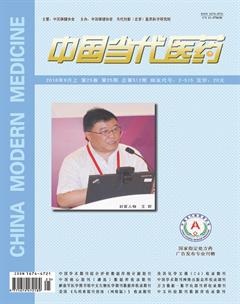
中国当代医药
2018年25期
刘明晖 赵树华 薛均来
[摘要]下焦湿热为中医常见证型,可发于多个部位,临床表现多样,变化复杂。脾肾两脏失常,水液代谢输布失司,聚湿成痰郁而化热是其主要病因病机。虽辨证不难,但治疗手段众多,良莠不齐,导致疗效不佳。赵树华教授系吉林省名中医,从事中医临床教学工作40余载,精研中医经典,通晓各家学说。本研究总结老师临床验案,查阅相关文献,通过对肾结石、慢性前列腺炎、盆腔炎等6种临床常见疾病的治疗经验总结,阐明老师对下焦湿热这一证型的认识、用药规律及常用方剂,对中医同道研究本证起到抛砖引玉的作用。
[关键词]赵树华;下焦湿热;清热利湿解毒
[中图分类号] R249.2 [文献标识码] A [文章编号] 1674-4721(2018)9(a)-0151-03
[Abstract] As a common pattern in traditional Chinese medicine (TCM), damp-heat in lower jiao can be found in various sites with multiple clinical manifestations and complex changes. The main etiology and pathogenesis are dysfunction of the spleen and kidney leading to failure of water metabolism and distribution which causes dampness accumulation converting into heat in stagnation. Although it is not difficult to identify the pattern, the treatment principles are various and the good and bad are intermingled which lead to poor effect. Professor Zhao Shuhua is a distinguished TCM doctor in Jilin Province, who has been engaged in the clinical teaching of Chinese medicine for over 40 years. The professor expertes in TCM Chinese classics and is familiar with the theory of different schools. The research tidies up the professor′s empirical cases and retrieves the relevant literature, and tries to clarify the professor′s acknowledgement of damp-heat in lower jiao pattern, treatment principle, and corresponding formulas by summarizing 6 common diseases such as renal stone, chronic prostatitis, and pelvic inflammatory disease. This serves as a modest spur for our fellow TCM practitioners to further explore the pattern.
[Key words] Zhao Shuhua; Damp-heat in lower jiao; Clearing heat and dampness and detoxification
湿热之邪致病,可发于多个部位[1],尤以下焦为著,故《医方考》中有:“下焦之病,责于湿热”之说。首论湿热之邪致病的当属《黄帝内经》,在《素问·生气通天论篇》和《素问·六元正纪大论篇》中分别论述了湿热之邪导致痿痹和黄疸、浮肿等病证的病因病机。《素问·水热穴论》曰:“肾者胃之关也,关门不利,故聚水而从其类也”。《素问·逆调论》曰,“肾者水脏,主津液”。《素问·经脉别论》曰:“饮入于胃,游溢精气,上输于脾,脾气散精,上归于肺,通调水道,下输膀胱,水精四布,五经并行”。均说明了脾肾两脏是影响津液输布的中心环节。因此,脾肾失常为下焦湿热形成的主要原因。而清代薛生白所著《湿热病篇》更是對下焦湿热这一病因做了详细论述。随着人民生活水平的提高,大量高热量高脂肪饮食的摄入,导致脾胃运化失常,水液代谢失司,水湿内生,聚湿成痰,郁而化热,更使罹患该病的患者日益增多。……
登录APP查看全文