
水稻土中猪粪炭用量对小白菜生长及食用安全的影响
2020-05-13 14:38:54郭卉陈建国王小丽杨爱爱江青青郭玥含王雯颖
湖南农业科学
2020年3期
郭卉 陈建国 王小丽 杨爱爱 江青青 郭玥含 王雯颖
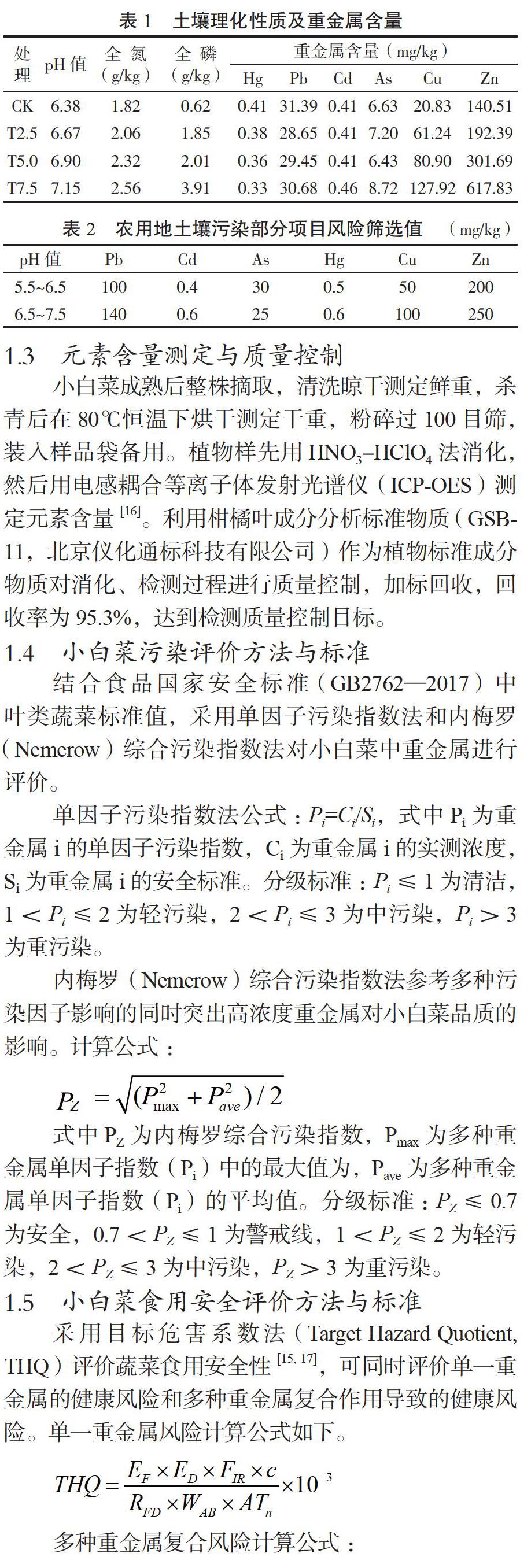

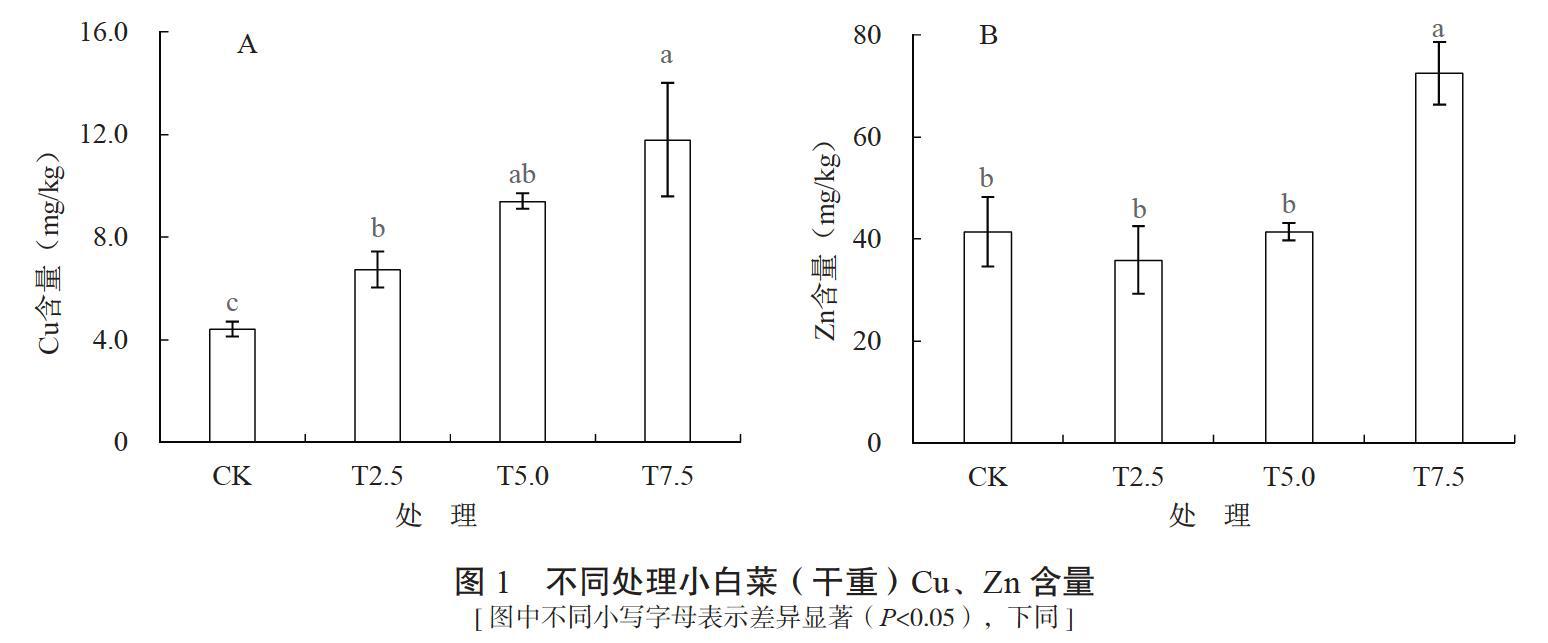
摘 要:为了评估水稻土施用猪粪炭的卫生安全风险,试验以小白菜为指示作物,通过盆栽处理探讨了红黄泥水稻土施用不同量猪粪炭对小白菜生长和食用安全的影响。结果表明:(1)与不施猪粪炭相比,红黄泥水稻土中猪粪炭施用量为2.5%时小白菜生物量增加0.56%,施用量5.0%和7.5%时小白菜生物量分别下降4.17%和17.78%;(2)与不施猪粪炭相比,猪粪炭用量为2.5%、5.0%和7.5%时小白菜Cu含量分別增加52.8%、113.4%和167.8%,Zn含量分别降低13.4%、增加0.1%和75.3%,各处理中唯有猪粪炭用量7.5%处理的小白菜出现锌毒害;(3)与不施猪粪炭相比,猪粪炭2.5%、5.0%和7.5%处理重金属综合污染指数(PZ)及复合健康风险指数(TTHQ)都呈下降趋势。 综上所述,在稻—菜轮作模式下,红黄泥水稻土中猪粪炭施用量低于7.5%时是合理的,于小白菜经济产量而言,红黄泥水稻土中猪粪炭的合理用量为2.5%;于小白菜卫生安全而言,红黄泥水稻土中猪粪炭合理用量为5.0%。
关键词:猪粪炭;小白菜;红黄泥;重金属;食用安全
中图分类号:X713, S634.3文献标识码:A文章编号:1006-060X(2020)03-0052-04
Abstract: In order to evaluate the health and safety risks of swine manure biochar applied into red paddy soil, the effect of different amounts of swine manure biochar on the growth and edible safety of pakchoi had been studied by pot experiment. In contrast to no application of swine manure biochar, 2.5%, 5.0% and 7.5% swine manure biochar brought the following changes: (1) the biomass of pakchoi was +0.56%, -4.17%, and -17.78%, respectively; (2) the content of Cu in pakchoi was +52.8%, +113.4%, +167.8%, respectively; the content of Zn was -13.4%, +0.1%, +75.3%, respectively, while the pakchoi presented slight zinc toxity in the treatment of 7.5%; (3) the comprehensive pollution index (Pz) and total taxget hazard quotient (TTHQ) of heavy metals both showed a downtrend. In summary, in rice-vegetable rotation system it is reasonable when the amount of swine manure biochar applied is less than 7.5% in red paddy soil. In terms of economic yield of pakchoi, the appropriate amount of swine manure biochar applied is 2.5%, but in terms of edible safety of pakchoi, the appropriate amount is 5.0%.
Key words: swine manure biochar; pakchoi; red paddy soil; heavy metal; edible safety
猪粪炭是指将猪粪在高温厌氧条件下裂解而形成的一种生物质炭,是当前规模化养猪场彻底消除粪污污染(包括实现养殖场废弃物的减量化、杀灭畜禽粪便病原菌、破坏抗生素的结构)的重要途径[1-2]。猪粪炭中有机碳、有效磷、有效钾含量高,富含养分,同时比表面积大、孔隙度高,具有较强的稳定重金属功能[3],因此加强其在农业上的应用研究对猪粪资源化利用具有重要意义。……
登录APP查看全文
