小场地比赛结合下肢加压训练对足球运动员反复冲刺能力的影响
2021-01-03 11:15:58周志博肖红于亮
首都体育学院学报
2021年6期
周志博 肖红 于亮

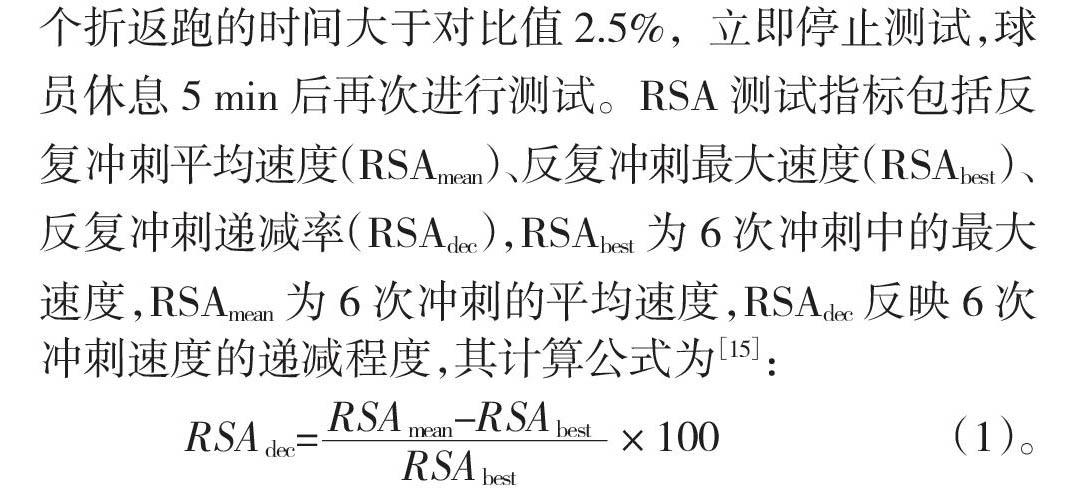
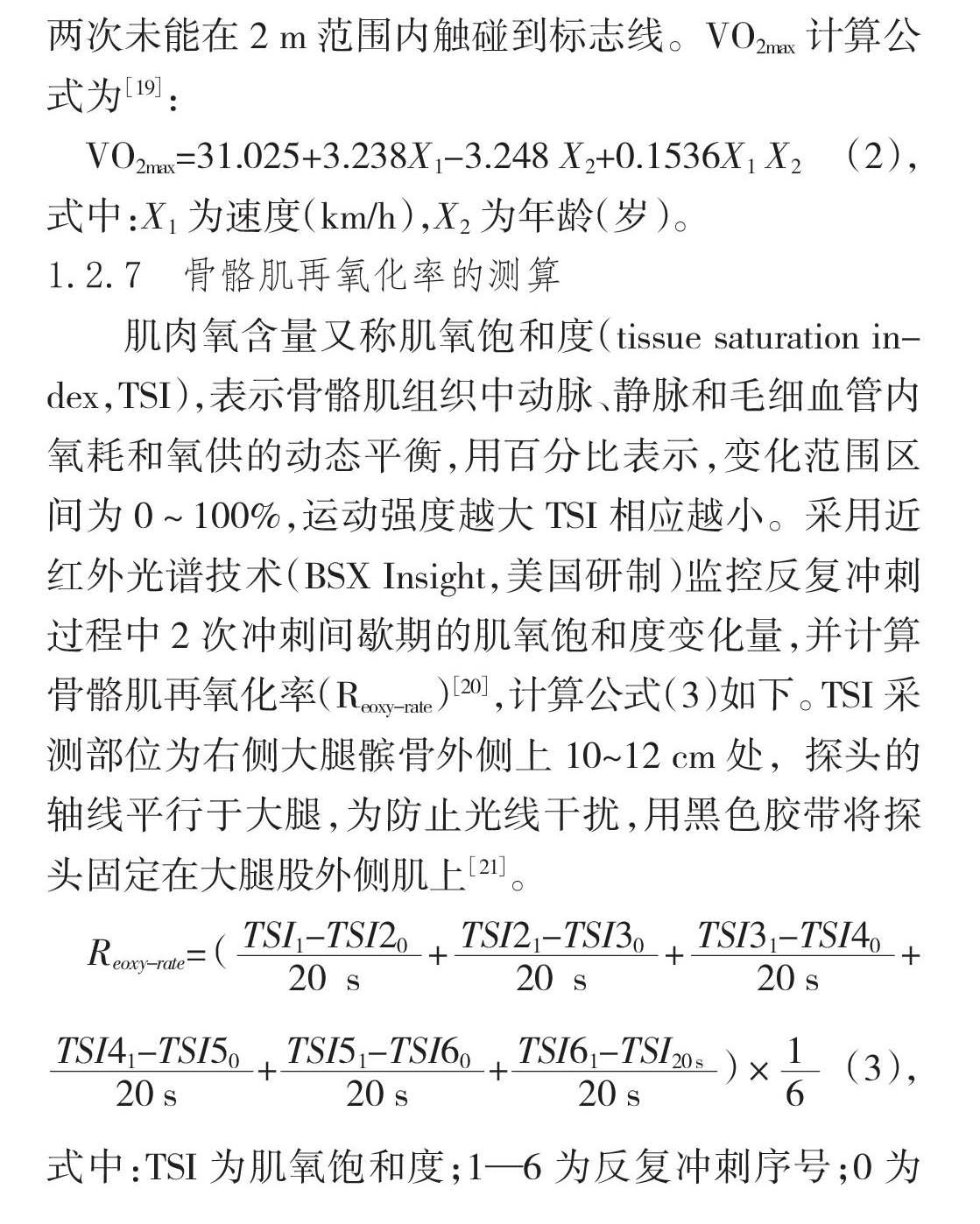
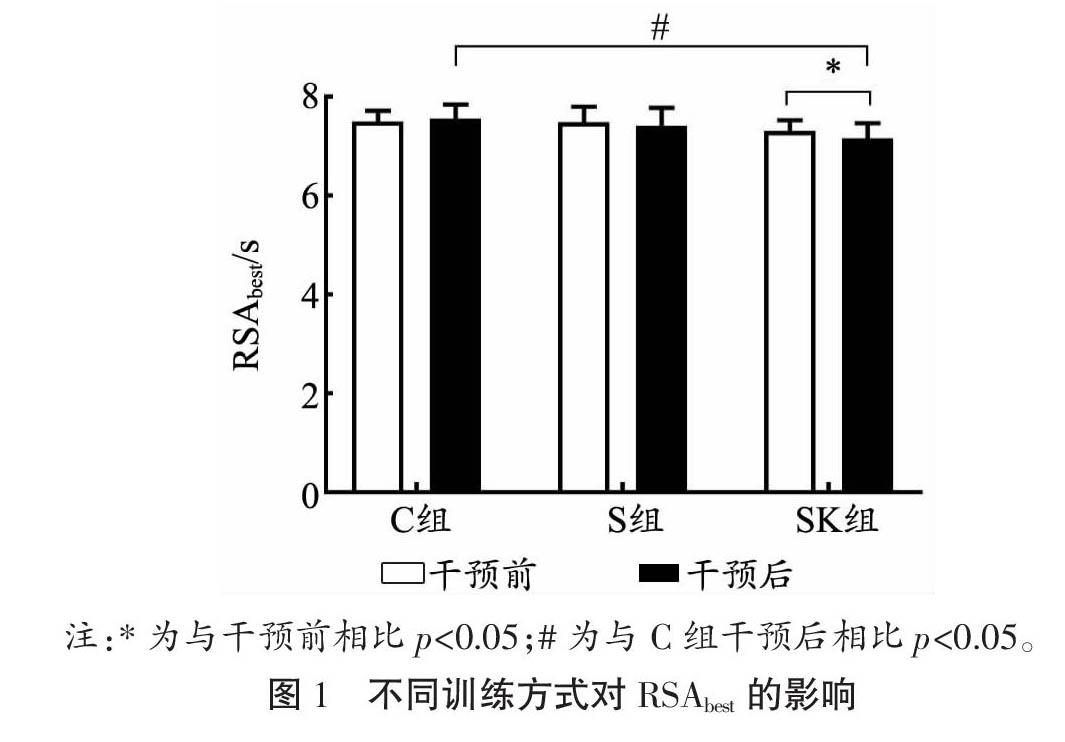
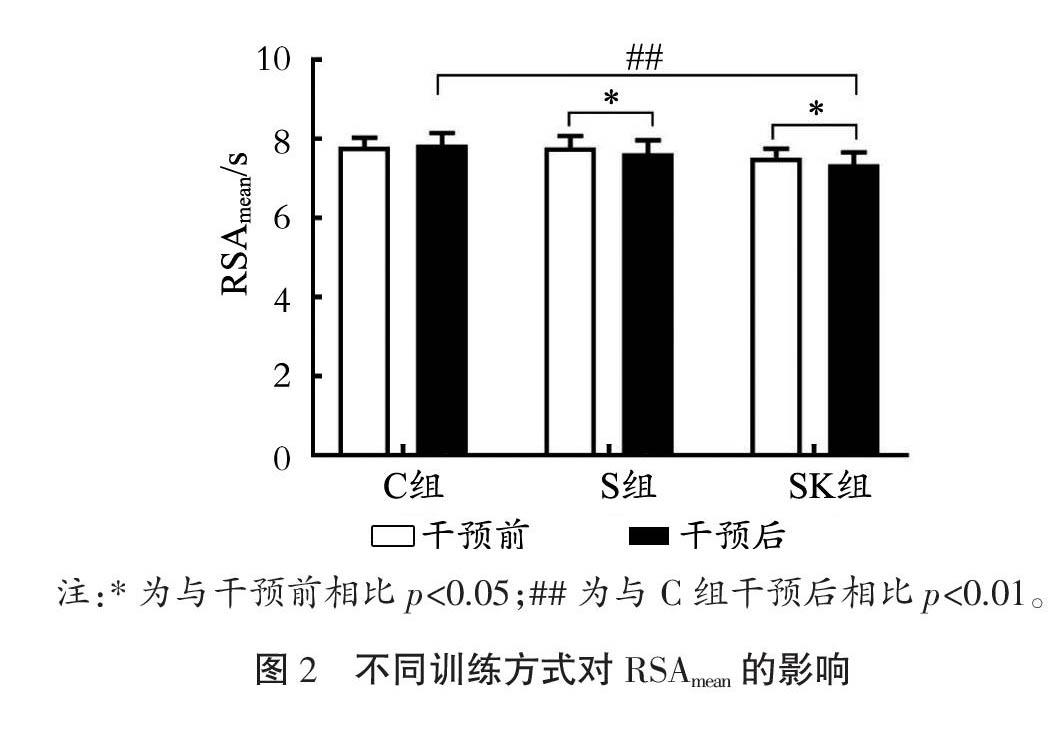
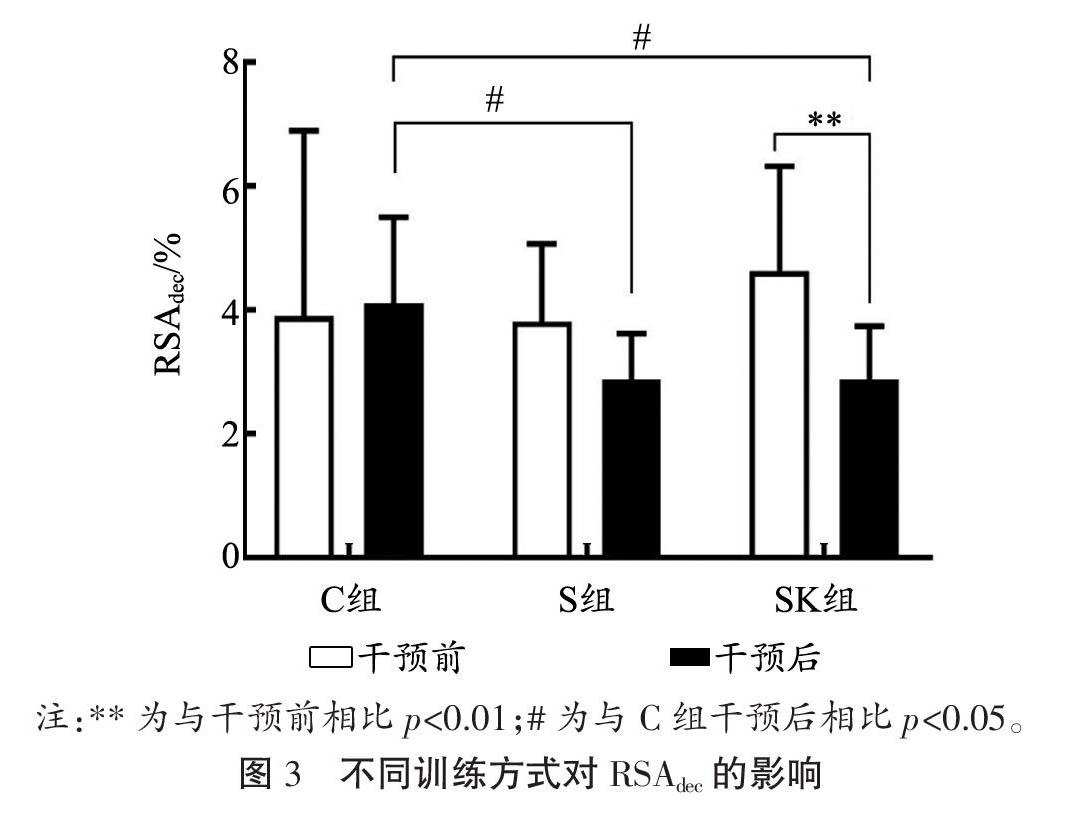
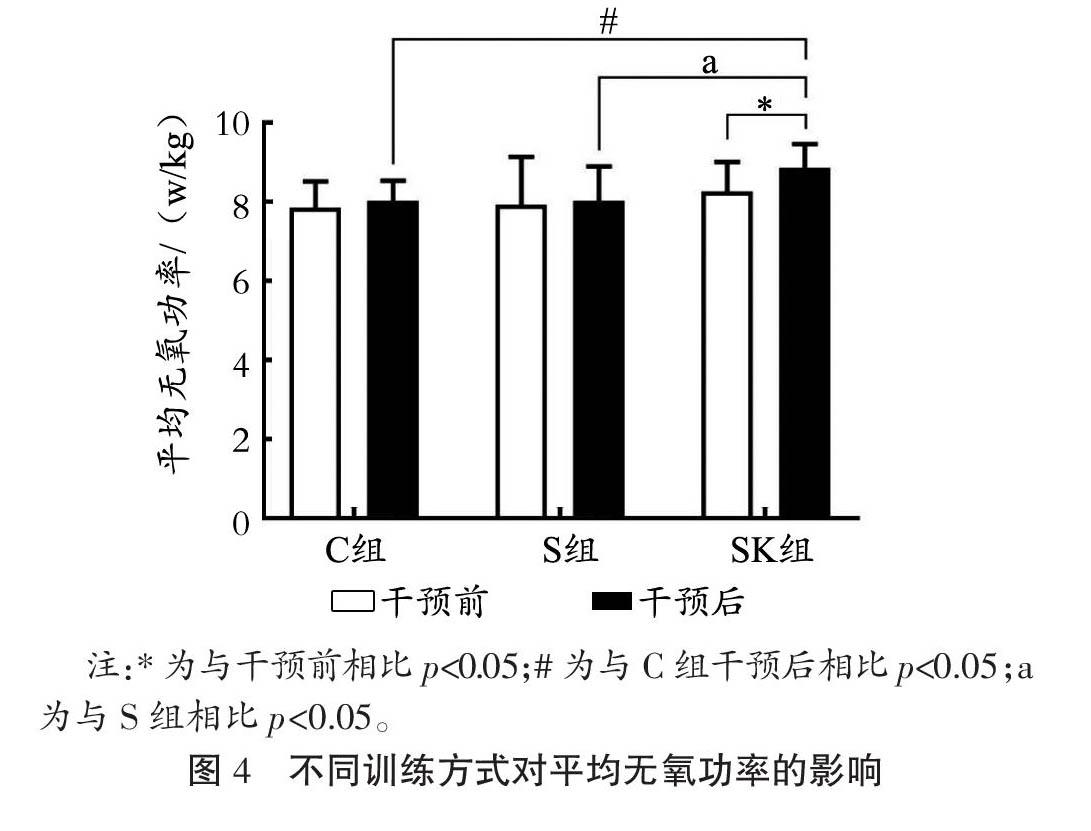
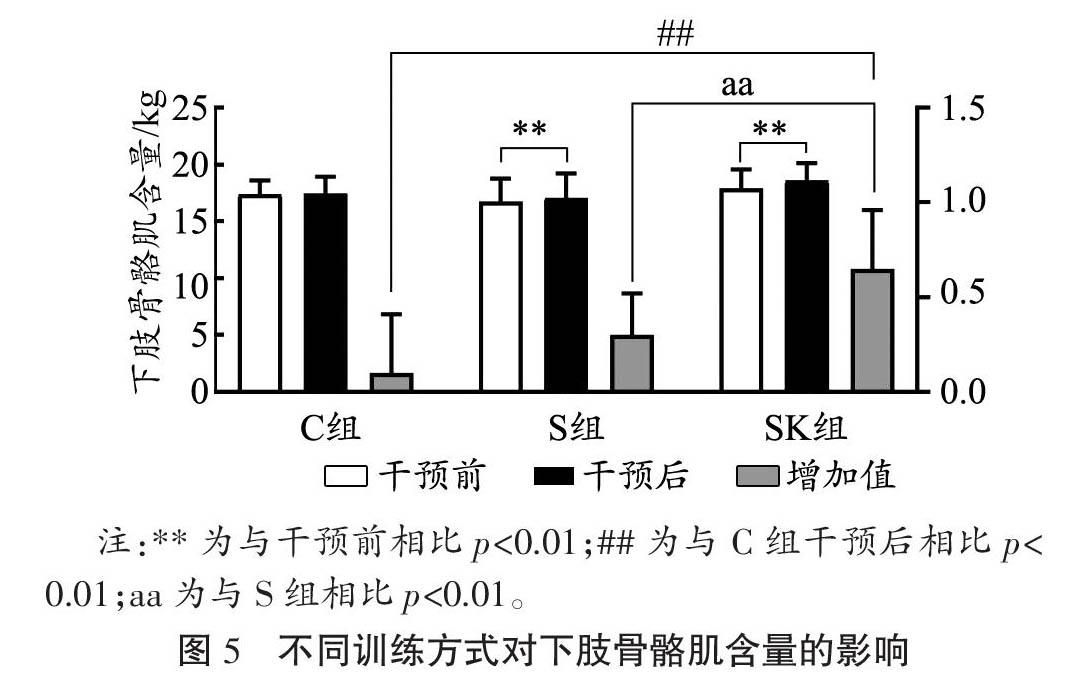
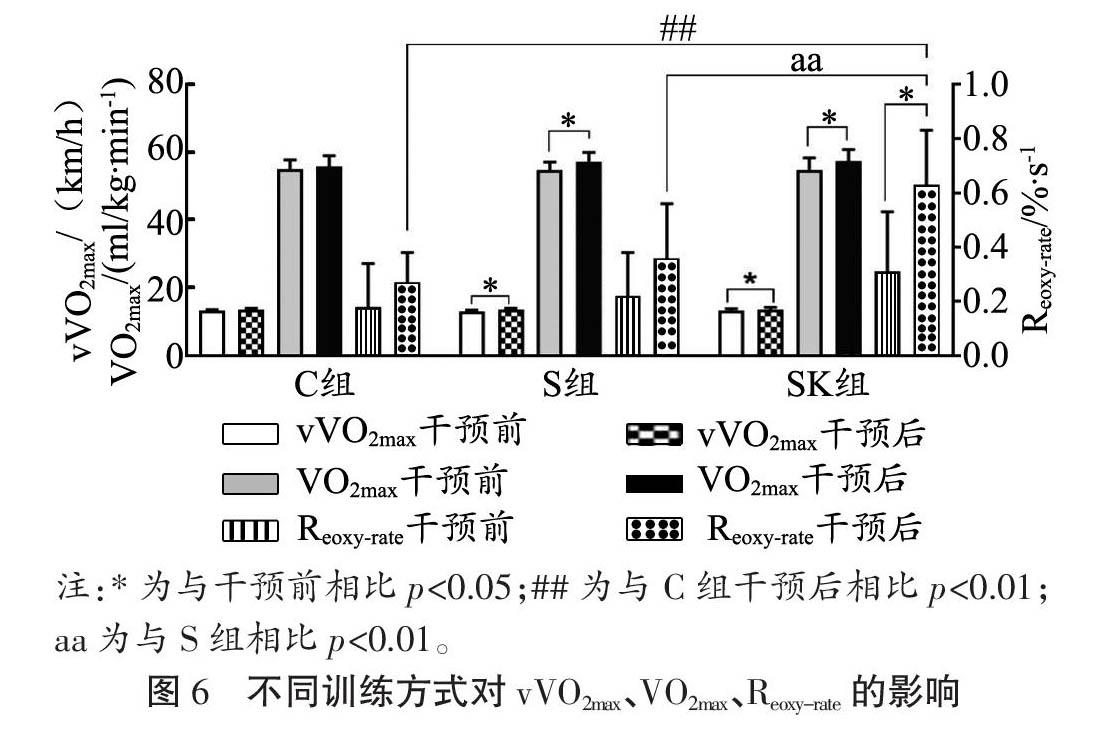
摘 要:探討4周小场地比赛(SSG)及SSG结合下肢加压训练(KAATSU)对足球运动员反复冲刺能力(RSA)的影响。方法:招募34名U17年龄段男性足球运动员,将其随机分为SSG组(S组)、SSG结合加压训练组(SK组)、对照组(C组),共进行4周训练,每周训练3次。S组进行SSG训练,场地面积为800m2(宽为20 m,长为40 m),共进行4场比赛,每场为3 min,间歇1.5 min。SK组在大腿近端佩戴压强为210 mmHg的加压带的同时进行SSG训练,SSG训练模式与S组一致。C组进行功能性预防运动损伤训练。测试指标包括反复冲刺最大速度(RSA best)、反复冲刺平均速度(RSA mean)、反复冲刺递减率(RSA dec)、最大摄氧量(VO2max)、骨骼肌再氧化率(Reoxy-rate)、骨骼肌含量、无氧功率。结果:4周干预后,1)SK组的RSAbest和RSA mean分别相应缩短了0.14 s和0.16 s,RSAdec减少了1.75%(p< 0.05);S组的RSA mean缩短了0.15 s(p<0.05);SK组的RSAbest和RSA mean显著快于C组(p< 0.05);SK组和S组的RSA dec显著低于C组(p<0.05)。2)S组和SK组的下肢骨骼肌含量显著增加(p<0.05);SK组的下肢骨骼肌含量差值显著大于C组和S组(p<0.05)。3)SK组平均无氧功率显著大于C组和S组(p<0.05)。4)S组和SK组VO2max显著增加(p<0.05)。5)SK组骨骼肌再氧化率显著大于C组和S组(p<0.05)。结论:4周小场地比赛训练具有加快反复冲刺平均速度和减少反复冲刺递减率的效果,但是不能加快反复冲刺最大速度。4周小场地比赛结合下肢加压训练具有加快反复冲刺最大速度的作用,这与无氧功率增大和下肢骨骼肌含量增加有关;并且该训练方法能够增大足球运动员的骨骼肌再氧化率,具有改善骨骼肌运输氧和利用氧的能力。
关键词:小场地比赛;加压训练;反复冲刺能力;无氧功率
中图分类号:G 808.1 学科代码:040303 文献标识码:A
Abstract:The purpose of this paper is to explore the effect of Small-Sided Games (SSG) training and SSG combined with KAATSU on the repeated sprint ability (RSA) of soccer players in 4 weeks. Method: 34 male U17 soccer players were recruited in this study and were randomly divided into SSG group (S), SSG combined with KAATSU group (SK), and control group (C) for 4 weeks of training, 3 times a week. In group S, SSG training was conducted, the area of the field is 800 m2 (width: 20 m, length: 40 m) with a total of 4 sets, the duration for each set was 3min and intermittent between two sets was 1.5 min. In group SK, the participants performed the SSG training and KAATSU training at the same time, who wear a compression belt with a pressure of 210 mmHg at the proximal end of the thigh. The SSG training mode of group SK is consistent with the group S. The training content of group C is functional sports injury prevention training. The RSAbest, RSAmean, RSAdec, maximal oxygen consumption(VO2max), reoxygenation rate(Reoxy-rate), skeletal muscle content and anaerobic power were analyzed. Results: Following 4 weeks of training: 1) the RSAbest and RSAmean in group SK shortened by 0.14 s and 0.16 s respectively, the RSA decreased by 1.75%(p<0.05); the RSAmean in group S shortened by 0.15 s (p<0.05); compared with the group C, RSAbest and RSAmean in group SK were significantly improved (p<0.05); RSAdec in group SK and group S were significantly lower than that in group C(p<0.05). 2) The skeletal muscle content of lower limb in group S and group SK were significantly increased(p<0.05); the differences in skeletal muscle content in the group SK was significantly higher than group C and group S (p<0.05). 3) The average anaerobic power in the group SK was significantly higher than that of the group C and group S (p<0.05). 4) The VO2max in the group S and group SK were significantly increased (p<0.05). 5) The Reoxy-rate of group SK was significantly higher than that of group C and group S(p<0.05). Conclusion: 4 weeks’SSG can improve RSAmean and reduce RSAdec , but cannot improve RSAbest. 4 weeks’ SSG combines with KAATSU training has the function of accelerating RSAbest , which can be derived from the improvement in aerobic power and legs skeletal muscle content. And this training method can also improve the player’s Reoxy-rate and the ability of skeletal muscles to transport and utilize oxygen.
Keywords:small sided games; KAATSU; repeated sprint ability; anaerobic power
优秀足球运动员具备较强的有氧能力以维持长时间比赛过程中的能量供应,同时还有很强的冲刺能力、变向能力、加减速能力和对抗能力[1]。……
登录APP查看全文