上市公司IPO抑价的长短期股票波动效应
2021-01-15 00:47:32朱东炬刘明显
科技资讯
2021年33期
朱东炬 刘明显

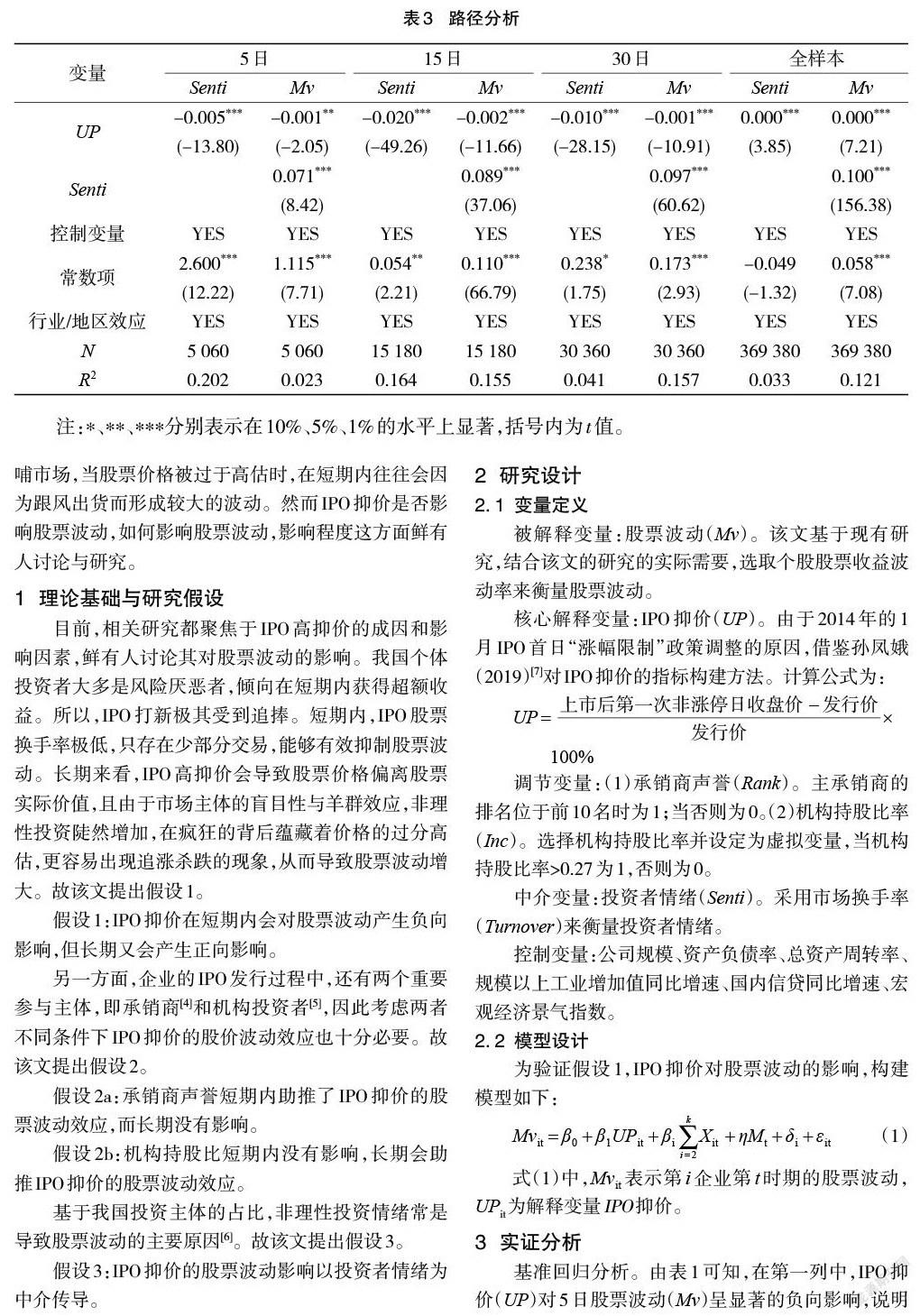
摘要:该文基于沪深两市 2014—2017 年上市公司365个交易日数据为研究样本,实证考察了IPO抑价对股票波动的影响效应及作用机制。研究发现:短期来看,IPO抑价抑制了股票波动,但长期显示,IPO抑价显著提高了股票波动;承销商声誉短期内提升了IPO抑价对股价波动的抑制效应,长期没有影响;机构持股比率短期没有影响,长期助推了IPO抑价对股票波动的正向效应。路径分析表明,IPO抑价的股票波动效应传导路径以投资者情绪为中介变量。
关键词:IPO抑价 投资者情绪 股票波动效应 承销商声誉 机构持股比率
中图分类号:F832文献标识码:A 文章编号:1672-3791(2021)11(c)-0000-00
Abstract: Based on the data of 365 trading days of listed companies in Shanghai and Shenzhen from 2014-2017, this article empirically examines the effect and mechanism of IPO underpricing and investor sentiment on stock volatility. The study found that in the short term, IPO underpricing suppressed stock volatility, but in the long run, IPO underpricing significantly increased stock volatility; the reputation of underwriters in the short term increased the suppression effect of IPO underpricing on stock price volatility, with no long-term impact; The shareholding ratio has no short-term impact, but in the long-term boosted the positive effect of IPO underpricing on stock volatility. Path analysis shows that the transmission path of the stock volatility effect of IPOunderpricing uses investor sentiment as an intermediary variable.
Key Words: Underpricing;Investor sentiment; Stock volatility effect; Underwriter's reputation; Institutional shareholding ratio
作为与有效市场假说相悖的“异象”之一,IPO抑价一直是资本市场研究的热点。IPO抑价短期对股票波动呈现何种影响,长期是否还有所影响?IPO抑价对股票波动的影响是否还存在中介效应?其影响路径是怎么样的?同时,IPO抑价对股票波动的影响在不同的承销商声誉和机构持股之间是否存在差异?科学性地回答上述问题,有助于厘清IPO抑价对股票波动的影响效果及影响机制,对提升我国IPO研究发展与相关发行政策提供重要的理论参考依据。
面对全球普遍存在IPO抑价的事实,国内外学者试图从理论、方法及实证等多方面对IPO抑价进行研究,提出了诸多理论和观点,且大多基于信息不对称性考虑[1]。Rock基于市场信息不对称的视角提出了“赢者诅咒”假说,并发现为了吸引更多投资者[2],公司往往会压低发行价,导致IPO高抑价。……
登录APP查看全文