贝氏体钢轨钢成分偏析带对摩擦磨损性能的影响
2021-02-21 16:05:10韩青阳张瑞杰郑春雷何建中李艳国王明明张福成
河北工业大学学报
2021年6期
韩青阳 张瑞杰 郑春雷 何建中 李艳国 王明明 张福成
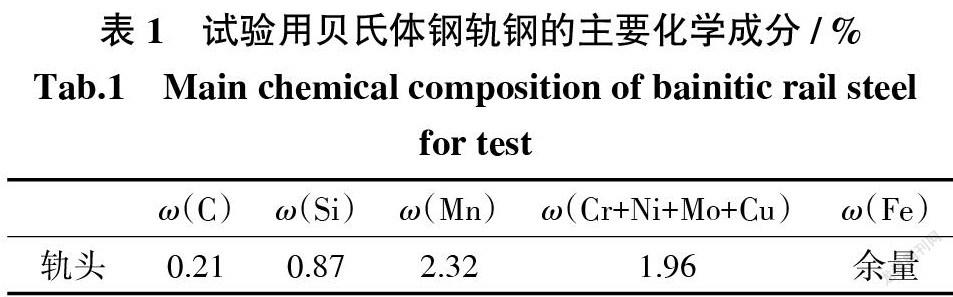
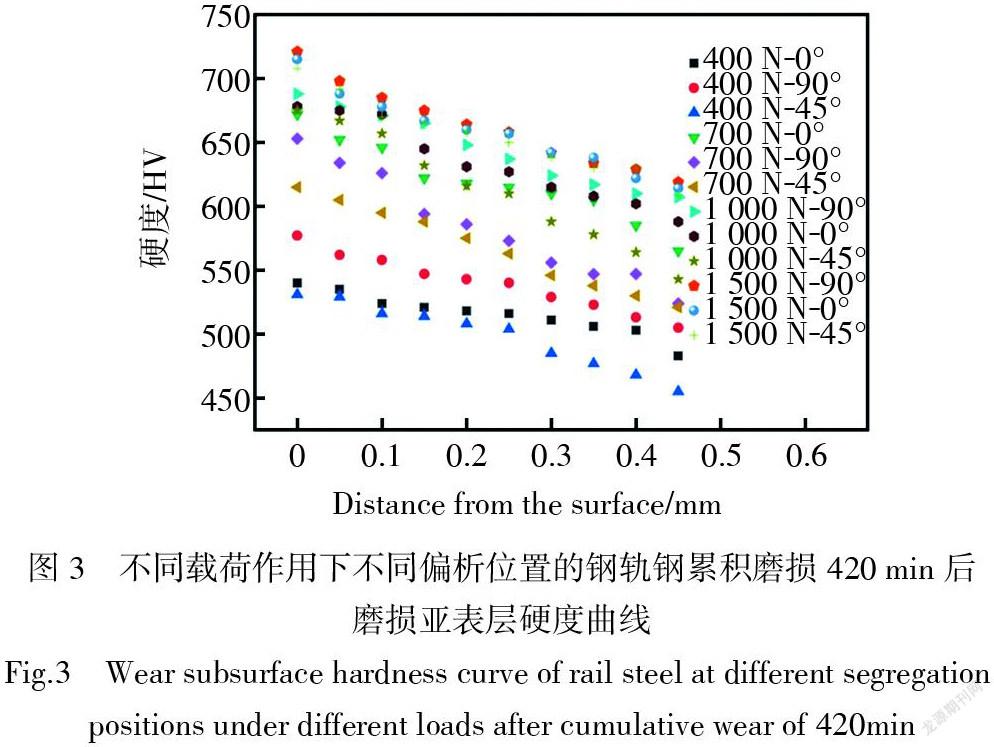
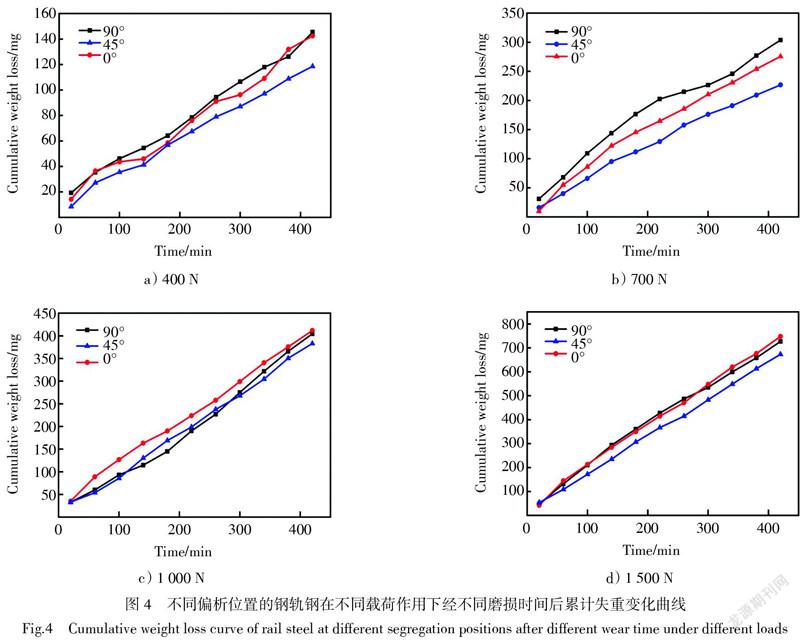
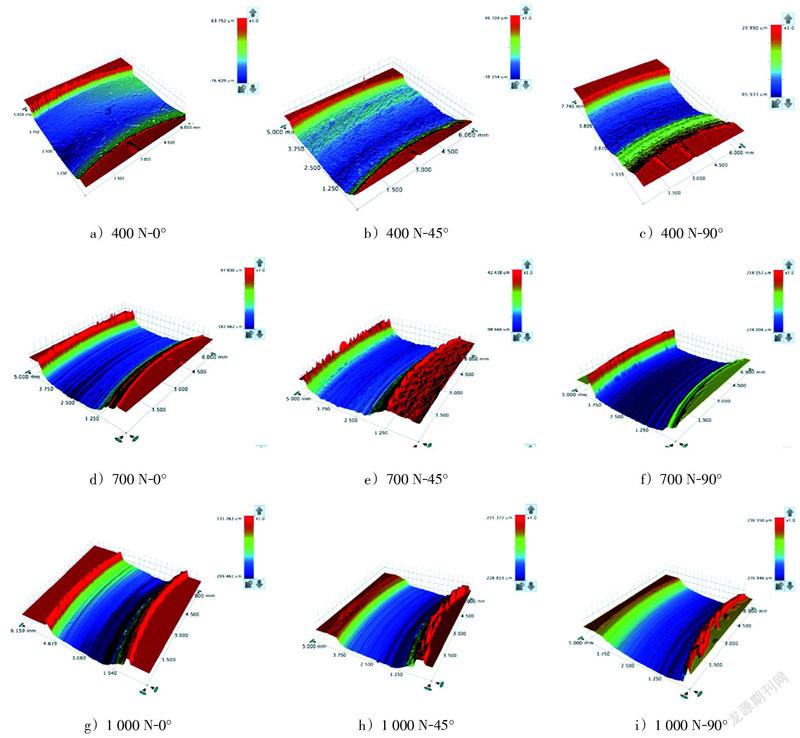
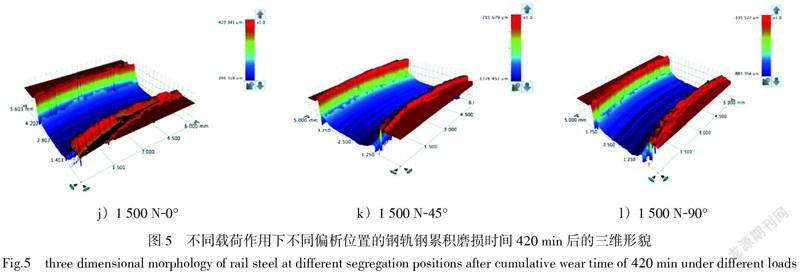
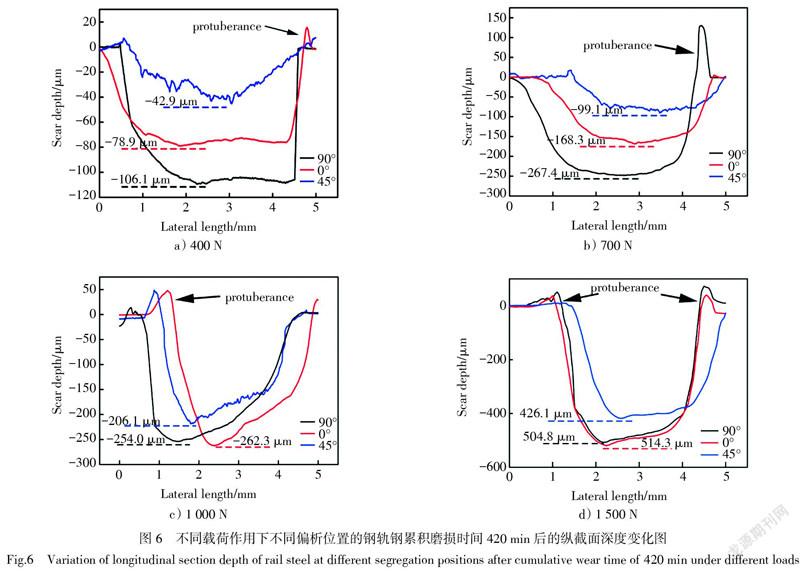
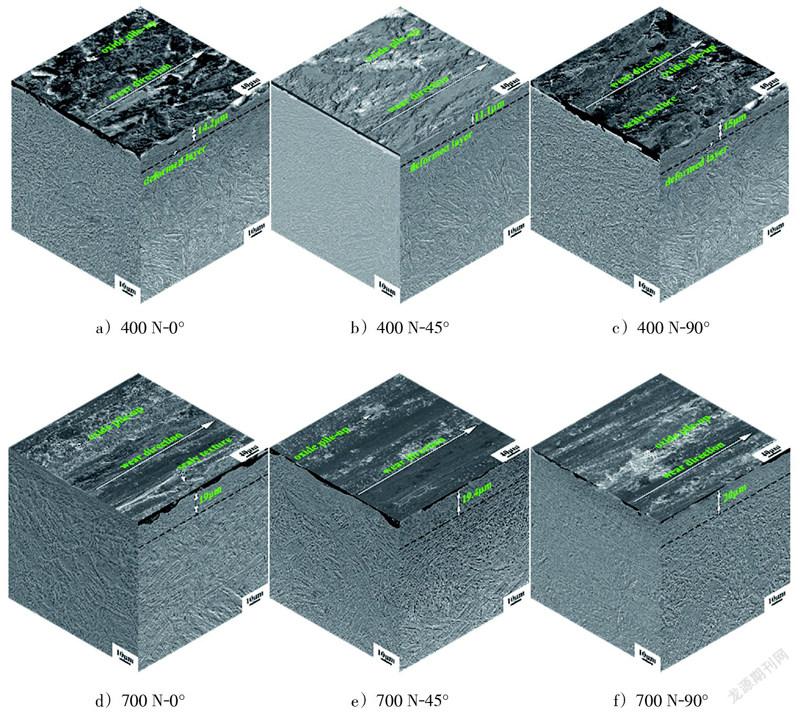
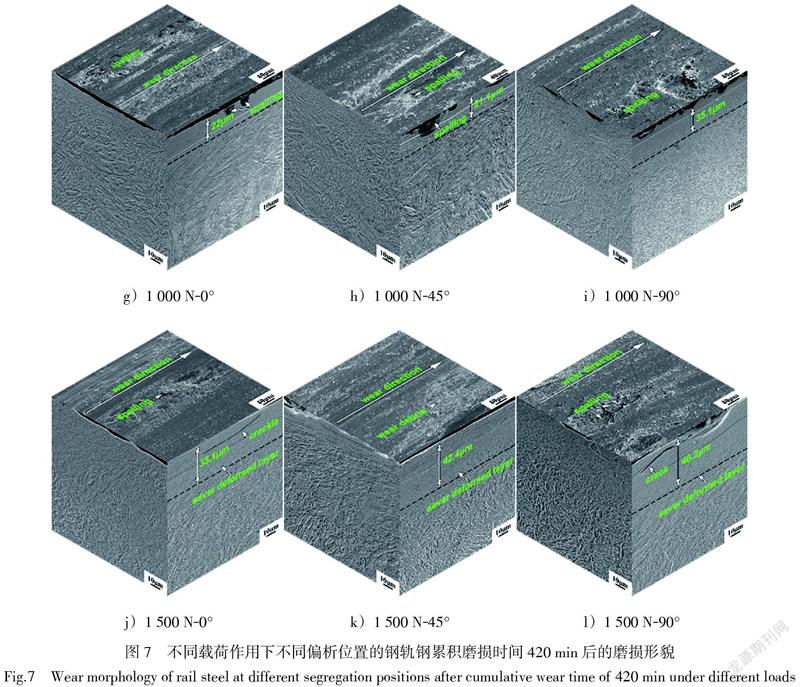
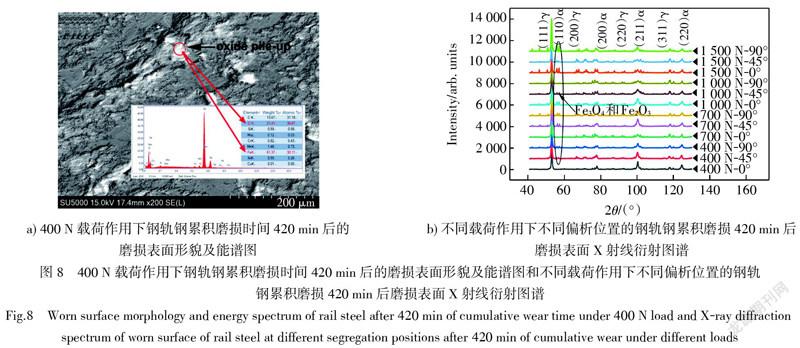
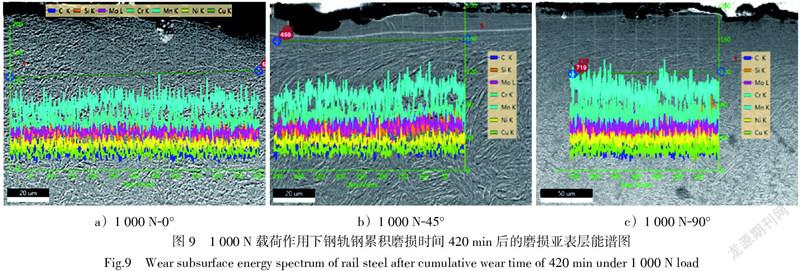
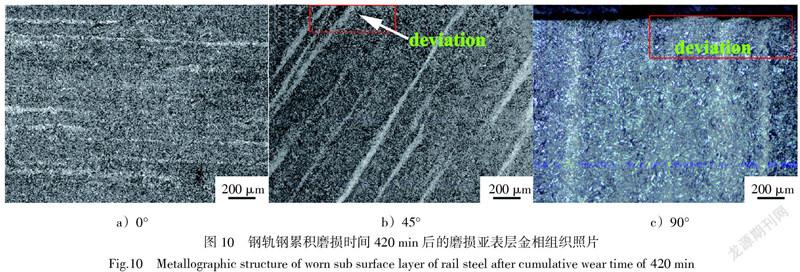
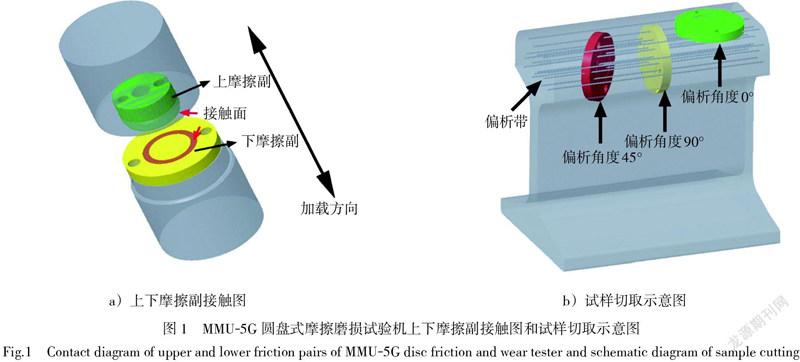
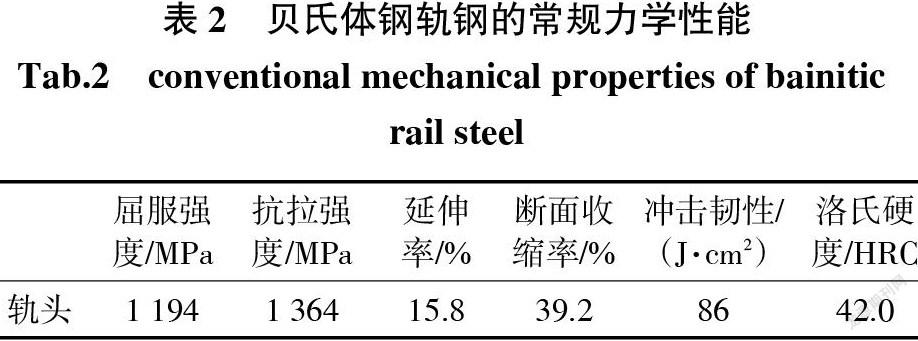
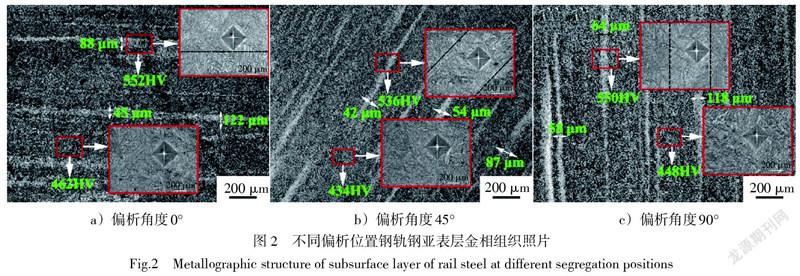
摘要 以实际使用的含有成分偏析带的贝氏体钢轨钢为研究对象,利用端面摩擦磨损试验机研究贝氏体钢在不同偏析角度下磨损性能的变化及组织变化规律。结果表明:贝氏体钢轨钢的磨损机理主要表现为粘着磨损、磨粒磨损和氧化磨损;基体局部在较大摩擦力的作用下会沿着磨损方向整体剥离,形成鱼鳞状纹理;随着载荷的增大,在磨损表面和纵截面亚表层会产生了大面积的剥离坑,同时还有大量的微裂纹形成;在不同偏析角度下贝氏体钢表现出不同的耐磨性能,在偏析位置为90°时,磨损失重速率显著增大,磨损量较大,符合铁路尤其是曲线段晃车抖车导致的磨损量增加的现象,而在偏析位置为45°时磨损量最少,表现出最好的耐磨性。
关 键 词 贝氏体钢轨钢;成分偏析;偏析角度;磨损机理;磨损性能
中图分类号 TG142.1 文献标志码 A
文章编号:1007-2373(2021)06-0013-10
Abstract The change of wear properties and microstructure of bainitic steel under a variety of segregation angles are studied by end face friction and wear tester. The results show that the wear mechanism of bainitic steel is mainly adhesive wear, abrasive wear and oxidation wear; Under the action of large friction force, the whole matrix peels off along the wear direction to form fish scale texture; With the increase of load, a large area of peeling occurs on the wear surface, and a large number of microcracks occur; Bainitic steel shows different wear resistance under different segregation angles. When the segregation position is 90°, the wear weight loss rate increases significantly and the wear amount is large, which is in line with the increase of wear amount caused by shaking in railway curve section. When the segregation position is 45°, the wear amount is the least and shows the best wear resistance.
Key words bainitic rail steel; component segregation; segregation angle; wear mechanism; wear performance
0 引言
磨損和滚动接触疲劳(RCF)是铁路钢轨在服役过程中的两种主要失效模式[1]。车轮表面在塑性剪切作用下发生反复变形,导致表面裂纹的延展。根据接触应力条件的不同,这些表面裂纹可能导致加重磨损或滚动接触疲劳[2]。轮轨接触通常假设为赫兹接触。轮轨接触片的形状为椭圆形,接触压力在接触区域呈椭圆形分布。轮轨在轨道上通过径向方向时,在接触界面之间没有切向力。然而,当转向架与轮对结合时,导致轨道轮接触之间存在一定的纵向力。……
登录APP查看全文