膝骨关节炎患者外周血单个核细胞CD36表达与氧化应激的相关性研究
2021-04-13 09:52:24周巧刘健宋倩郭锦晨黄旦
风湿病与关节炎
2021年3期
周巧 刘健 宋倩 郭锦晨 黄旦
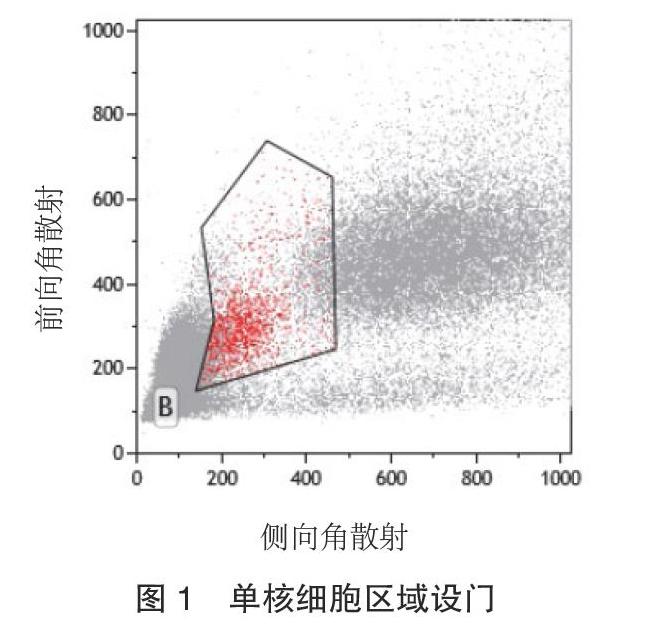
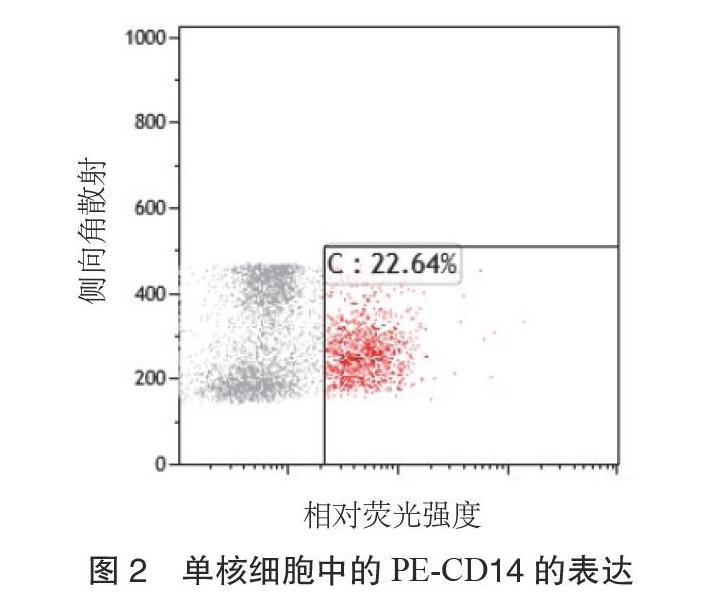
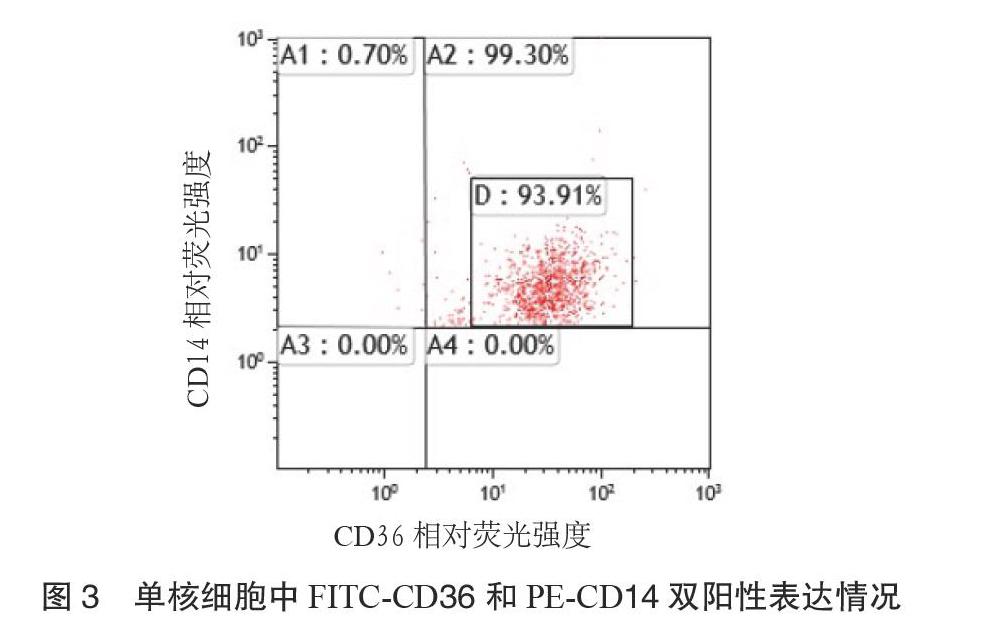
【摘 要】目的:探讨B类清道夫受体白细胞分化抗原36(CD36)在膝骨关节炎患者外周血单个核细胞(PBMC)上的表达及临床意义,以阐明其在膝骨关节炎发生和发展中的作用。方法:应用流式细胞仪检测70例膝骨关节炎患者和30例健康对照者PBMC表面CD36相对荧光强度,比较2组的表达情况,采用ELISA法检测2组炎性细胞因子、氧化应激相关指标的表达,并分析其相关性。结果:膝骨关节炎患者PBMC上CD36相对荧光强度显著高于正常对照组(P < 0.01)。与正常对照组比较,膝骨关节炎组超氧化物歧化酶(SOD)、总抗氧化能力(TAOC)、白细胞介素(IL)-4、IL-9明显降低,丙二醛(MDA)、脂质过氧化物、IL-1β、IL-6、肿瘤坏死因子-α(TNF-α)水平升高(P < 0.05或P < 0.01)。膝骨关节炎患者PBMC上CD36表达与SOD(r = -0.296,P = 0.014)、TAOC(r = -0.241,P = 0.042)呈负相关,与MDA(r = 0.255,P = 0.029)呈正相关;与炎性细胞因子IL-1β(r = 0.307,P = 0.009)、IL-6(r = 0.285,P = 0.017)、TNF-α(r = 0.265,P = 0.025)呈正相关。结论:膝骨关节炎患者PBMC上CD36表达异常,与炎症反应和氧化损伤有明确的相关性。
【关键词】 膝骨关节炎;外周血单个核细胞;B类清道夫受体白细胞分化抗原36;氧化应激
Correlation between the Expression of CD36 in Peripheral Blood Mononuclear Cells and Oxidative Stress in Patients with Knee Osteoarthritis
ZHOU Qiao,LIU Jian,SONG Qian,GUO Jin-chen,HUANG Dan
【ABSTRACT】Objective:To investigate the expression and clinical significance of CD36 in peripheral blood mononuclear cells(PBMC)of patients with knee osteoarthritis(KOA).Methods:Flow cytometry was used to detect the relative fluorescence intensity of CD36 on the surface of PBMC in 70 patients with knee osteoarthritis and 30 healthy controls.The expression of cytokines and oxidative stress related indicators in the two groups were detected by ELISA,and the correlation between them was analyzed.Results:The relative fluorescence intensity of CD36 on PBMC of patients with knee osteoarthritis was significantly higher than that of the normal group(P < 0.01).Compared with the normal group,the levels of SOD,TAOC and IL-4 were significantly decreased,and the levels of MDA,IL-1β,IL-6 and TNF-α were increased in the knee osteoarthritis group(P < 0.05 or P < 0.01).
CD36 expression was negatively correlated with SOD(r = -0.296,P = 0.014),TAOC(r = -0.241,P = 0.042),positively correlated with MDA(r = 0.255,P = 0.029),and positively correlated with IL-1β(r = 0.307,P = 0.009),IL-6(r = 0.285,P = 0.017)and TNF-α(r = 0.265,P = 0.025).Conclusion:
The abnormal expression of CD36 in PBMC of patients with knee osteoarthritis has a clear correlation with inflammatory reaction and oxidative damage.
【Keywords】 knee osteoarthritis;peripheral blood mononuclear cells;CD36;oxidative stress
骨關节炎(osteoarthritis,OA)的特征是关节软骨细胞的逐渐破坏,膝关节是最常受累部位,称为膝骨关节炎(knee osteoarthritis,KOA)。软骨细胞衰老已被认为是影响软骨稳态和功能衰老相关变化的主要因素,并且与炎症介质的增加和氧化应激有关[1]。异常升高的活性氧(ROS)会破坏细胞成分,例如细胞膜中的脂质、蛋白质、线粒体和核酸,干扰软骨细胞的无氧代谢和软骨破坏[2]。B类清道夫受体白细胞分化抗原36(CD36)是一种广泛表达的模式识别受体,可作为多种配体的清除剂受体,促进其摄取和细胞内降解[3]。巨噬细胞、血小板和某些其他细胞类型的CD36表达诱导炎症反应[4],CD36是促炎和氧化途径的关键调节剂[5]。CD36信号可下调关键的抗氧化因子,但其具体的作用途径及机制尚未阐明。
本研究通过检测KOA患者及健康对照者外周血单个核细胞(PBMC)中CD36的表达,分析其与氧化应激指标、细胞因子的相关性,探讨其在KOA发生和发展中的作用。……
登录APP查看全文
猜你喜欢
中老年保健(2021年5期)2021-12-02 15:48:21
基层中医药(2021年9期)2021-06-05 07:14:14
今日农业(2020年19期)2020-12-14 14:16:52
世界科学技术-中医药现代化(2020年2期)2020-07-25 02:05:56
临床医药文献杂志(电子版)(2017年11期)2017-05-17 04:48:39
西南军医(2016年6期)2016-01-23 02:21:19
新疆医科大学学报(2015年10期)2015-12-26 12:33:30
癌变·畸变·突变(2015年3期)2015-02-27 06:15:09
西南军医(2015年2期)2015-01-22 09:09:37
中国中医药现代远程教育(2014年11期)2014-08-08 13:23:44