
西双版纳国家级自然保护区资源现状及管理对策
2021-06-17 14:59:09宋志勇刀燕英
安徽农业科学
2021年2期
关键词:资源
宋志勇 刀燕英

摘要 西双版纳国家级自然保护区生物多样性非常丰富,有热带雨林、热带季雨林、亚热带常绿阔叶林、热性竹林、落叶阔叶林、暧性针叶林、草丛、灌木林8种植被类型,哺乳动物共130种、鸟类469种、两栖动物53种、爬行动物79种、鱼类100种。通过对资源进行评价,对生物多样性进行分析,提出加强基础设施建设与管理、进一步开展资源本底调查和保护工作、保护资源与发展社区、缓解人象冲突、对外交流合作、培养和引进人才等保护管理措施。
关键词 自然保护区;资源;生物多样性;西双版纳
中图分类号 S759.9文献标识码 A文章编号 0517-6611(2021)02-0100-05
doi:10.3969/j.issn.0517-6611.2021.02.028
开放科学(资源服务)标识码(OSID):
Resource Status and Management Countermeasures of Xishuangbanna National Nature Reserve
SONG Zhiyong1, DAO Yanying2
(1. Scientific Institute of Yunnan Xishuangbanna National Nature Reserve, Jinghong, Yunnan 666100;2. Maintenance and Conservation Center of Xishuangbanna National Nature Reserve, Jinghong, Yunnan 666106)
Abstract Xishuangbanna National Nature Reserve has rich biodiversity, there are eight vegetation types, including tropical rain forest, Taiwan subtropical evergreen forests forest, subtropical evergreen broadleaved forest, tropical bamboo forest, deciduous broadleaved forest, warm coniferous forest, grass forest and shrub forest. There are 130 species of mammals, 469 species of birds, 53 species of Amphibians, 79 species of reptiles and 100 species of fish. Through the evaluation of resources and the analysis of biodiversity, we put forward some protection and management measures, such as strengthening infrastructure construction and management, further investigating and protecting resources, protecting resources and developing communities, alleviating conflicts between man and elephant, exchanging and cooperating with foreign countries, training and introducing talents.
Key words Nature reserve;Resources;Biodiversity;Xishuangbanna
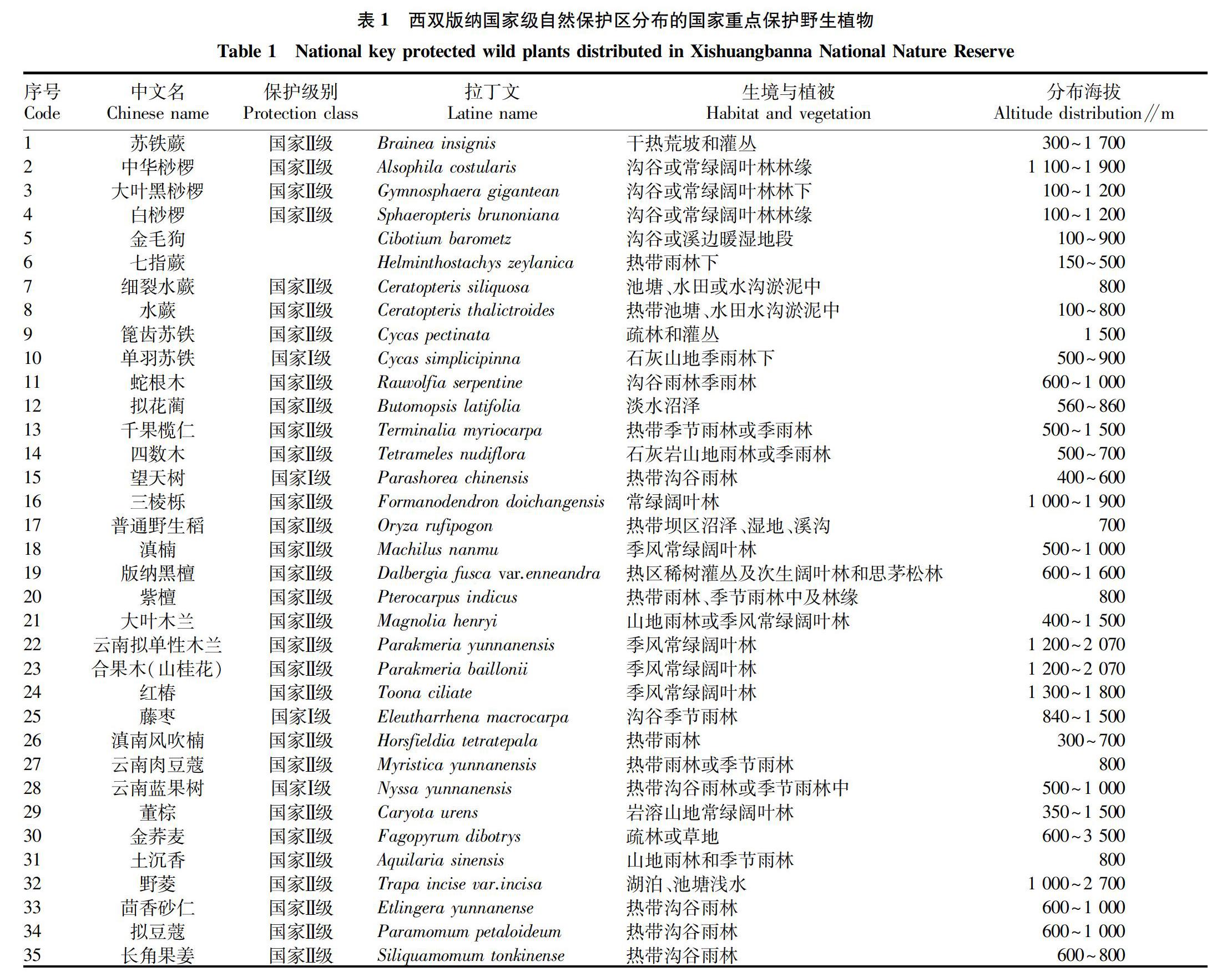
國家级自然保护区保护了我国绝大部分重要的生态系统和珍稀濒危物种,其发展建设直接关系到我国生物多样性的安全[1],是我国自然保护区的精华所在。西双版纳国家级自然保护区在地域上由相近而又不相连的勐养、勐仑、尚勇、勐腊和曼稿5个子保护区组成(图1),地理坐标为21°10′~22°24′N,100°16′~101°50′E,总面积242 510 hm2,占全州面积的12.9%。5个子保护区的面积分别为:勐养子保护区99840 hm2,勐仑子保护区10 933 hm2,勐腊子保护区92 683 hm2,尚勇子保护区31 184 hm2,曼稿子保护区7 870 hm2,是一个森林生态系统和野生动植物类型的综合性自然保护区,主要以保护热带北缘雨林、季雨林森林生态系统为标志的热带森林生物多样性及热带珍稀濒危野生动植物种群与其生存环境为主要保护对象[2]。保护区的面积仅占全国土面积的0.026%,而生物多样性非常丰富,其中野生动物占全国总种数的比例是:哺乳动物约130种,占20%;鸟类约469种,占36%[3];两栖爬行类约132种,占15%。……
登录APP查看全文
猜你喜欢
江苏安全生产(2023年1期)2023-02-08 05:58:38
资源节约与环保(2022年8期)2022-09-20 02:25:22
吉林广播电视大学学报(2021年4期)2022-01-14 02:35:48
艺术品鉴(2020年7期)2020-09-11 08:04:44
东方少年·布老虎画刊(2020年4期)2020-06-08 15:48:10
小天使·一年级语数英综合(2018年11期)2018-11-23 09:47:26
当代贵州(2018年28期)2018-09-19 06:39:04
资源再生(2017年3期)2017-06-01 12:20:59
决策(2015年9期)2015-09-10 07:22:44
空间控制技术与应用(2015年2期)2015-06-05 12:24:55
