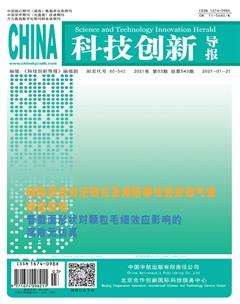
基于实验设计方法的高等教育教学效果研究
2021-07-28 05:32:15李莎莎付晓飞
科技创新导报
2021年3期
李莎莎 付晓飞


DOI:10.16660/j.cnki.1674-098x.2011-5640-1128
摘 要:本文采用实验设计的方法,对数据进行分类处理,分析影响本科课程教学效果的主要因素。考虑到可重复性,数据在同一高校连续两年进行收集。实验结果显示,学生主观上对影响教学效果因素的看法与采用实验设计方法得出的结果并不完全相同。该实验设计方法可以为本科高等教育过程中提升教学效果提供更广泛准确的理论依据。本次实验的局限性之一,实验选取的案例课程,为较受学生喜爱的课专业程之一,但针对不受大学生欢迎的课程进行实验研究,也是十分必要。该研究只针对本科生課程,研究生课程结果可能会有所不同。这将是未来研究的重点,可以对比出本科生与研究生教学方法的不同之处。本文得出的结果,可以帮助参与教学的老师了解教学过程中提高学生满意度的因素及其原因,并揭示了实验分析法可应用到高等教育等领域的评估中。
关键词:教学效果 高等教育 实验设计 满意度
中图分类号:G642 文献标识码:A 文章编号:1674-098X(2021)01(c)-0181-07
The Research of Teaching Effectiveness in the Higher Education Using Experimental Design
LI Shasha FU Xiaofei*
(Heilongjiang Institute Technology, Harbin, Heilongjiang Province, 150001 China)
Abstract: The purpose of the paper is to demonstrate the power of experimental design as a technique to understand and evaluate the most important factors which influence teaching effectiveness in the Higher Education.The data was collected over a 2 year period from a postgraduate course offered by the same tutor for repeatability reasons.The key findings of the experiment have clearly indicated that students perceptions of teaching effectiveness based on intuition and guesswork are not identical to the outcomes from a simple designed experiment. Moreover, the results of the experiment provided a greater stimulus for the wider applications of the technique to other processes across the case study higher education sector.One of the limitations of the study is that the experiment was conducted for a popular undergraduate course. It would be beneficial to understand the results of the experiment for less popular undergraduate courses in the university in order to drive improvements.Moreover, this research was conducted only for undergraduate courses and the results may vary for post-graduate courses. This would be an interesting study to understand the differences in the factors between undergraduate and postgraduate teaching effectiveness.The outcome of this experiment would help everyone who is involved in teaching to understand the factors and their influences to improve students satisfaction scores during the delivery of teaching.This paper shows how experimental design as a pure manufacturing technique can be extended to a higher education setting.
Key Words: Teaching effectiveness; Higher education; Experimental design; Satisfaction
实验设计方法已被证明是过程优化中最有效的技术之一,几十年来在提高制造过程的效率、能力及性能的研究中被广泛的应用。但这种技术在服务流程或非制造环境中的应用是非常有限的,目前只有少数文章对其展开过讨论。实验设计的方法可以使研究者和实验者以最少的试验或测试次数同时了解多个过程及变量之间的影响,可以直接代替传统的“尝试和错误”实验方法,传统方法依靠直觉、猜测和运气,不能保证其成功率。……
登录APP查看全文
猜你喜欢
工会博览(2023年3期)2023-04-06 15:52:34
小康(2021年7期)2021-03-15 05:29:03
活力(2019年19期)2020-01-06 07:34:38
杂文月刊(2019年15期)2019-09-26 00:53:54
中国市场(2016年36期)2016-10-19 04:33:08
中国教育信息化·基础教育(2016年9期)2016-10-18 03:04:16
大学教育(2016年9期)2016-10-09 07:53:44
大学教育(2016年9期)2016-10-09 07:43:27
散文百家(2014年11期)2014-08-21 07:16:52
中国中医药现代远程教育(2014年13期)2014-03-01 04:26:44