新疆兵团机采棉田杂草种类及群落结构调查
2021-08-06 21:24:02张强李红赵冰梅丁丽丽田英朱玉永王林
杂草学报
2021年1期
张强 李红 赵冰梅 丁丽丽 田英 朱玉永 王林
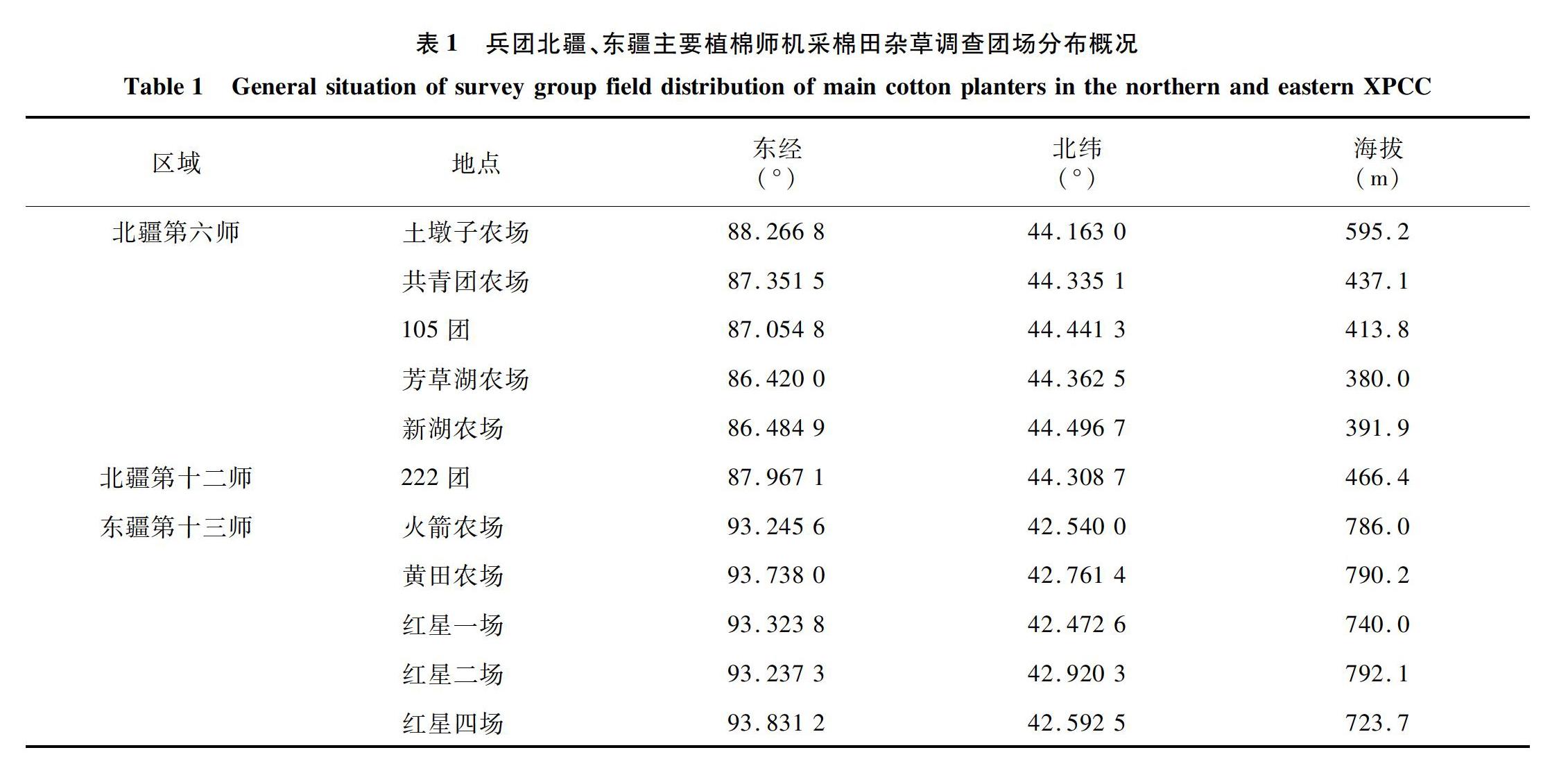
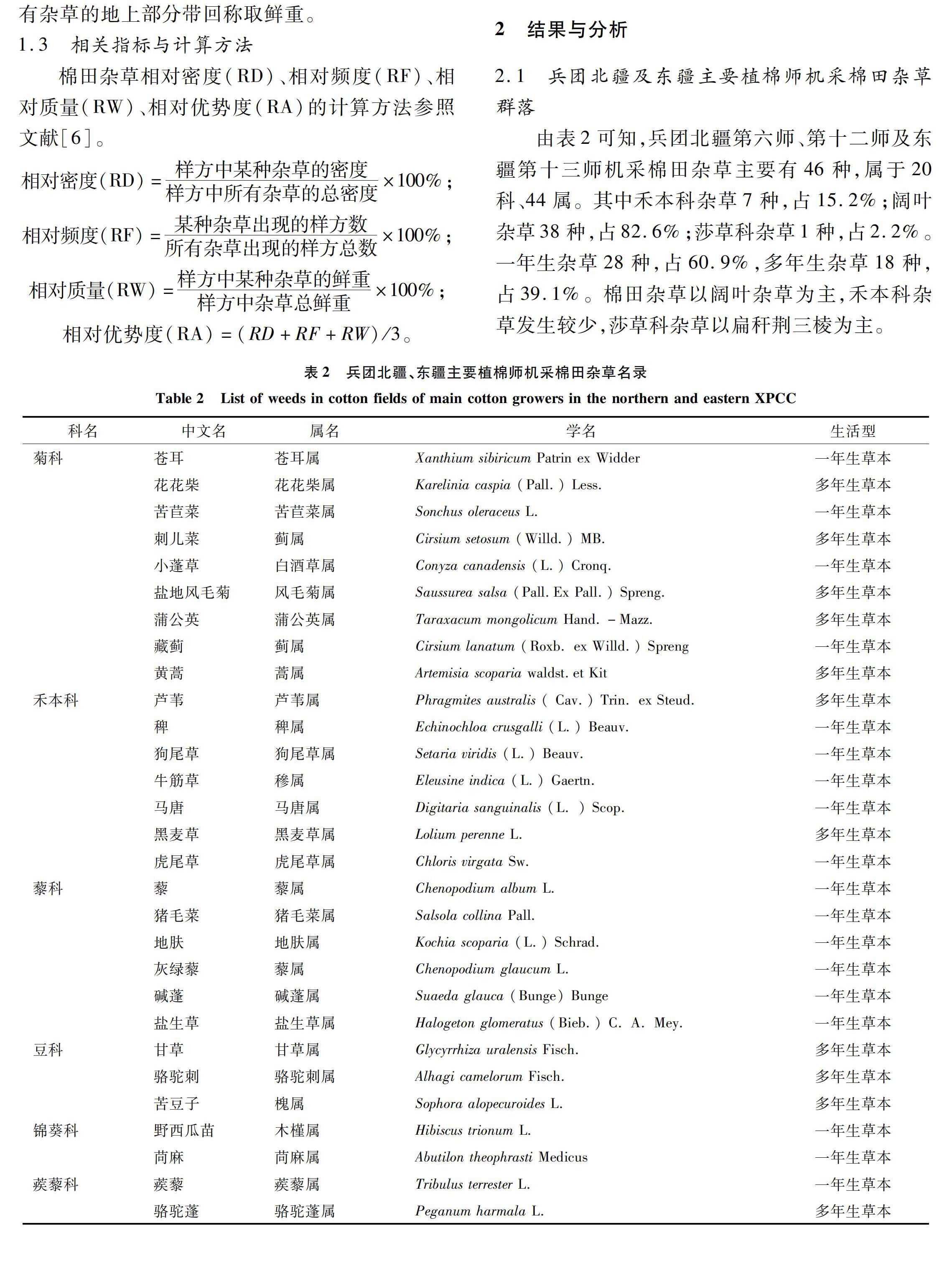
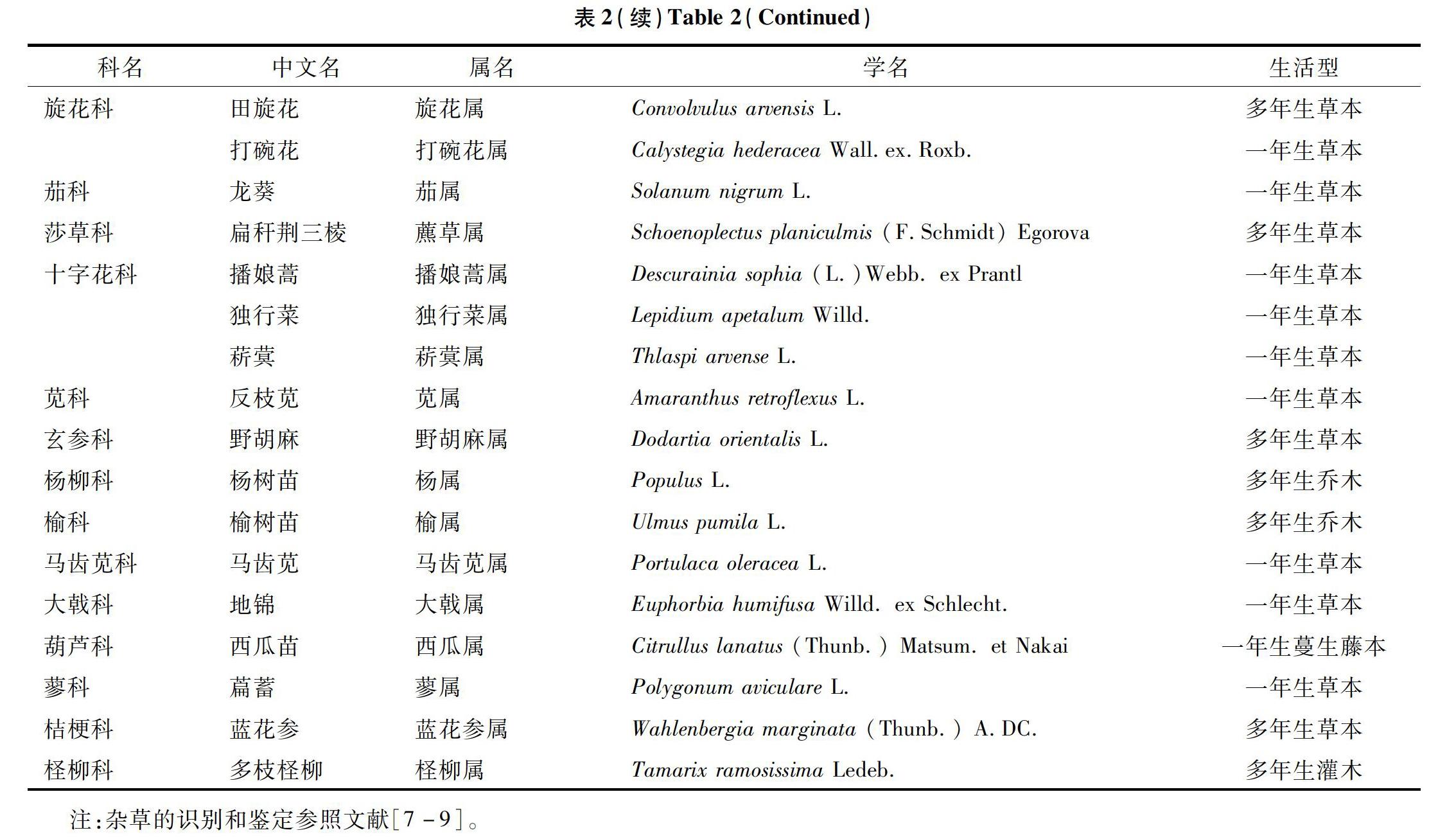
摘要:为明确新疆生产建设兵团机采棉田杂草发生情况,采用倒置“W”九点取样法,对兵团北疆第六师、第十二师及东疆第十三师共11个团场、99块样地、891个样方的杂草进行调查与分析。结果表明,北疆及东疆棉田杂草主要有20科44属46种,其中禾本科杂草7种,占15.2%,阔叶杂草38种,占82.6%,莎草科杂草1种,占2.2%;一年生杂草28种,占60.9%,多年生杂草18种,占39.1%。总体看,龙葵、藜、田旋花、反枝苋为机采棉田优势杂草,野西瓜苗为区域性优势杂草,芦苇、狗尾草、猪毛菜等12种杂草为常见杂草,苦豆子、扁秆荆三棱、苦苣菜等29种杂草为一般杂草。不同区域、不同生育时期机采棉田杂草发生种类及群落结构各不相同,研究结果为机采棉田杂草的综合治理提供了详实的基础数据和科学依据。
关键词:倒置“W”九点取样法;新疆兵团;机采棉田;杂草;调查
中图分类号:S451 文献标志码:A 文章编号:1003-935X(2021)01-0029-09
Abstract:The occurrence of weeds in the machine-harvested cotton fields in the 6th,12th and 13th divisions of Xinjiang Production and Construction Corps,was determined by surveying 99 plots and 891 quadrats of 11 farms using the inverted “W” nine-point sampling method. There were 46 weed species belonging to 44 genera of 20 families in northern and eastern Xinjiang,including 7 species of Gramineae (15.2%),38 species of broad-leaved weeds (826%),and one Cyperaceae (2.2%). Twenty eight were annual (60.9%) and 18 species were perennial weeds (39.1%). In general,Solanum nigrum L.,Chenopodium album L.,Convolvulus arvensis L. and Amaranthus retroflexus L. were the dominant weeds in machine-harvested cotton fields,and Hibiscus trionum L. was a regional dominant weed. Twelve species including Phragmites communis (Cav.) Trin. ex Steud.,Setaria viridis (L.) Beauv.,and Salsola collina Pall. were common weeds,and 29 species such as Sophora alopecuroides L.,Schoenoplectus planiculmis (F. Schmidt) Egorova,Sonchus oleraceus L. were general weeds. The species and community structure of weeds vary among regions and growth stages in machine-harvested cotton fields. These results are relevant for the comprehensive management of weeds in machine-harvested cotton fields.
Key words:inverted “W” nine-point sampling method;Xinjiang Production and Construction Corps;machine-harvested cotton field;weeds;investigation
新疆生产建设兵团(以下简称“兵团”)作为我国棉花的重要生产区与优势区,棉花的生产规模、机械化程度、单产水平等与其他植棉区相比具有明显的优势。其棉花产业的各个方面更是走在新疆棉区的前列,在我国棉花产业中具有举足轻重的地位[1]。近年兵团棉花种植面积一直维持在较高水平,占全国比重持续增加[2],其中机采棉田达82%[3]。棉田杂草作为近年兵团机采棉田影响棉花产量和品质提升的重要因素,年均发生面积超过130万hm2/次,造成产量损失12.5%~148%[4],尤其是龙葵、田旋花、扁秆荆三棱等恶性杂草在局部危害加重。……
登录APP查看全文
猜你喜欢
科教新报(2022年22期)2022-07-02 12:34:28
今日农业(2021年5期)2021-11-27 17:22:19
高中生学习·阅读与写作(2019年2期)2019-09-10 07:22:44
经营者(2016年12期)2016-10-21 09:49:14
现代经济信息(2016年19期)2016-10-20 16:28:51
现代经济信息(2016年19期)2016-10-20 14:58:36
现代园艺(2016年17期)2016-10-17 07:12:23
科学与财富(2016年28期)2016-10-14 23:22:54
现代农业(2015年5期)2015-02-28 18:40:49
杂草学报(2012年1期)2012-11-06 07:08:33