杉木无性系嫩枝扦插繁殖技术
2021-08-12 05:19:29陈晓明黄开勇李魁鹏陈琴蓝肖戴俊程林陈仕昌董利军莫绍锋
农业研究与应用
2021年2期
陈晓明 黄开勇 李魁鹏 陈琴 蓝肖 戴俊 程林 陈仕昌 董利军 莫绍锋
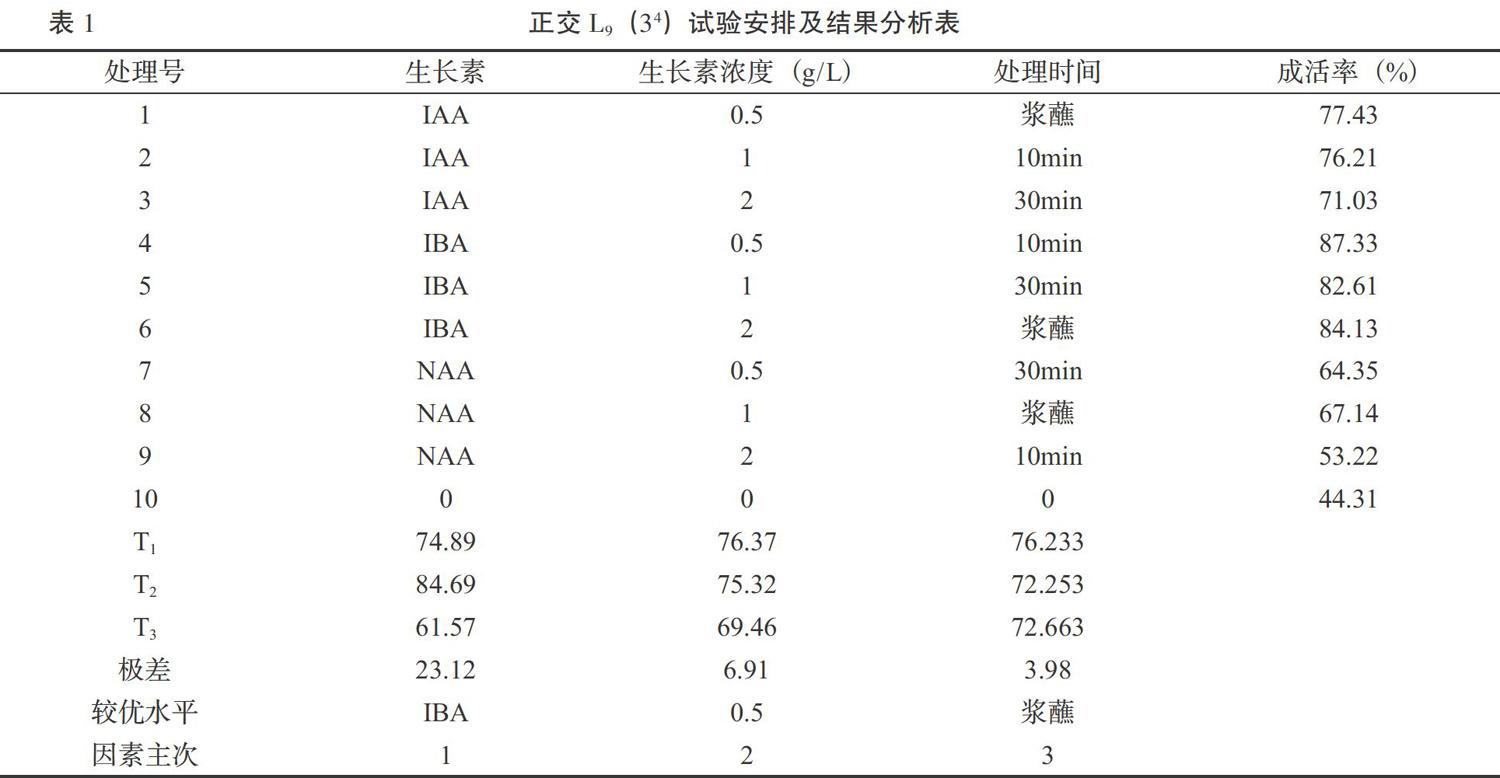

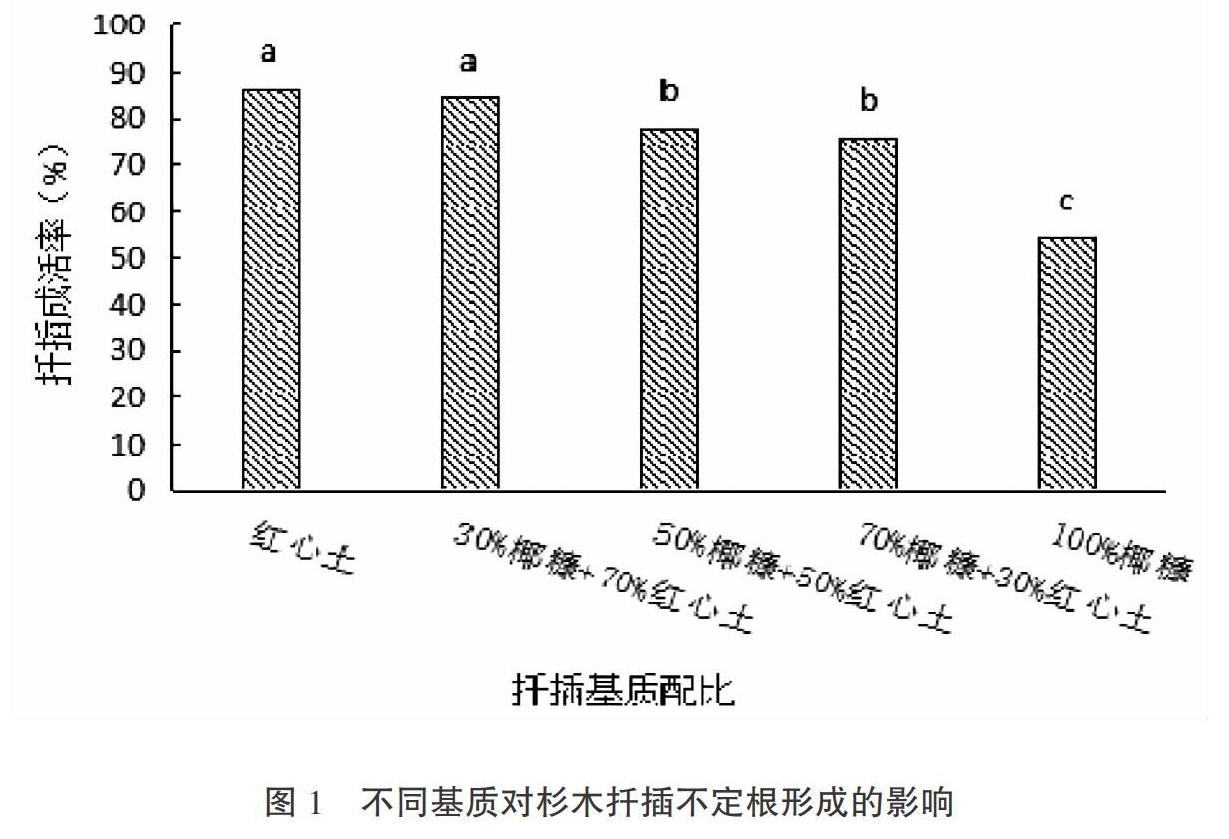
摘 要:杉木是我国主要的用材林树种。为加快杉木优良无性系的繁育进程,开展杉木无性系扦插繁殖技术研究,探索生长素、扦插基质和插穗长度对杉木不定根生长的影响。结果表明:生长素对不定根的诱导有明显的影响,最佳的生长素处理方法为0.5 g/L的IBA浆蘸后直插到基质中,扦插基质以30 %椰糠+70 %红心土为最优,扦插成活率84.31%。最适合杉木嫩枝扦插的插穗长度为15 cm左右,可在较短的时间诱导不定根的形成。扦插90天时,每个插穗平均能形成8.56条不定根,扦插成活率85.83%。
关键词:杉木 无性系 扦插 不定根
中图分类号: S791.27 文献标识码:A
The Cutting Propagation Technology of Cunninghamia lanceolata Clones
CHEN Xiaoming1, HUANG Kaiyong1, LI Kuipeng1, CHEN Qin1,
LAN Xiao1, DAI Jun1, CHENG Lin1, CHEN Shichang1,
DONG Lijun2,MO Shaofeng2
(1Guangxi Academy of Forestry / Key Laboratory of Central South Fast-growing Timber Cultivation, State Forestry Administration / Guangxi Key Laboratory of Superior Timber Trees Resource Cultivation, Nanning, Guangxi 530002, China; 2 Beijianghe Forest Farm of Rongshui County, Liuzhou, Guangxi 545300, China;)
Abstract: Cunninghamia lanceolata is the main timber forest species in China. In order to speed up the breeding process of fine clones of Cunninghamia lanceolata, we studied the cutting propagation technology of Cunninghamia lanceolata clones by investigating the effects of auxin, cutting substrate and cuttings length on the growth of Cunninghamia lanceolata adventitious root. The results showed that auxin had obvious inducing effect on adventitious roots. The best treatment was 0.5g/L IBA slurry + 30% coconut bran + 70% red mud, with which the survival rate of cuttings was 84.31%. The optimum length of cuttings was about 15 cm, by which the adventitious roots were induced in a short time. After 90 days of cutting, each cutting could form 8.56 adventitious roots on average, and the survival rate of cuttings was 81.83%.
Key words: Cunninghamia lanceolata; clones; cuttings ; adventitious roots
杉木[Cunninghina lanceolata(Lamb.)Hook]為杉科杉木属常绿针叶树种,与松树、桉树并称为我国南方三大用材树种,为我国主要的人工林树种之一,在广西、广东、福建、江西、浙江、湖南、四川等16多个省市自治区均有大面积的栽培[1]。 杉木广泛用于建筑、桥梁、电杆、门窗、家具、板料、木制用具等[2]。目前杉木人工造林种苗主要用种子进行实生苗繁殖,然而实生繁殖后代通常会在一定程度产生与其母本不一样的性状,即母株优良性状不一定能得到稳定的遗传[3],从而造成子代林分化严重,影响到林分质量和产量。无性繁殖如扦插繁殖则能在人为控制的条件下,在较短时间内培育大量保持亲本优良遗传性状的优质苗木,从而成为目前杉木优质苗木繁殖的另一重要途径[4]。我国从上世纪80年代开始研究杉木扦插繁殖技术,也取得一定的成果[5-7]。……
登录APP查看全文