火龙罐疗法治疗脾肾阳虚型慢性疲劳综合征的临床观察
2024-05-21 03:40:23郑衍庆徐凤宜叶焕卿
中国医学创新
2024年8期
郑衍庆 徐凤宜 叶焕卿
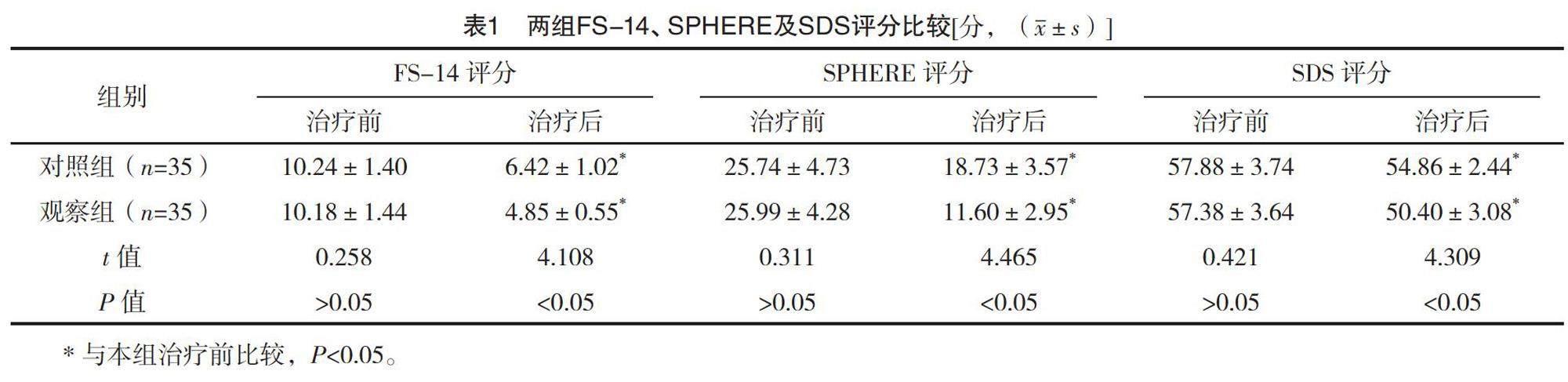
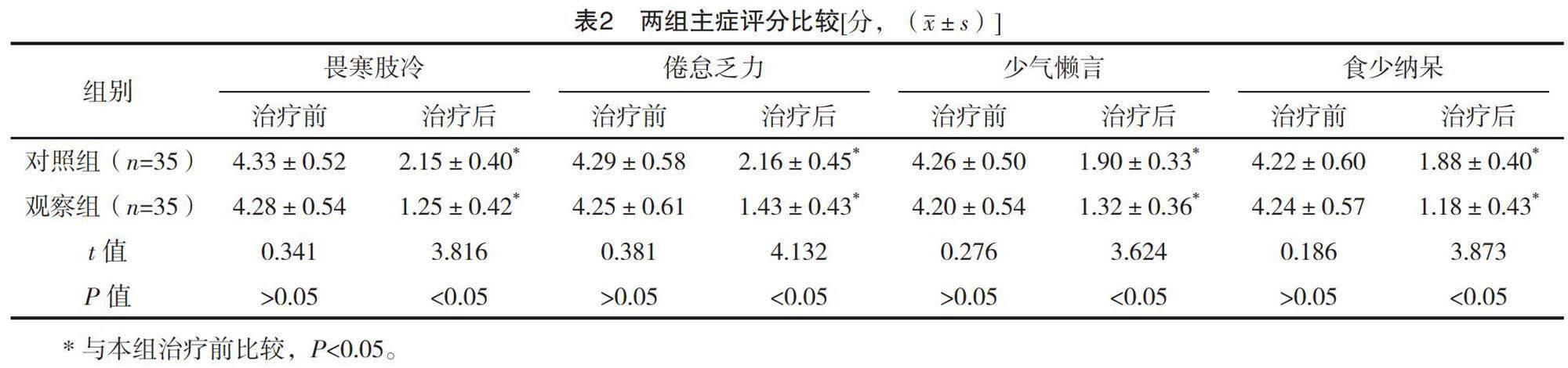
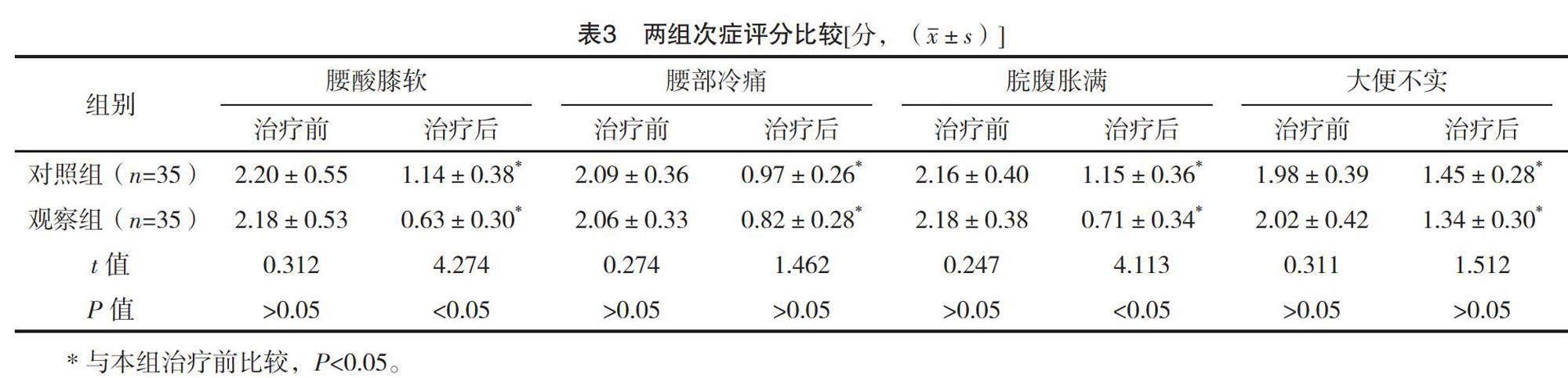
【摘要】 目的:觀察火龙罐疗法对脾肾阳虚型慢性疲劳综合征的临床疗效、心理状态及生活质量的影响。方法:将2022年6月—2023年1月在佛山市中医院三水医院治未病科门诊就诊的70例慢性疲劳综合征(脾肾阳虚型)患者按随机数字表法分为对照组和观察组,各35例。对照组单纯给予生活方式指导,观察组在对照组的基础上再给予火龙罐疗法治疗,每周2次,4周为1个疗程。治疗前后进行疲劳量表(FS-14)、躯体及心理健康报告(SPHERE)、抑郁自评量表(SDS)、中医症状分级量化表评判,治疗后进行临床效果评估。结果:治疗后,观察组FS-14、SPHERE及SDS评分分别为(4.85±0.55)、(11.60±2.95)、(50.40±3.08)分,均明显低于治疗前[(10.18±1.44)、(25.99±4.28)、(57.38±3.64)分]及对照组[(6.42±1.02)、(18.73±3.57)、(54.86±2.44)分](P<0.05)。治疗后,观察组畏寒肢冷、倦怠乏力、少气懒言、食少纳呆、腰酸膝软、脘腹胀满评分分别为(1.25±0.42)、(1.43±0.43)、(1.32±0.36)、(1.18±0.43)、(0.63±0.30)、(0.71±0.34)分,均明显低于治疗前[(4.28±0.54)、(4.25±0.61)、(4.20±0.54)、(4.24±0.57)、(2.18±0.53)、(2.18±0.38)分]及对照组[(2.15±0.40)、(2.16±0.45)、(1.90±0.33)、(1.88±0.40)、(1.14±0.38)、(1.15±0.36)分],差异均有统计学意义(P<0.05);治疗后,两组腰部冷痛、大便不实评分均明显低于治疗前,差异均有统计学意义(P<0.05),观察组上述评分与对照组相比,差异均无统计学意义(P>0.05)。观察组临床总有效率为97.14%(34/35),明显高于对照组的74.29%(26/35),差异有统计意义(P<0.05)。结论:火龙罐疗法治疗脾肾阳虚型慢性疲劳综合征能有效改善躯体疲劳、脑力疲劳,且同时能改善患者心理状态,提升患者生活质量,提高临床治疗效果。
【关键词】 慢性疲劳综合征 火龙罐疗法 脾肾阳虚形
Clinical Observation on the Treatment of Chronic Fatigue Syndrome with Spleen-kidney Yang Deficiency Type with Fire Dragon Pot Therapy/ZHENG Yanqing, XU Fengyi, YE Huanqing. //Medical Innovation of China, 2024, 21(08): -130
[Abstract] Objective: To observe the clinical effect, psychological state and quality of life fire dragon pot therapy on chronic fatigue syndrome with spleen-kidney Yang deficiency type. Method: From June 2022 to January 2023, 70 patients with chronic fatigue syndrome with spleen-kidney Yang deficiency type who were treated in the Outpatient Preventive Medicine Department of Sanshui Hospital of Foshan Hospital of Traditional Chinese Medicine were divided into the control group and the observation group according by random number table method, with 35 cases of each group. The control group was simply given lifestyle guidance, the observation group was treated with fire dragon pot therapy on the basis of the control group, twice a week, 4 weeks for 1 course. Before and after treatment were evaluated by fatigue scale-14 (FS-14), somatic and psychological health report (SPHERE), self-rating depression scale (SDS), and Chinese medicine symptom grading scale, and clinical efficacy was evaluated after treatment. Result: After treatment, the scores of FS-14, SPHERE and SDS of the observation group were (4.85±0.55), (11.60±2.95) and (50.40±3.08) points, which were significantly lower than [(10.18±1.44), (25.99±4.28), (57.38±3.64) points] of before treatment and [(6.42±1.02), (18.73±3.57), (54.86±2.44) points] in the control group (P<0.05). After treatment, the scores of cold fear of cold limbs, fatigue and weakness, less qi and lazy talk, less food and dormancy, sore waist and soft knees, abdominal distension full score of the observation group were (1.25±0.42), (1.43±0.43), (1.32±0.36), (1.18±0.43), (0.63±0.30), (0.71±0.34) points, which were significantly lower than [(4.28±0.54), (4.25±0.61), (4.20±0.54), (4.24±0.57), (2.18±0.53), (2.18±0.38) points] before treatment and [(2.15±0.40), (2.16±0.45), (1.90±0.33), (1.88±0.40), (1.14±0.38), (1.15±0.36) points] in the control group, the differences were statistically significant (P<0.05), after treatment, the scores of lumbar cold pain and fecal insufficiency in both groups were significantly lower than those before treatment, the differences were statistically significant (P<0.05), compared with the control group, the differences were not statistically significant (P>0.05). The total clinical effective rate of the observation group was 97.14% (34/35), which was significantly higher than 74.29% (26/35) of the control group (P<0.05). Conclusion: Fire dragon pot therapy on treatment of chronic fatigue syndrome with spleen-kidney Yang deficiency by can effectively improve physical and mental fatigue, as well as improve the psychological state of patients, enhance their quality of life, and enhance clinical treatment effectiveness.
[Key words] Chronic fatigue syndrome Fire dragon pot therapy Spleen-kidney Yang deficiecy type
First-author's address: Preventive Medicine Department, Sanshui Hospital of Foshan Hospital of Traditional Chinese Medicine, Foshan 528100, China
doi:10.3969/j.issn.1674-4985.2024.08.028
慢性疲劳综合征临床检查多无明显器质性改变,而临床症状往往表现出关节疼痛、肌肉酸痛等躯体症状及睡眠障碍、焦虑抑郁等精神心理症状,且会对认知功能造成不同程度的损害,导致50%以上的患者无法正常学习和工作[1-2]。目前,慢性疲劳综合征多采用药物和非药物治疗,其中药物治疗主要有抗病毒治疗、抗抑郁治疗或增强免疫力治疗等,疗效并不确切,而认知行为疗法和运动疗法等非药物疗法具有一定疗效。祖国医学认为,慢性疲劳综合征的发病是多因素作用的结果[3-4],中医辨证多为脾肾阳虚证型[5-6]。中医药治疗慢性疲劳综合征的方法主要有针刺、灸法、电针、推拿、中药等,其中灸法在改善患者临床症状、疲劳程度更为显著,推拿按摩具有良好的调节气血功效,而火龙罐疗法将灸法和推拿按摩有机结合,效果优于单一灸法或推拿[7-8]。……
登录APP查看全文