鼠神经生长因子对脑卒中患者肢体功能的影响
2017-04-27 12:14:41赵卫卫吴美娟杨美红吴章福
中国现代医生
2017年6期
赵卫卫 吴美娟 杨美红 吴章福 谈红霞

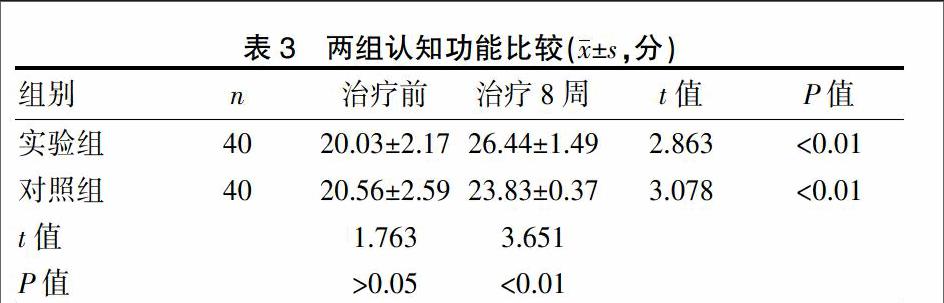
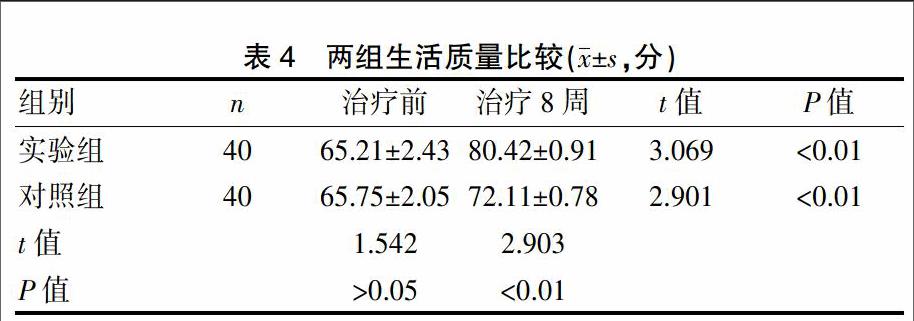
[摘要] 目的 探討鼠神经生长因子对脑卒中患者肢体功能的影响。 方法 选取2014年8月~2016年6月的脑卒中偏瘫患者80例,根据随机数字表法分为实验组与对照组,分别为40例。实验组在常规康复训练,包括运动疗法、作业治疗、理疗等基础上,辅予注射鼠神经生长因子治疗,疗程为20 d。对照组只使用包括运动疗法、作业治疗、理疗等康复训练,疗程为20 d。分别于治疗前与治疗后8周,采用简式Fugl-Meyer评定法(Fugl-Meyer assessmen,FMA)评估上下肢运动功能;应用简易精神状态检查量表(Minimum Mental State Examination,MMSE)进行认知功能的评定;以健康调查简表(the mos item short from health survey,SF-36)评定生活质量。 结果 两组患者的上下肢FMA评分较治疗前均有升高,但实验组较对照组明显,差异有统计学意义(P<0.01)。两组患者的MMSE评分较治疗前均有升高,但实验组较对照组明显,差异有统计学意义(P<0.01)。两组患者的SF-36评分较治疗前均有升高,但实验组较对照组明显,差异有统计学意义(P<0.01)。 结论 鼠神经生长因子可以有效改善脑卒中偏瘫患者的肢体功能,促进认知的改善,明显提高患者的生活质量,值得临床推荐及进一步研究。
[关键词] 鼠神经生长因子;脑卒中;肢体功能;认知;生活质量
[中图分类号] R743.33 [文献标识码] A [文章编号] 1673-9701(2017)06-0001-03
[Abstract] Objective To investigate the effects of mouse nerve growth factor on limb function in patients with stroke. Methods Eighty patients with hemiplegia between August 2014 and June 2016 were randomly divided into experimental group(n=40) and control group(n=40) according to the random number table. The experimental group was treated with nerve growth factor for 20 days on the basis of routine rehabilitation training, including exercise therapy, occupational therapy and physiotherapy, etc.. The control group was treated only with rehabilitation therapy for 20 days, including exercise therapy, occupational therapy, physical therapy. The following indexs were assessed before treatment and 8 weeks after treatment. The motor function of the upper and lower limbs were evaluated by Fugl-Meyer assessing method(FMA). The cognitive function was assessed by the Minimum Mental State Examination(MMSE). The quality of life was evaluated by the mos item short from health survey(SF-36). Results The FMA scores of the upper and lower limbs in both groups were higher than those before treatment. However, the FMA scores of the experimental group were significantly higher than those of the control group, the difference was statistically significant(P<0.01). The MMSE scores of the two groups were higher than those before treatment. However, the MMSE scores of the experimental group were significantly higher than those of the control group, the difference was statistically significant(P<0.01). The SF-36 scores of the two groups were higher than those before treatment. However, the SF-36 scores of the experimental group were significantly higher than those of the control group, the difference was statistically significant(P<0.01). Conclusion Mouse nerve growth factor can improve effectively the limb function of patients with stroke hemiplegia, promote cognitive improvement and improve significantly the quality of life of patients, and it is worthy of clinical recommendation and further study.
[Key words] Mouse nerve growth factor; Stroke; Limb function; Cognition; Quality of life
脑卒中是危害中老年人生命健康的主要疾病之一,致残率和致死率高,是我国位于第三位的死亡原因,紧随心脏病和癌症之后,且大部分患者会留下明显的后遗症,如严重的认知功能障碍、运动功能障碍,严重影响患者的生活与生命质量[1,2],故有效治疗显得尤其重要。鼠神经生长因子具有营养神经与促进突起生长、修复神经元等作用,但由于大部分学者认为其分子量大,难以通过血脑屏障,多应用于周围神经疾病的治疗中[3]。虽然有关于鼠神经生长因子用于脑部疾病的治疗,但大多数具有样本含量少、观察指标少等缺陷,还不能为临床治疗提供较准确的依据。……
登录APP查看全文
猜你喜欢
今日健康(2016年12期)2016-11-17 13:43:42
今日健康(2016年12期)2016-11-17 13:31:00
中国现代医生(2016年23期)2016-11-15 03:14:57
人间(2016年26期)2016-11-03 16:01:13
青年文学家(2016年27期)2016-11-02 17:48:29
现代经济信息(2016年19期)2016-10-20 16:04:46
中国实用医药(2016年24期)2016-10-17 06:05:29
中国实用医药(2016年24期)2016-10-17 05:56:32
中国实用医药(2016年24期)2016-10-17 05:47:48
中国实用医药(2016年24期)2016-10-17 05:30:14