尿液检验中尿沉渣与尿常规项目的比较分析
2017-07-13 16:28:55陈秋鸿
中外医疗
2017年15期
陈秋鸿
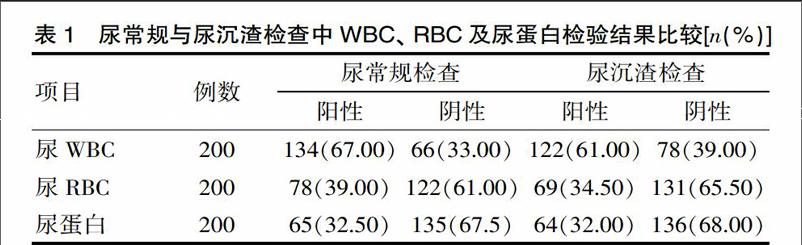
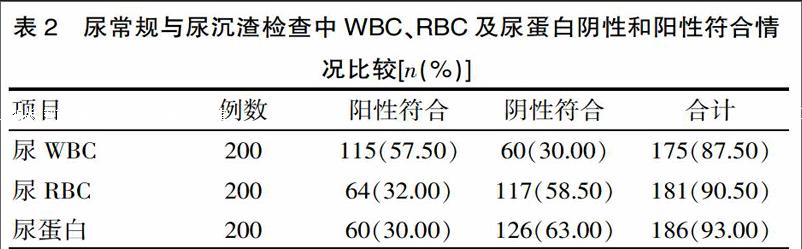
[摘要] 目的 分析、探讨在尿液检验中,尿沉渣和尿常规检验结果的情况。方法 该研究采用回顾性研究方法,回顾2016年1月—2017年1月送检至该社区卫生服务中心检验科的患者尿液样本检查结果,方便选择其中同时进行的尿沉渣、尿常规检查的患者200例,观察、比较其尿沉渣、尿常规检查中的尿白细胞(white blood cell,WBC)、尿红细胞(Red blood cell,RBC)、尿蛋白阳性率与阴性率,并对所得结果进行统计比较。 结果 纳入患者的尿常规检查与尿沉渣检查对比结果显示,尿WBC的阳性率分别为134例(67.00%)vs122例(61.00%)、尿RBC的陽性率分别为78例(39.00%)vs 69例(34.50%)、尿蛋白的阳性率分别为65例(32.50%)vs64例(32.00%),比较差异无无统计学意义(P>0.05)。综合统计尿常规、尿沉淀检查结果表后,尿WBC、尿RBC及尿蛋白的符合例数及符合率分别为175例(87.50%)、181例(90.50%)、186例(93.00%),符合率均较高,差异无统计学意义(P>0.05)。 结论 尿常规化验尿沉渣化验 都是尿液化验的重要附属化验手段,二者不能相互替代,各具优缺点,将二者有效结合起来,综合二者的化验结果能有效提高检验的精度,降低漏检率。
[关键词] 尿沉渣;尿常规;尿液检验
[中图分类号] R44 [文献标识码] A [文章编号] 1674-0742(2017)05(c)-0040-03
[Abstract] Objective To analyze and discuss between the Urine sediment and routine urine test items in the urine test. Methods The urine samples examination results of patients submitted to our community health service center from January 2016 to January 2017 were reviewed, and 200 cases of patients with urine sediment and routine urine test examination were selected and the white blood cell, red blood cell, positive rate and negative rate of urine protein in the urine sediment and routine urine test were compared and the results were compared. Results The comparison showed that the positive rate of urine WBC [ 134 cases (67.00%) vs 122 cases (61.00%)], and the positive rate of urine RBC [ 78 cases (39.00%) vs 69 cases (34.50%)], and the positive rate of urine protein [65 cases (32.50%) vs 64 cases (32.00%)], and the differences were not statistically significant(P>0.05), and the coincidence case and coincidence rate of urine WBC and urine RBC were respectively 175 cases (87.50%), 181 cases (90.50%) and 186 cases (93.00%), and the coincidence rate was higher, and the difference was not statistically significant(P>0.05). Conclusion Urine sediment test and routine urine test are the important adjunctive test means of urine, and the two cant replace each other, and both of them have advantages and disadvantages, and the comprehensive test results can effectively improve the precision of test and reduce the miss rate.
[Key words] Urine sediment; Routine urine test; Urine test
辅助检查是得到准确临床诊断的重要辅助手段。尿液作为人体相对容易采集的标本,对临床病情的辅助诊断具有重要意义,能通过检查尿酶、尿PH、尿白细胞(white blood cell,WBC)、尿红细胞(Red blood cell,RBC)、尿蛋白、尿糖、尿酮体等,辅助判断肾小球、肾小管功能、血液病、糖尿病、 肝胆疾病等全身性病变或身体脏器引起尿液改变等疾患[1]。尿常规与尿沉渣检查临床常用的尿液检查手段,二者各具检测优势及缺点[2]。尿液……
登录APP查看全文