人性化护理对降低医院手术室感染发生率及预防患者术后感染的临床意义与影响分析
2017-07-17 01:41:02韦翠花
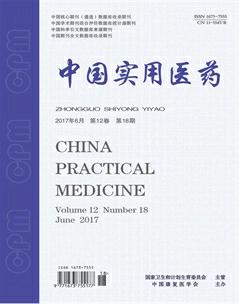
中国实用医药
2017年18期
关键词:临床意义
韦翠花

【摘要】 目的 探讨人性化护理对降低医院手术室感染发生率及预防患者术后感染的临床意义与影响。方法 912例手术室行外科手术的患者, 随机分为对照组及观察组, 各456例。对照组采用常规手术室护理, 观察组采用人性化护理。比较两组患者手术室感染发生率、术后恢复时间、住院时间、物体表面菌落数、手表面菌落数、手术室空气菌落数。结果 观察组手术室感染发生率4.61%低于对照组9.87%, 术后恢复时间(6.8±2.1)d及住院时间(11.6±2.3)d短于对照组[(11.2±2.5)、(16.8±2.5)d], 差异均有统计学意义(P<0.05)。观察组物体表面菌落数(2.00±0.02)cfu/m3、手表面菌落数(1.01±0.10)cfu/m3、手术室空气菌落数(82.50±29.14)cfu/m3均低于对照组[(4.11±0.07)、(8.13±1.04)、(273.50±87.40)cfu/m3],
差异均有统计学意义(P<0.05)。结论 人性化护理能有效降低医院手术室感染发生率, 提高手术室无菌程度, 减少患者术后恢复时间, 具有积极的临床意义。
【关键词】 医院手术室感染;人性化护理;临床意义
DOI:10.14163/j.cnki.11-5547/r.2017.18.088
【Abstract】 Objective To explore the clinical significance and impact of humanistic nursing to reduce the incidence of hospital operating room infection and prevent postoperative infection. Methods A total of 912 patients undergoing surgery in operation room were randomly divided into control group and observation group, with 456 cases in each group. The control group received conventional operating room nursing, and the observation group received humanistic nursing. Comparison were made on incidence of operating room infection, postoperative recovery time, hospitalization time, number of surface colonies, number of hand surface colony and number of airborne colonies in operating room in two groups. Results The observation group had lower incidence of operating room infection as 4.61% than 9.87% in the control group, and shorter postoperative recovery time as (6.8±2.1) d and hospitalization time as (11.6±2.3) d than the control group [(11.2±2.5) and (16.8±2.5) d]. Their difference had statistical significance (P<0.05). The observation group had lower number of surface colonies as (2.00±0.02) cfu/m3, number of hand surface colony as (1.01±0.10) cfu/m3 and number of airborne colonies in operating room as (82.50±29.14) cfu/m3 than the control group [(4.11±0.07), (8.13±1.04) and (273.50±87.40) cfu/m3],
and their difference had statistical significance (P<0.05). Conclusion Humanistic nursing can effectively reduce incidence of hospital operating room infection, improve the degree of sterility in operating room, and reduce the recovery time of patients. So it has a positive clinical significance.
【Key words】 Hospital operating room infection; Humanistic nursing; Clinical significance
手術室感染是医源性感染发生的高发科室, 术后感染的发生不仅增加了患者的身心痛苦, 严重者甚至对生命造成威胁。手术室感染的发生与手术室的工作质量关系密切, 因此严格手术室管理规章制度, 加强对手术室人员管理, 控制手术室感染率, 对降低患者的感染风险有重要作用。而这也对手术室护理人员提出了更高的要求。手术室护理人员不仅要具备过硬的职业技能素质, 还需具备综合的服务护理理念, 展开优质护理服务[1]。本研究分析人性化护理对降低医院手术室感染发生率及预防患者术后感染的临床意义, 现具体汇报如下。
1 资料与方法
1. 1 一般资料 选取2016年2月~2017年2月在本院手术室行外科手术的912例患者为研究对象。……
登录APP查看全文
猜你喜欢
中国实用医药(2016年27期)2016-11-30 12:17:33
中国实用医药(2016年27期)2016-11-30 10:43:01
东方教育(2016年16期)2016-11-25 03:45:39
中国实用医药(2016年24期)2016-10-17 06:21:50
中国实用医药(2016年21期)2016-08-19 12:53:15
中国实用医药(2016年20期)2016-08-11 22:56:51
中国实用医药(2016年20期)2016-08-11 21:24:30
中国实用医药(2016年18期)2016-08-03 19:07:15
中国实用医药(2016年9期)2016-05-17 14:19:17
中国实用医药(2016年6期)2016-03-17 19:48:40