应用CHA2DS2—VASc评分法和纤维蛋白原预测非瓣膜性房颤合并短暂性脑缺血发作后短期脑卒中风险
2018-12-12 10:46:56徐晓今
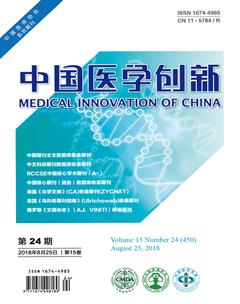
中国医学创新
2018年24期
关键词:脑卒中
徐晓今
【摘要】 目的:采用CHA2DS2-VASc评分法结合纤维蛋白原(Fib)预测非瓣膜性房颤(AF)合并短暂性脑缺血发作(TIA)患者短期内发生脑卒中的风险,为早期干预TIA、降低脑卒中发生率提供依据。方法:选取2013年1月-2016年1月本院神经内科住院治疗的非瓣膜性AF合并TIA患者400例,均进行CHA2DS2-VASc评分和Fib检测,观察14 d内脑卒中发生率,分析CHA2DS2-VASc评分、CHA2DS2-VASc+Fib评分与患者发生脑卒中的相关性,以及CHA2DS2-VASc评分、CHA2DS2-VASc+Fib评分的临床价值。结果:本研究400例患者中有33例在14 d内继发脑卒中;CHA2DS2-VASc评分中低危组、中危组、高危组脑卒中发生率分别为5.80%、50.00%、66.67%,比较差异有统计学意义(P<0.05);CHA2DS2-VASc+Fib评分中低危组、中危组、高危组脑卒中发生率分别为6.22%、63.64%、66.67%,比较差异有统计学意义(P<0.05);CHA2DS2-VASc+Fib评分与CHA2DS2-VASc评分的ROC曲线下面积(95%CI)分别为0.68(0.56,0.79)和0.67(0.56,0.78)。结论:CHA2DS2-VASc+Fib评分法比CHA2DS2-VASc评分法能更准确地预测非瓣膜性AF合并TIA患者短期脑卒中风险。
【关键词】 非瓣膜性房颤; 短暂性脑缺血发作; 脑卒中; CHA2DS2-VASc+Fib评分法; 预测
【Abstract】 Objective:To analyze the predictive value of CHA2DS2-VASc combined with fibrinogen(Fib) for stroke risk in patients with non-valvular atrial fibrillation(AF) and transient ischemic attack (TIA),to provide a basis for early intervention in TIA and to reduce the incidence of stroke.Method:A total of 400 patients with non-valvular AF with TIA hospitalized in neurology department of our hospital from January 2013 to January 2016 were selected,CHA2DS2-VASc scores and Fib tests were performed in all patients.The incidence of cerebral apoplexy in 14 d was observed,the correlation between CHA2DS2-VASc score,CHA2DS2-VASc+Fib score and stroke in patients,and the clinical value of CHA2DS2-VASc score and CHA2DS2-VASc+Fib score were analyzed.Result:Of the 400 patients,33 patients had secondary stroke within 14 d.The incidence of stroke in CHA2DS2-VASc score were 5.80%,50.00% and 66.67% in low risk group,middle risk group and high risk group,the difference was statistically significant(P<0.05).The incidence of stroke in CHA2DS2-VASc+Fib score were 6.22%,63.64% and 66.67% in low risk group,middle risk group and high risk group,the difference was statistically significant(P<0.05).The area under the ROC curve(95%CI) of CHA2DS2-VASc+Fib score and CHA2DS2-VASc score were 0.68(0.56,0.79) and 0.67(0.56,0.78) respectively.Conclusion:CHA2DS2-VASc+Fib score is more accurate than CHA2DS2-VASc score in predicting short-term stroke risk in patients with non-valvular AF combined with TIA.
【Key words】 Non-valvular atrial fibrillation; Transient ischemic attack; Cerebral apoplexy; CHA2DS2-VASc+Fib scoring; Prediction
First-authors address:Hospital 463 of PLA,Shenyang 110000,China
doi:10.3969/j.issn.1674-4985.2018.24.003
隨着人类社会的发展,无论是发达国家还是发展中国家都面临着心脑血管疾病的威胁,近年来我国流行病学资料表明,脑血管疾病在我国人口死因顺序中第1、2位,每年新发卒中患者约200万人,死亡(150~200)万人[1-2]。心房纤颤(atrial fibrillation,AF)是缺血性卒中的危险因素之一,我国普通人群AF总患病率0.65%,由此可估算我国AF患者至少超过400万[1],目前,我国对AF合并短暂性脑缺血发作(transient ischemic attack,TIA)诊断率偏低,而其继发的脑卒中风险较高。有研究显示AF合并TIA发生后1年内脑卒中发生率为32.4%,14 d内继发脑卒中的风险为8%[3]。一项瑞典注册登记研究发现,约有20%的TIA患者合并房颤,这些比例随着年龄增加而上升,85岁及以上的TIA患者这一比例高达32.9%[4]。AF是TIA进展为脑卒中发病的高危因素,早期对AF合并TIA患者进行脑卒中风险评估显得十分重要。目前,CHADS2评分系统是常用的非瓣膜性AF危险评估工……
登录APP查看全文
猜你喜欢
中国实用医药(2016年27期)2016-11-30 11:36:50
中国医药导报(2016年25期)2016-11-30 07:48:35
中外医学研究(2016年24期)2016-11-30 02:30:04
今日健康(2016年12期)2016-11-17 13:04:21
中国实用医药(2016年24期)2016-10-17 06:05:29
中国实用医药(2016年24期)2016-10-17 05:56:32
中国实用医药(2016年24期)2016-10-17 05:47:48
中国实用医药(2016年24期)2016-10-17 05:30:14
养生保健指南(2016年4期)2016-03-22 11:53:54