基于闭环理论的高职图书馆智能化发展管理机制研究
2021-01-03 11:55:08袁西鹏邓国家郭新武
新世纪图书馆
2021年11期
关键词:智能化
袁西鹏 邓国家 郭新武
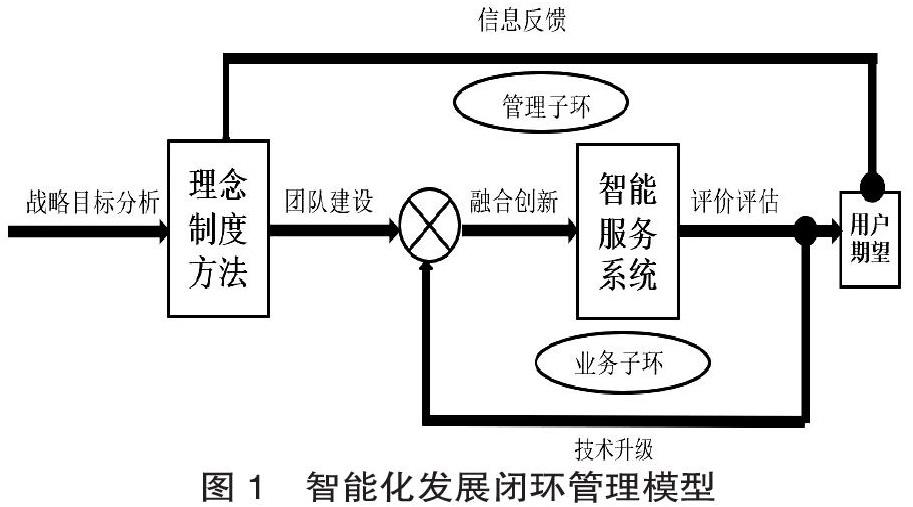

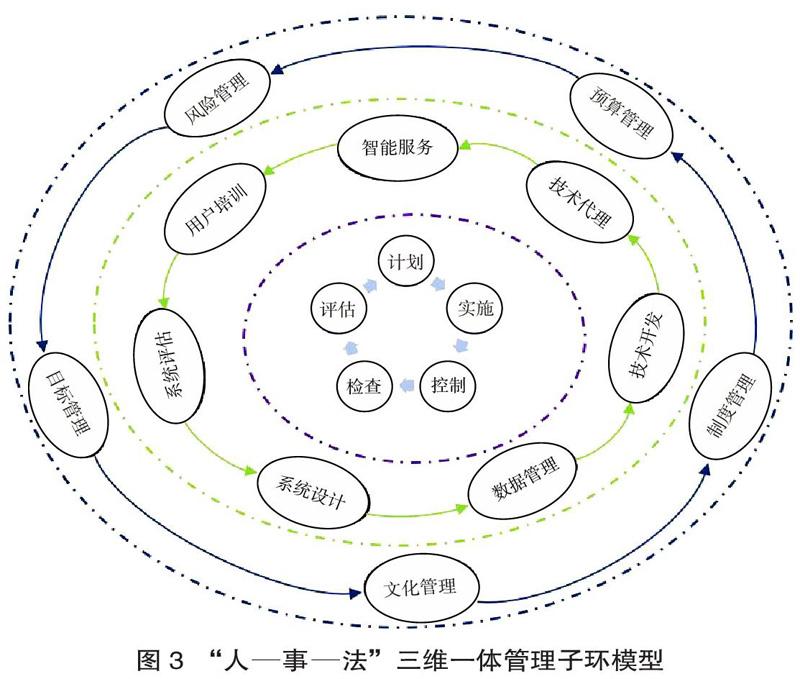
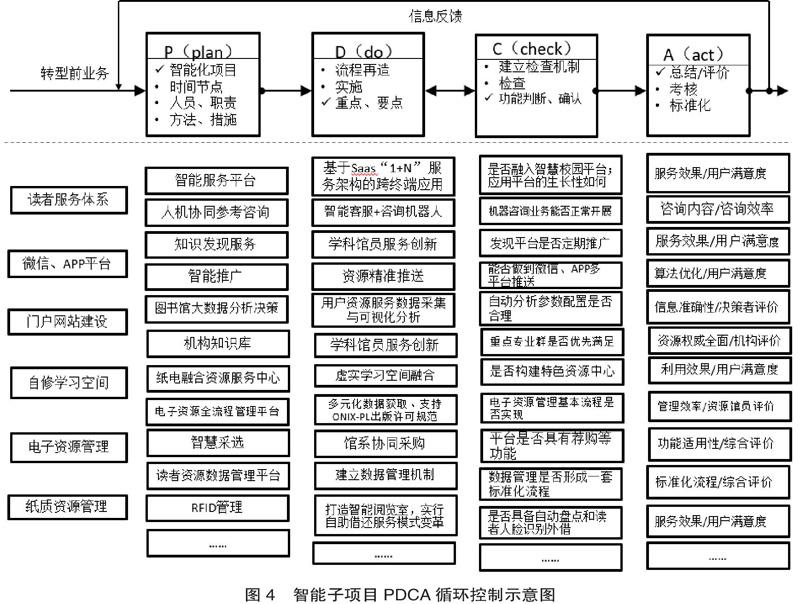
摘 要 高职院校图书馆智能化转型不仅是人工智能技术发展到一定阶段的必然产物,也是职教改革背景下图书馆转型发展的内在要求。论文以高职图书馆人工智能研究现状为切入点,从理论研究、智能应用、技术创新三个方面分析现阶段高职图书馆智能化发展的特征与内涵,构建了基于闭环理论的高职图书馆智能化发展管理模型,以期为高职图书馆智能化发展非技术建设路径提供参考借鉴。
关键词 高职图书馆 智能化 闭环理论
分类号 G251
DOI 10.16810/j.cnki.1672-514X.2021.11.001
Abstract The intelligent transformation of libraries in higher vocational colleges is not only the inevitable outcome of the development of artificial intelligence technology, but also the internal requirement of the transformation development of libraries under the background of vocational education reform. Based on artificial intelligence research status quo of higher vocational library as the breakthrough point, from the three aspects of theoretical research, intelligent application and technology innovation, analysis of the present stage in the development of higher vocational college library intelligent characteristic and the connotation, to build the higher vocational college library based on the theory of the closed-loop intelligent transformation development model, in order to provide reference for the intellectualized development of higher vocational college library non-technical path construction reference.
Keywords Vocational library. Intelligent. Closed- loop theory.
0 引言
随着大数据、运算力和深度学习算法取得长足进步,人工智能与各学科、各行业、各领域之间的深度融合日趋明显,成为驱动经济数字化、社会网络化和生活智能化的核心驱动力[1]。作为信息技术理论与应用研究的前沿阵地,国内外图书馆早在20世纪80年代就开始关注人工智能系统[2-3],图书馆学界和业界也从理论探讨和实际应用层面广泛分析了人工智能给图书馆带来的深远影响,为不同类型、不同层次图书馆的转型与发展不断注入新知识、新理论、新方法。近年来,占据全国高校图书馆半壁江山的高职图书馆在“以评促建”的政策导向下,不断转变纸质藏书建设和传统图书馆服务模式,但其空间服务、知识信息服务、专业人才队伍建设、信息化建设等建设不充分、不平衡问题与日益深化的高职教育改革之间的矛盾日益尖锐,高职图书馆发展面临着巨大困境。……
登录APP查看全文
猜你喜欢
军事文摘(2022年19期)2022-10-18 02:41:14
建材发展导向(2021年13期)2021-07-28 07:14:34
建材发展导向(2021年10期)2021-07-16 07:13:24
印刷工业(2020年4期)2020-10-27 02:46:02
印刷工业(2020年4期)2020-10-27 02:45:52
中国储运(2019年5期)2019-05-15 09:37:40
能源(2018年10期)2018-12-08 08:02:52
汽车观察(2018年10期)2018-11-06 07:05:08
中国交通信息化(2017年4期)2017-06-06 07:21:52
中国公路(2017年12期)2017-02-06 03:07:25