长江上游港口协同发展测度及影响因素分析
2021-01-06 22:45:04邓萍柯桥
上海海事大学学报
2021年4期
邓萍 柯桥
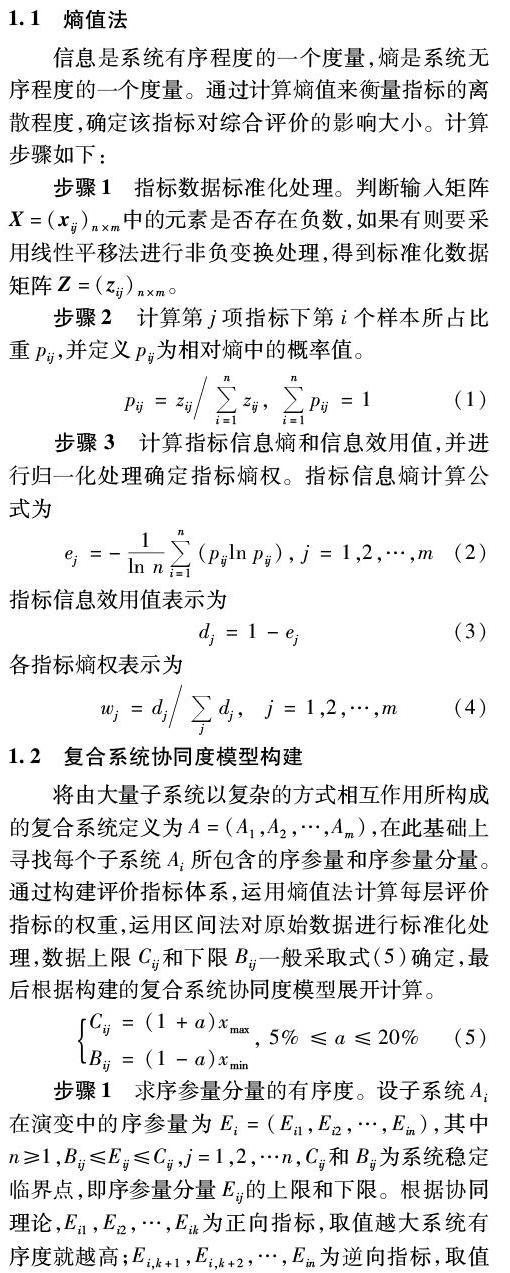
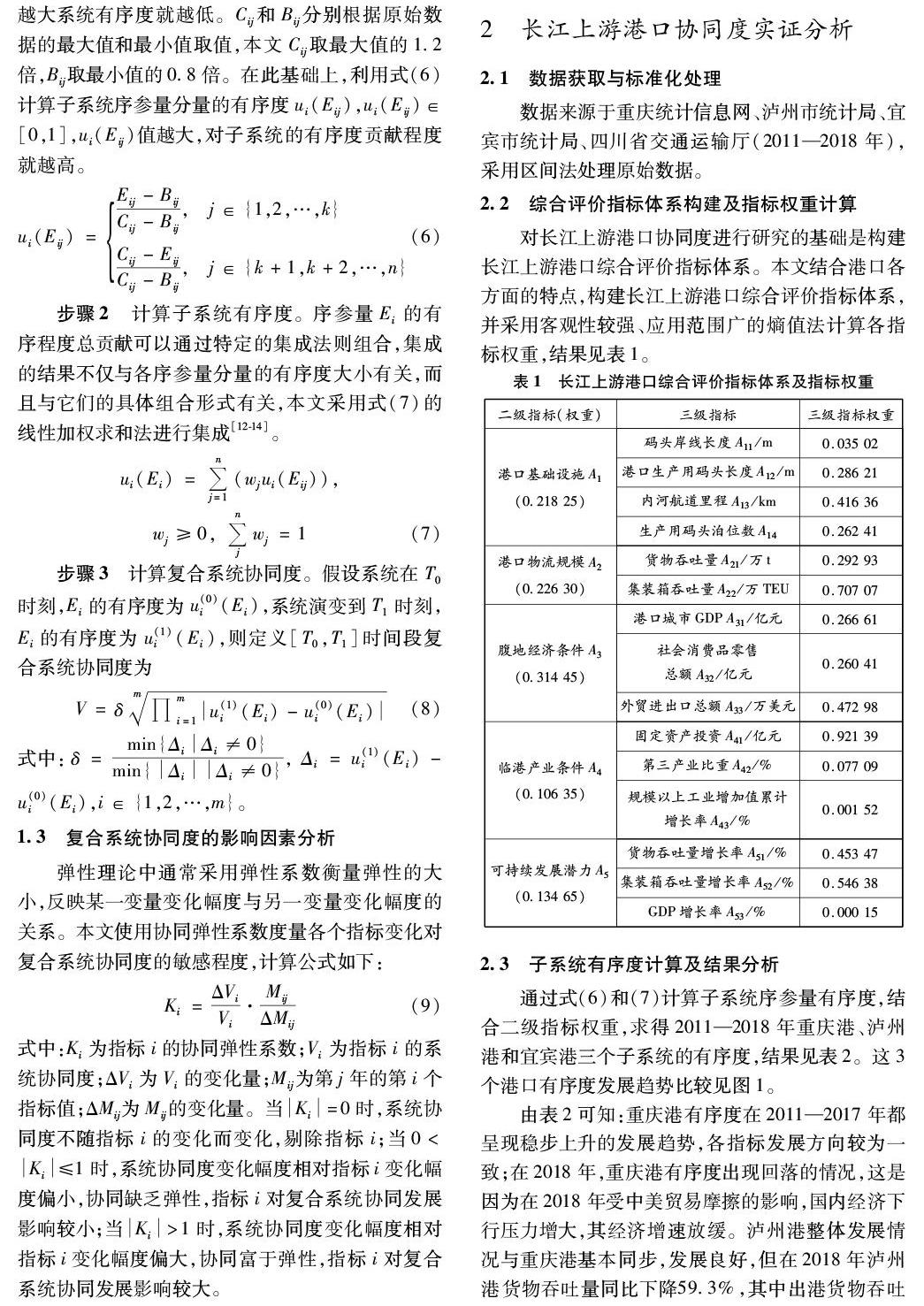
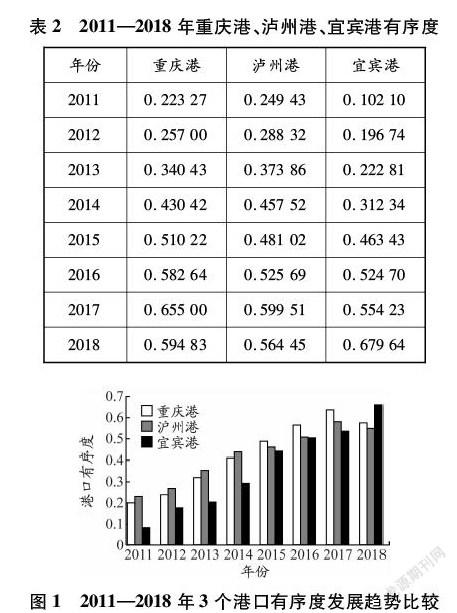
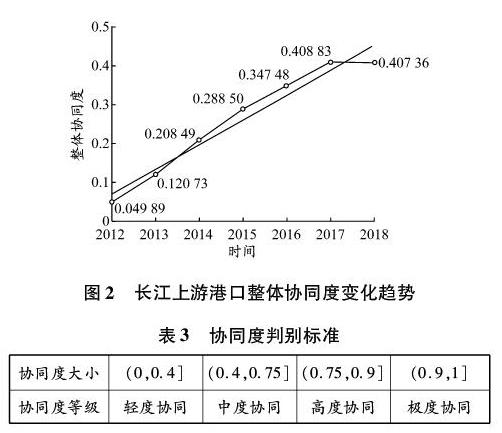
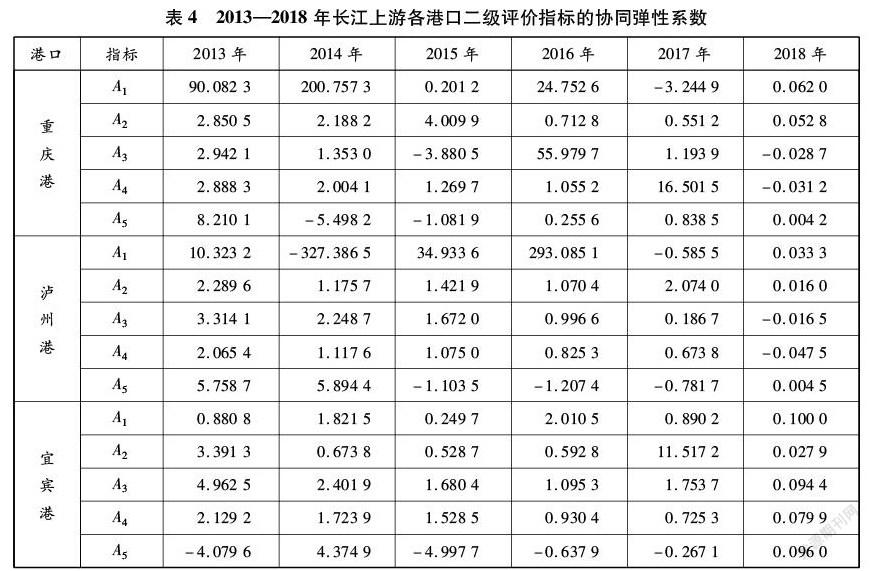
摘要:为有效促进长江沿线港口资源深度整合与高效发展,对长江上游港口协同发展程度进行测度和影响因素分析,构建长江上游港口复合系统协同度模型和弹性系数模型。结果表明:2011—2018年长江上游各港口有序度都近似线性增长,整体协同度由轻度协同提升至中度协同;重庆港的腹地经济条件和临港产业条件、泸州港的物流规模和宜宾港的腹地经济条件是促进长江上游港口协同发展的最主要因素;宜宾港的基础设施和物流规模是制约发展的最主要因素。研究成果可为相关决策者对区域港口整体统筹规划、深度合作提供参考。
关键词: 长江上游; 港口协同发展; 弹性系数
中图分类号: F552.7 文献标志码: A
Abstract: In order to effectively promote the deep integration of resource and efficient development of ports along the Yangtze River, the coordinated development degree of ports in the upper Yangtze River is measured and the influencing factors are analyzed, and the coordination model and the elastic coefficient model of the composite system of ports in the upper Yangtze River are constructed.The results show that: the order degree of each port in the upper Yangtze River increases approximately linearly from 2011 to 2018, and the overall coordination increases from mild coordination to moderate coordination;the hinterland economic condition and port industry condition of Chongqing Port, the logistics scale of Luzhou Port and the hinterland economic condition of Yibin Port are the most important factors to promote the coordinated development of ports in the upper Yangtze River; the infrastructure and logistics scale of Yibin Port are the most important factors restricting the development.The research results can provide reference for relevant decision makers on the overall planning and deep cooperation of regional ports.
Key words: upper Yangtze River; port coordinated development; elastic coefficient
0 引 言
2020年5月,由中共中央、国务院印发的《关于新时代推进西部大开发形成新格局的指导意见》提出拓展区际互动合作,积极对接长江经济带发展重大战略,支持川渝毗邻地区建立健全协同开放发展机制,加快推进重点区域一体化进程。《长江经济带发展规划纲要》强调要统筹长江沿线港口规划布局,严格控制港口码头无序建设,促进各港口间资源共享,形成长江沿岸各港口城市协作互动的格局。然而,长江上游的重庆港、泸州港和宜宾港并未建立成熟的港口合作机制,抢占发展资源、缺乏协作精神、破坏产业链条的连接和延伸的问题一直存在。长江上游干线港口可看作由重庆港、泸州港、宜宾港三个主要港口子系统构成的复合系统,促进各港口协同有序发展是目前亟待解决的问题。……
登录APP查看全文