正念认知疗法对脑卒中后躯体化症状患者的干预效果分析
2021-03-25 22:29:12杨雅杰袁水莲赖燕
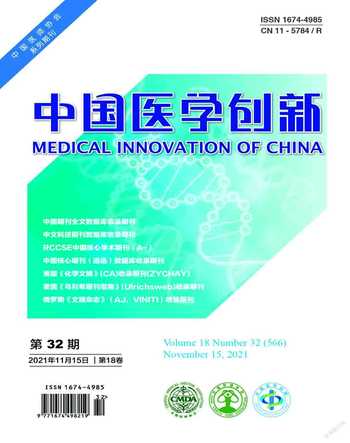
中国医学创新
2021年32期
关键词:脑卒中
杨雅杰 袁水莲 赖燕


【摘要】 目的:探討正念认知疗法对脑卒中后躯体化症状患者的干预效果。方法:选择2019年3月-
2020年9月本院收治的脑卒中后躯体化症状患者120例,按照随机数字表法分为对照组与试验组,每组60例。两组均接受脑卒中常规药物治疗,在此基础上,对照组接受常规康复训练,试验组在对照组基础上接受正念认知疗法。比较两组干预前后依从性、医院焦虑抑郁量表(HADS)评分、五因素正念量表(FFMQ)评分、患者健康问卷躯体症状群量表(PHQ-15)评分。结果:干预前,两组依从性、HADS、FFMQ、PHQ-15评分比较,差异均无统计学意义(P>0.05);试验组干预后依从性优于对照组,差异有统计学意义(P<0.05);干预后,试验组焦虑症状、抑郁症状、PHQ-15评分均低于对照组,而FFMQ评分高于对照组,差异均有统计学意义(P<0.05)。结论:正念认知疗法能够减轻脑卒中后躯体化症状患者负性情绪,提高用药依从性,并减轻躯体化症状,利于控制病情。
【关键词】 脑卒中 躯体化症状 正念认知疗法 依从性
Analysis of the Intervention Effect of Mindfulness Cognitive Therapy on Patients with Somatization Symptoms after Stroke/YANG Yajie, YUAN Shuilian, LAI Yan. //Medical Innovation of China, 2021, 18(32): 0-099
[Abstract] Objective: To explore the intervention effect of mindfulness cognitive therapy on patients with somatization symptoms after stroke. Method: A total of 120 patients with post-stroke somatization symptoms admitted to our hospital from March 2019 to September 2020 were selected and divided into control group and experimental group according to random number table method, with 60 cases in each group. Both groups received conventional medical treatment for stroke, on this basis, the control group received conventional rehabilitation training, and the experimental group received mindfulness cognitive therapy on the basis of the control group. Compliance, hospital anxiety and depression scale (HADS) score, five-factor mindfulness questionaire (FFMQ) scores and patient health questionnaire physical symptom group scale (PHQ-15) scores were compared between the two groups before and after intervention. Result: Before intervention, there were no significant differences in compliance, HADS, FFMQ and PHQ-15 scores between the two groups (P>0.05); the compliance of experimental group was better than that of the control group after intervention, the difference was statistically significant (P<0.05). After intervention, anxiety symptom, depression symptom and PHQ-15 scores of experimental group were lower than those of the control group, while FFMQ was higher than that of the control group, the differences were statistically significant (P<0.05). Conclusion: Mindfulness cognitive therapy can reduce the negative emotions of patients with somatization symptoms after stroke, improve medication compliance and reduce somatization symptoms, which is beneficial to control the disease.
[Key words] Stroke Somatization symptoms Mindfulness cognitive therapy Compliance
First-author’s address: The Third People’s Hospital of Ganzhou City, Ganzhou 341000, China
doi:10.3969/j.issn.1674-4985.2021.32.024
脑卒中为突发且进展迅速的脑血管疾病,具有并发症多、致残率高、预后差等特点[1]。急性脑卒中患者常遗留多种精神、心理障碍,其中焦虑、抑郁及躯体化症状较为常见。目前,关于脑卒中后焦虑、抑郁症状的相关研究甚多,但鲜有对卒中后躯体化症状的研究报道[2-3]。而脑卒中后躯体化症状发病率不低,同样增加脑卒中致残率和致死率,不仅增加患者身心痛苦,同时给家庭、社会造成极大负担[4]。近年来,研究指出,正念认知疗法能够提高伴有抑郁患者康复效果,改善生活质量[5-6]。……
登录APP查看全文
猜你喜欢
中国实用医药(2016年27期)2016-11-30 11:36:50
中国医药导报(2016年25期)2016-11-30 07:48:35
中外医学研究(2016年24期)2016-11-30 02:30:04
今日健康(2016年12期)2016-11-17 13:04:21
中国实用医药(2016年24期)2016-10-17 06:05:29
中国实用医药(2016年24期)2016-10-17 05:56:32
中国实用医药(2016年24期)2016-10-17 05:47:48
中国实用医药(2016年24期)2016-10-17 05:30:14
养生保健指南(2016年4期)2016-03-22 11:53:54