基于YOLOv3算法的船舶双目视觉检测与定位方法
2021-04-30 19:59:27张啸尘赵建森王胜正张敏程成
上海海事大学学报
2021年1期
张啸尘 赵建森 王胜正 张敏 程成
摘要:
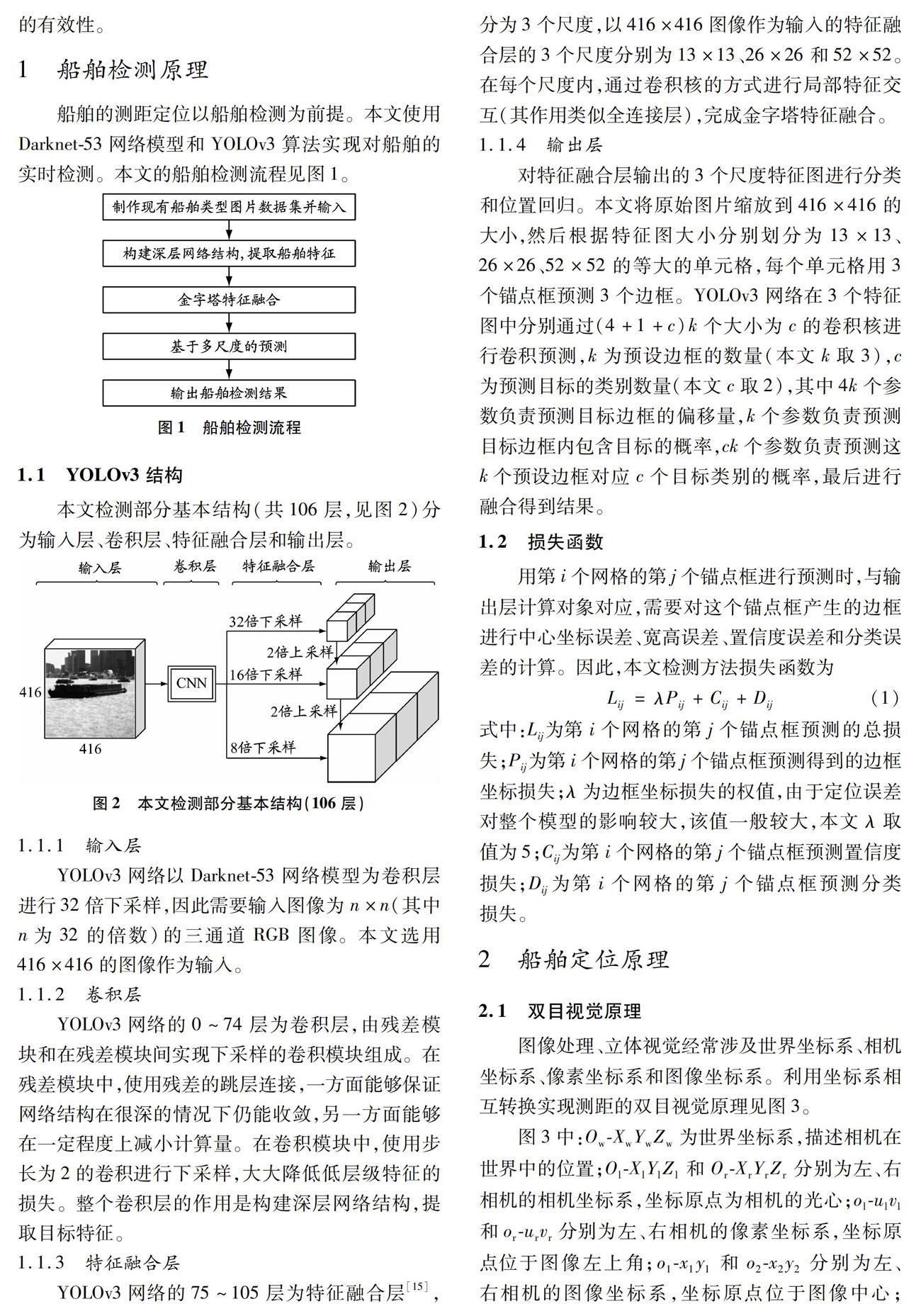
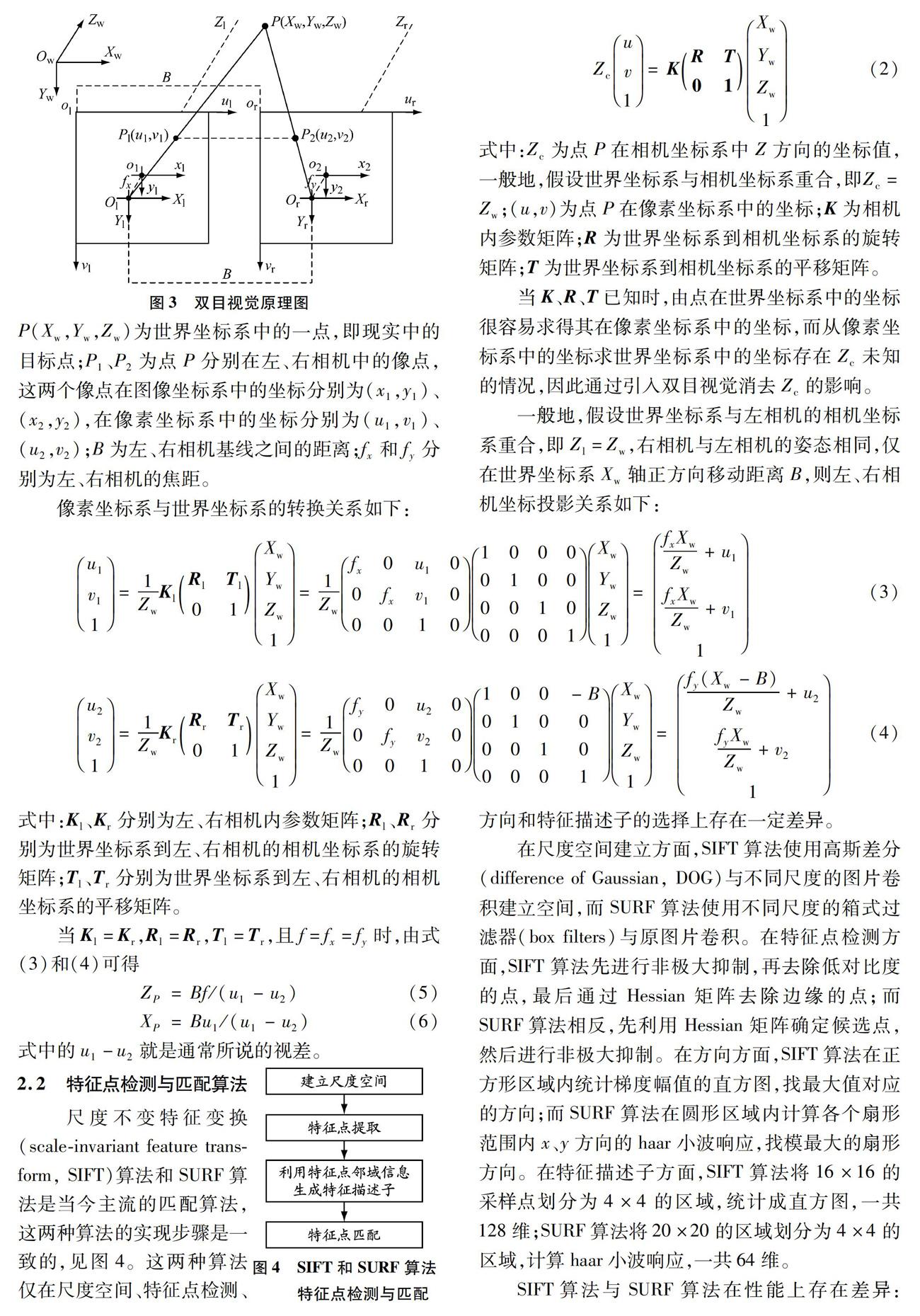
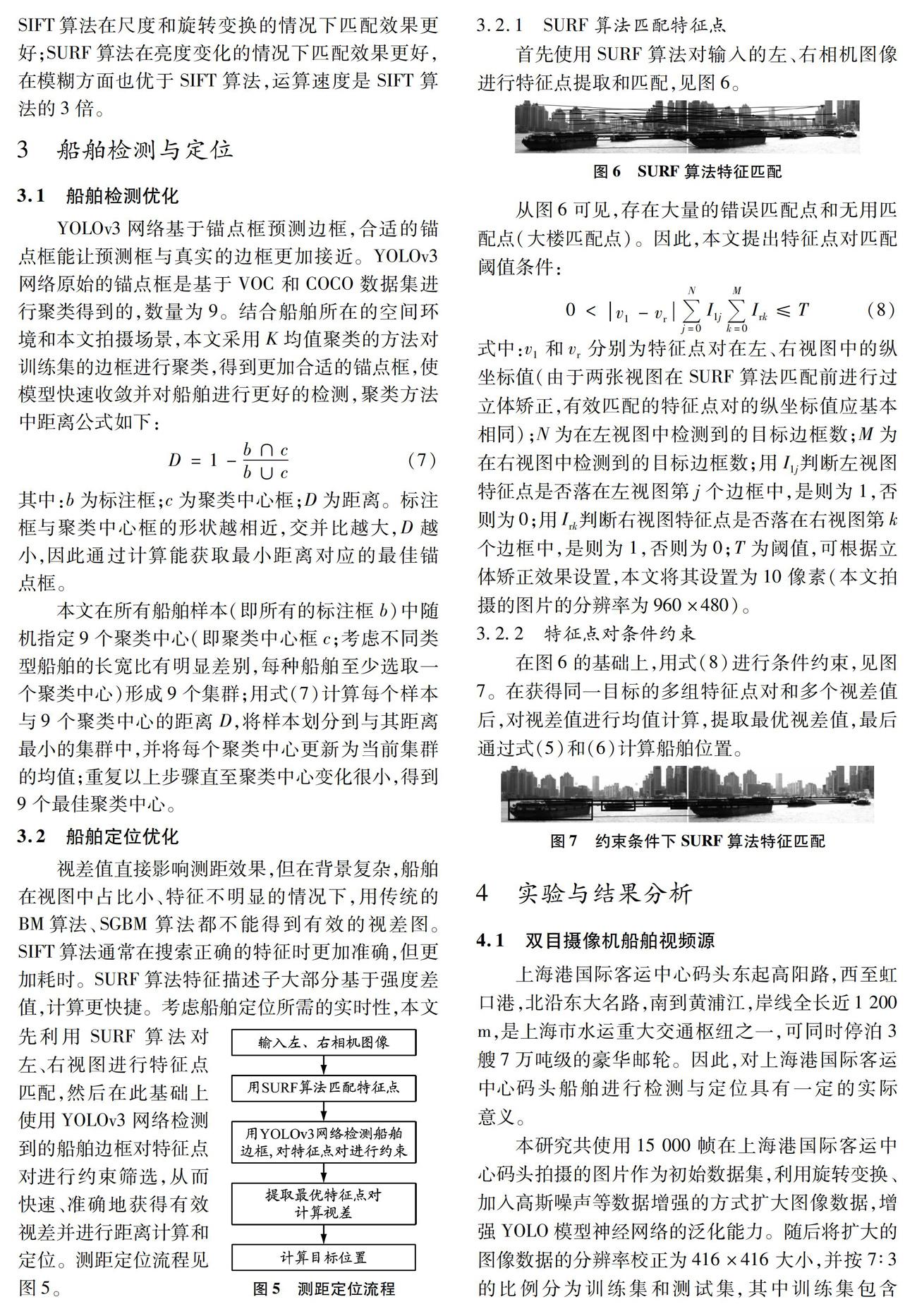
为快速、准确地检测船舶目标,提出一种基于YOLOv3算法的船舶双目视觉检测与定位方法。
在特征学习时针对样本中不同船舶长宽比例,重新聚类样本中心锚点框,增强对船舶检测的准确性;利用SURF算法进行特征匹配,并引入双目测距算法,实现目标的测距与定位。实验结果表明,该方法在每秒传输图片30帧的情况下,平均检测精度达到94%,在1 n mile内的目标平均定位误差为11 m左右,与现有检测算法相比,具有更好的实时性、准确性。该方法对智能船舶视觉感知信息与雷达、AIS信息的融合,以及避碰辅助决策具有非常重要的作用。
关键词:
智能船舶; 目标检测; 双目测距; 辅助决策
中图分类号: U675.79; TP242.6+2
文献标志码: A
收稿日期: 2020-04-09
修回日期: 2020-08-10
基金项目:
国家自然科学基金(51709167,61701299);国家重点研发计划(2019YFB1600605);上海市科技创新行动计划社会发展领域项目(18DZ1206101);大学生创新创业项目(S20190105, S20190117)
作者简介:
张啸尘(1995—),男,江苏苏州人,硕士研究生,研究方向为船舶智能导航、计算机视觉,(E-mail)247101485@qq.com;
赵建森(1983—),男,黑龙江牡丹江人,副教授,博士,研究方向为智能通信、微波和天线,(E-mail)7230981@163.com;
王胜正(1976—),男,湖南双峰人,教授,博士,研究方向为航海仿真、智能船舶导航、大数据、机器学习,(E-mail)szwang@shmtu.edu.cn
Binocular vision detection and positioning method for
ships based on YOLOv3 algorithm
ZHANG Xiaochen, ZHAO Jiansen, WANG Shengzheng,
ZHANG Min, CHENG Cheng
(Merchant Marine College, Shanghai Maritime University, Shanghai 201306, China)
Abstract:
In order to detect target ships quickly and accurately, a binocular vision detection and positioning method for ships based on YOLOv3 algorithm is proposed. During feature learning, the center anchor frames of the samples are re-clustered for the different ship length-width ratios in the samples to enhance the accuracy of ship detection; the feature matching is carried out by the SURF algorithm, and the binocular ranging algorithm is introduced to achieve target ranging and positioning. The experimental results show that, under the condition of 30 frames per second, the average detection accuracy of this method is 94%, and the average positioning error of the targets within 1 n mile is about 11 m. Compared with the existing detection algorithms, it is of better real-time performance and accuracy. It plays a very important role in the information fusion from the visual perception, radars and AIS, as well as collision avoidance auxiliary decision for intelligent ships.
Key words:
intelligent ship; target detection; binocular ranging; auxiliary decision
0 引 言
中国船级社2015年发布的《智能船舶规范》中提到,智能船舶需利用传感器、通信、互联网等技术手段自主感知和分析船舶周边环境的信息和数据,以保证自身安全、自主航行。由此可见,信息感知技术在智能船舶领域是一项非常关键的技术。……
登录APP查看全文
猜你喜欢
舰船科学技术(2022年14期)2022-09-22 03:07:40
船舶(2021年4期)2021-09-07 17:32:22
小哥白尼(趣味科学)(2019年10期)2020-01-18 09:16:22
疯狂英语·新策略(2019年10期)2019-12-13 08:43:28
当代陕西(2019年10期)2019-06-03 10:12:04
海峡科技与产业(2016年3期)2016-05-17 04:32:12
河南科技(2014年23期)2014-02-27 14:19:15
航海(2005年4期)2005-04-29 00:00:00