本院泌尿系感染患者病原菌分布及耐药情况分析
2021-07-01 06:22:41彭气平曹军孙君璐杨增怡
中国医学创新
2021年13期
关键词:耐药
彭气平 曹军 孙君璐 杨增怡
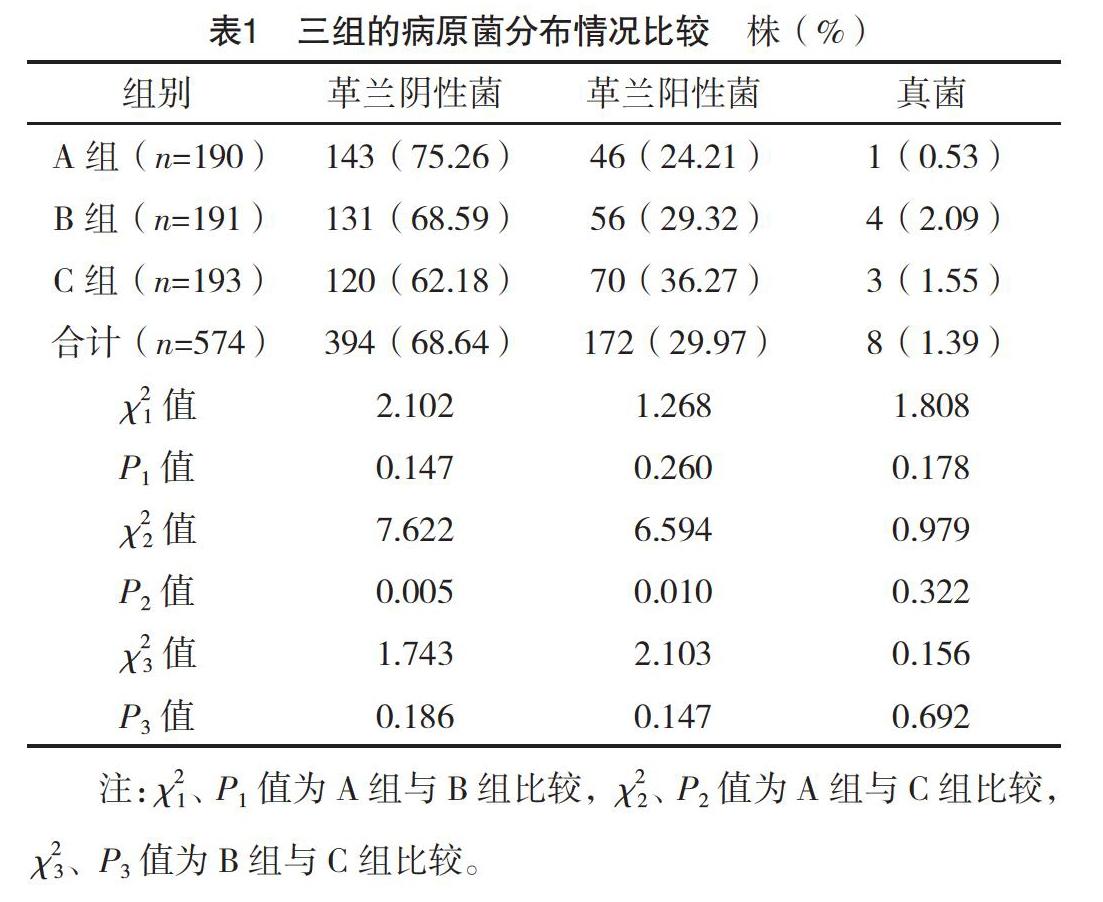
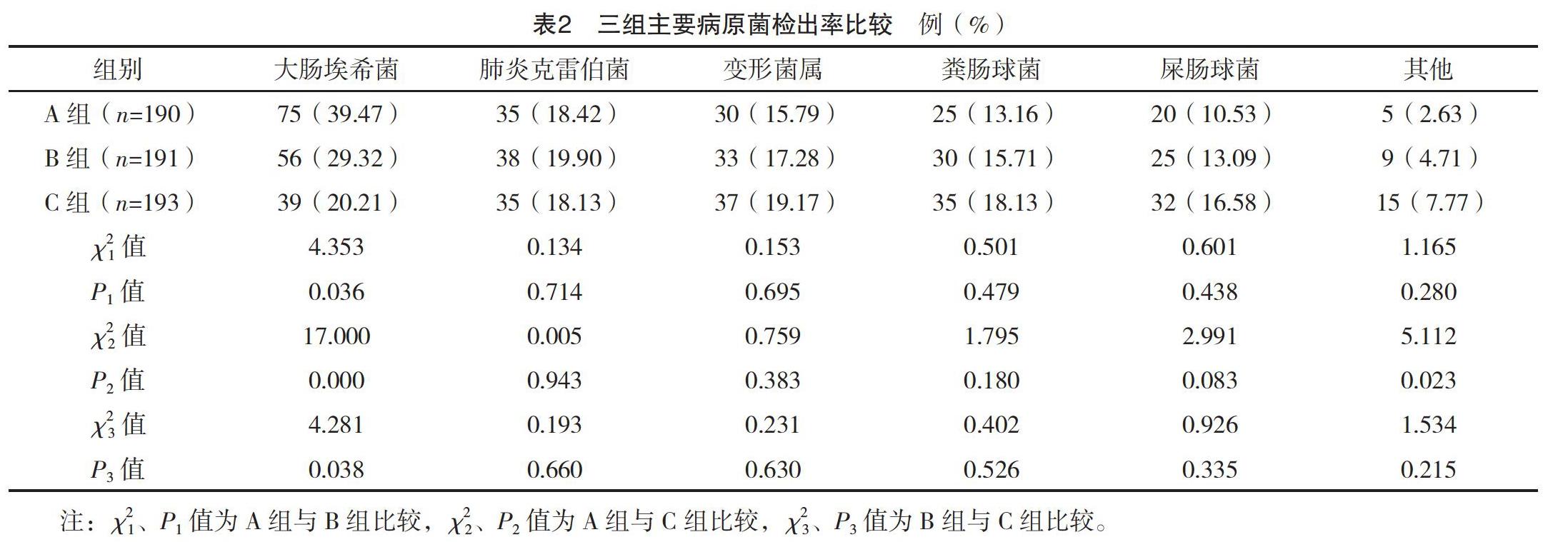

【摘要】 目的:研究與分析本院泌尿系感染患者病原菌分布及耐药情况。方法:选取2017年1-12月本院的200例泌尿系感染患者为A组,2018年1-12月的202例泌尿系感染患者为B组,2019年1-12月的210例泌尿系感染患者为C组。检测与比较三组的病原菌分布情况,同时进行病原菌耐药性情况分析。结果:A组的200例患者共检出病原菌190株,B组的202例患者共检出病原菌191株,C组的210例患者共检出病原菌193株。A、B、C组的革兰阴性菌检出率均显著高于革兰阳性菌及真菌,大肠埃希菌检出率均高于其他菌株。A组的大肠埃希菌检出率显著高于B、C组,B组则显著高于C组,差异均有统计学意义(P<0.05)。主要革兰阴性菌(大肠埃希菌、肺炎克雷伯菌及变形菌属)对复方新诺明、左氧氟沙星及哌拉西林的耐药率最高,显著高于其他药物。主要革兰阳性菌(粪肠球菌及屎肠球菌)对红霉素、左氧氟沙星及四环素的耐药率最高,显著高于其他药物。结论:2017-2019年本院泌尿系感染患者病原菌仍以革兰阴性菌为主,且其耐药性较为明显,应重视对上述方面的监测与干预。
【关键词】 泌尿系感染 病原菌分布 耐药
Analysis on Pathogens Distribution and Drug Resistance Situation of Patients with Urinary Tract Infection in Our Hospital/PENG Qiping, CAO Jun, SUN Junlu, YANG Zengyi. //Medical Innovation of China, 2021, 18(13): 082-085
[Abstract] Objective: To study and analyze the pathogens distribution and drug resistance situation of patients with urinary tract infection in our hospital. Method: A total of 200 patients with urinary tract infection in our hospital from January to December 2017 were selected as group A, 202 patients with urinary tract infection from January to December 2018 were selected as group B, and 210 patients with urinary tract infection from January to December 2019 were selected as group C. The distribution of pathogens in the three groups were detected and compared, and the resistance of pathogens were analyzed at the same time. Result: A total of 190 strains of pathogenic bacteria were detected in 200 patients of group A, 191 strains were detected in 202 patients of group B, and 193 strains were detected in 210 patients of group C. The detection rate of Gram-negative bacteria in group A, B and C were significantly higher than those of Gram-positive bacteria and fungi, and the detection rate of Escherichia coli in group A, B and C were higher than those of other strains. The detection rate of Escherichia coli in group A was significantly higher than that in group B and C, while that in group B was significantly higher than that in group C, the differences were statistically significant (P<0.05). The resistance rates of the main Gram-negative bacteria (Escherichia coli, Klebsiella pneumoniae and Proteus) to Cotrimoxazole, Levofloxacin and Piperacillin were the highest, which were significantly higher than other drugs. The resistance rates of the main Gram-positive bacteria (Enterococcus faecalis and Enterococcus faecium) to Erythromycin, Levofloxacin and Tetracycline were the highest, which were significantly higher than other drugs. Conclusion: From 2017 to 2019, the pathogenic bacteria of patients with urinary tract infection in our hospital are still mainly Gram-negative bacteria, and their drug resistance is relatively obvious. Therefore, attention should be paid to the monitoring and intervention in the above aspects.
[Key words] Urinary tract infection Pathogens distribution Drug resistance
First-authors address: Changan Hospital of Dongguan City, Dongguan 523843, China
doi:10.3969/j.issn.1674-4985.2021.13.020
泌尿系感染是临床极为常见的感染类型,可导致患者出现尿频、尿急、尿痛等泌尿系症状乃至全身症状体征,对患者的日常生活造成极为不良的影响。临床中与泌尿系感染相关的众多研究中,病原菌感染分布及药敏情况的研究一直是重点[1-2],而上述方面受时间、地点等多方面因素影响较大,因此对不同地区(医院)患者不同时间段的病原菌分布与耐药性分析需求较高,这有助于了解泌尿系感染病原菌感染情况,并有助于疾病治疗措施的制定[3-5]。本研究就本院泌尿系感染患者病原菌分布及耐药情况进行研究,以为泌尿系感染的防控与诊治提供参考依据,现报道如下。
1 资料与方法
1.1 一般资料 选取2017年1-12月本院的200例泌尿系感染患者为A组,2018年1-12月的202例泌尿系感染患者为B组,2019年1-12月的210例泌尿系感染患者为C组。……
登录APP查看全文
猜你喜欢
保健医苑(2022年5期)2022-06-10 07:46:38
现代临床医学(2022年3期)2022-06-06 07:59:40
昆明医科大学学报(2022年1期)2022-02-28 07:43:40
天津医科大学学报(2021年3期)2021-07-21 09:04:02
科学大众(2020年12期)2020-08-13 03:22:22
云南医药(2019年3期)2019-07-25 07:25:10
现代检验医学杂志(2016年1期)2016-11-12 13:19:40
中国卫生标准管理(2015年14期)2016-01-15 02:58:37
中国当代医药(2015年17期)2015-03-01 02:03:58
现代检验医学杂志(2014年3期)2014-02-02 02:42:22