早期行呼吸机间歇纯氧治疗对40例高血压脑出血患者呼吸指标和预后的影响
2016-07-26 23:19:07彭俏菁黎源梁佩伦李秀云
上海医药
2016年13期
关键词:高血压脑出血
彭俏菁+黎源+梁佩伦+李秀云


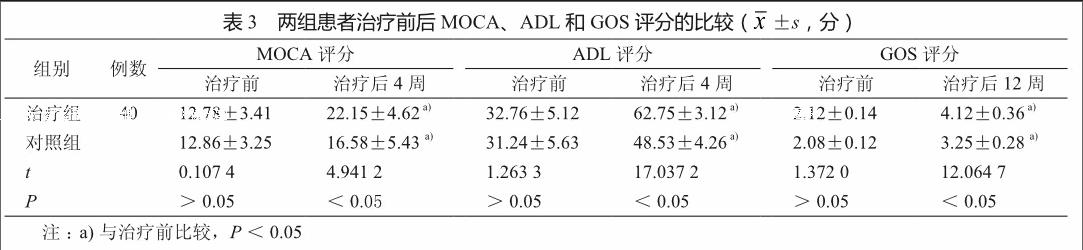
摘 要 目的:探讨早期行呼吸机间歇纯氧治疗对高血压脑出血患者呼吸指标和预后的影响。方法:回顾性分析2015年5月—2016年2月在我院接受立体定向钻孔引流术治疗后的高血压脑出血患者80例,根据治疗方式的不同,分为对照组和治疗组各40例。对照组患者术后均给予减轻脑水肿、营养神经、预防感染、预防消化道出血等常规治疗,治疗组则在对照组的基础上加用呼吸机间歇纯氧治疗。结果:治疗组治疗后的PaO2显著高于对照组(P<0.05);治疗组治疗后7 d、14 d血清TNF-a和IL-6的水平显著低于对照组(P<0.05);治疗组治疗后GOS、MOCA和 ADL评分显著高于对照组(P<0.05)。结论:早期行呼吸机间歇纯氧治疗可明显改善术后高血压脑出血患者的呼吸指标,降低血清TNF-a和IL-6的水平,抑制炎症反应,同时还能改善患者认知功能、运动功能以及近期预后。
关键词 呼吸机间歇纯氧治疗 高血压脑出血 呼吸指标 预后
中图分类号:R743.34; R459.6 文献标识码:B 文章编号:1006-1533(2016)13-0052-04
Effect of the early treatment of intermittent oxygen therapy with respirator on respiratory index and prognosis of 40 cases of patients with hypertensive intracerebral hemorrhage*
PENG Qiaojing, LI Yuan, LIANG Peilun, LI Xiuyun(Department of Brain surgery, Humen Hospital of Dongguan City, Dongguan 523900, China)
ABSTRACT Objective: To discuss the effect of the early treatment of intermittent oxygen therapy with respirator on respiratory index and prognosis of patients with hypertensive intracerebral hemorrhage. Methods: The data from 80 cases of patients with hypertensive intracerebral hemorrhage, who were treated with stereotactic drilling drainage were retrospectively analyzed. The patients were divided into a treatment group and a control group with 40 cases each based on the different therapies. The control group received a conventional treatment including alleviation of cerebral edema, nutrition of nerve, prevention of infection and gastrointestinal bleeding after surgery while the treatment group was additionally treated with the intermittent oxygen therapy with respirator besides the conventional treatment. Results: PaO2 value and the scores of GOS, MOCA and ADL were obviously higher after therapy while the levels of serum TNF-a and IL-6 at the postoperative 7th and 14th day were significantly lower in the treatment group than in the control group (P<0.05). Conclusion: The early treatment of intermittent oxygen therapy with respirator can obviously improve the respiratory index of patients with hypertensive intracerebral hemorrhage, reduce the levels of serum TNF-aand IL-6, and inhibit the inflammatory reaction, and meanwhile can also improve the cognitive function, motor function and short-term prognosis.
KEY WORDS intermittent oxygen therapy with respirator; hypertensive intracerebral hemorrhage; respiratory index; prognosis
高血压性脑出血是由于高血压患者脑动脉血管血压骤然升高,使得脑病变血管破裂,从而导致脑出血。高血压脑出血是神经内科常见的病症,具有发病率高、致残率高、死亡率高等特点,如不及时加以有效的治疗,将严重威胁到患者的生命健康[1]。立体定向钻孔引流术是治疗高血压脑出血的有效方法,但术后患者常伴随呼吸功能的障碍,严重影响了患者的预后。近年来,随着呼吸机机械通气的应用,极大改善了术后患者的预后[2]。本文通过早期呼吸机间歇纯氧和常规方法治疗对改善术后高血压脑出血患者预后的对照研究,探讨早期呼吸机间歇纯氧治疗高血压脑出血患者优越性,现报道如下。
1 资料与方法
1.1 一般资料
回顾性分析2015年5月—2016年2月在我院接受立体定向钻孔引流术治疗后的高血压脑出血患者80例,根据治疗方式的不同,分为对照组和治疗组各40例。……
登录APP查看全文
猜你喜欢
中国实用医药(2016年29期)2016-12-26 10:15:32
中国实用医药(2016年23期)2016-12-26 08:18:30
中国实用医药(2016年28期)2016-12-07 08:01:29
中国实用医药(2016年27期)2016-11-30 11:57:32
中国实用医药(2016年27期)2016-11-30 11:19:39
中外医学研究(2016年26期)2016-11-30 02:48:03
中外医学研究(2016年28期)2016-11-28 07:20:12
中外医学研究(2016年28期)2016-11-28 06:54:19
今日健康(2016年12期)2016-11-17 12:11:26
中国实用医药(2016年26期)2016-11-07 11:10:22