
城市公园绿地避震减灾适宜性评价及优化
2020-08-07 05:35:31宿萌萌高惠瑛范贺珊
价值工程
2020年22期
宿萌萌 高惠瑛 范贺珊
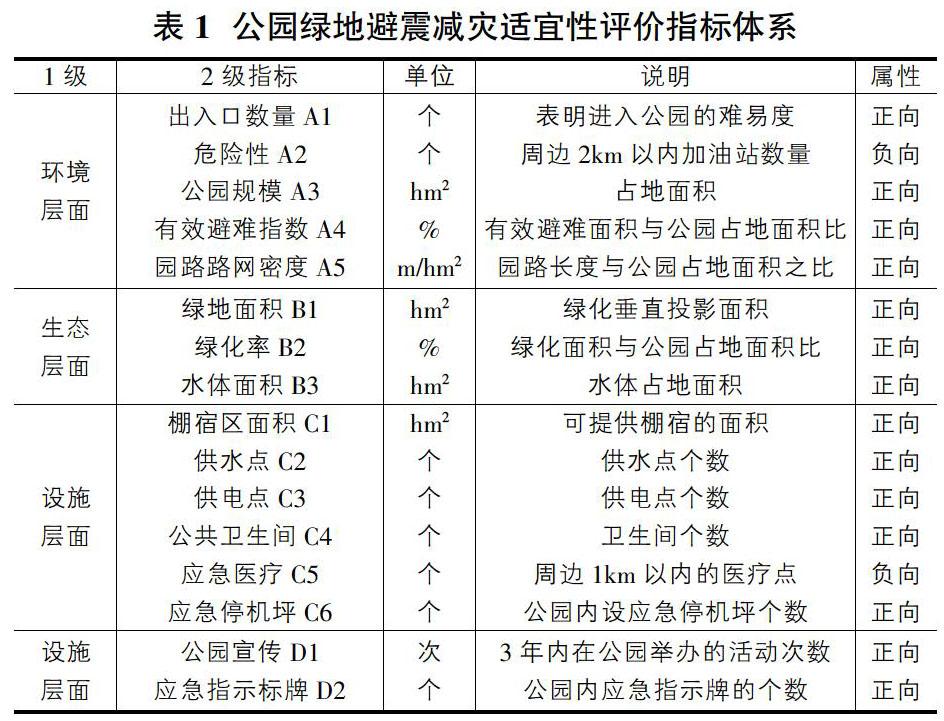


摘要:依据公园绿地避震减灾规划相关规范,从环境、生态、设施、制度等4个层面选取16个指标因子,以定量评价为出发点结合GIS技术,采用熵值法和逼近理想解排序法(TOPSIS)的评价方法,对青岛市辖七区36个公园绿地进行实证评价,确定各公园绿地的适宜性。根据评价结果,分析七区避震减灾公园绿地现状,并结合现有城市避震减灾场所,对服务盲区预选出263处适合做避震减灾场所的区域。通过对青岛市七区的评价以期为青岛的避震减灾疏散场所的规划提供参考。
Abstract: According to the relevant specifications of park green space earthquake mitigation planning, 16 index factors are selected from four levels, including environment, ecology, facility and system. Based on the quantitative evaluation and GIS technology, the entropy method and TOPSIS method are used to evaluate 36 parks in seven districts under the jurisdiction of Qingdao, so as to determine the suitability of each park green space. According to the evaluation results, this paper analyzes the current situation of the green space of the earthquake mitigation Park in Qingdao, and combines with the existing service area of the urban earthquake mitigation place, selects 263 areas suitable for the earthquake mitigation place in the service blind area. Through the evaluation of the seven districts of Qingdao, in order to provide a reference for the planning of the evacuation places for earthquake mitigation.
关键词: 公园绿地;避震减灾;适宜性;熵值法;逼近理想解排序法(TOPSIS)
Key words: park green space;earthquake mitigation;suitability;entropy method;TOPSIS
中圖分类号:P315.9;TU986 文献标识码:A 文章编号:1006-4311(2020)22-0176-04
0 引言
城市作为经济文化的中心区域,是社会、经济、生态的有机结合体,面对各种灾害的发生,建立“安全城市”已成为全球无法回避的课题[1]。城市公园、绿地、广场的各方面优势是应急避难场所选址时的首选,在灾时起到应急避难功能,其应急设施的配置与布局已成为众多专家学者的研究热点。
国内外学者对城市公园绿地功能评价方面的研究已取得一定成果,如French E.L等[2]从多功能性、网络、场地位置和适宜性、规模和功能、场地要素和对社会弹性六个方面总结公园绿地需纳入避震疏散场地中的重要性。Edmundas K.Z.等[3]对影响公园绿地安全性的因子进行分析,选取10个指标建立了多准则决策评估模型,进而对欧洲Vilnius市的综合公园进行了安全性评价分析。史莹等[4]在公园整体布局、结构、自然人工条件基础上,选取对综合公园避震减灾适宜性影响因子,利用层次分析法对其进行评价和分析。……
登录APP查看全文
