中欧班列发展潜力的云物元综合评价
2021-01-06 22:45:04叶静怡蒋惠园孙嘉戴婷艳
上海海事大学学报
2021年4期
叶静怡 蒋惠园 孙嘉 戴婷艳
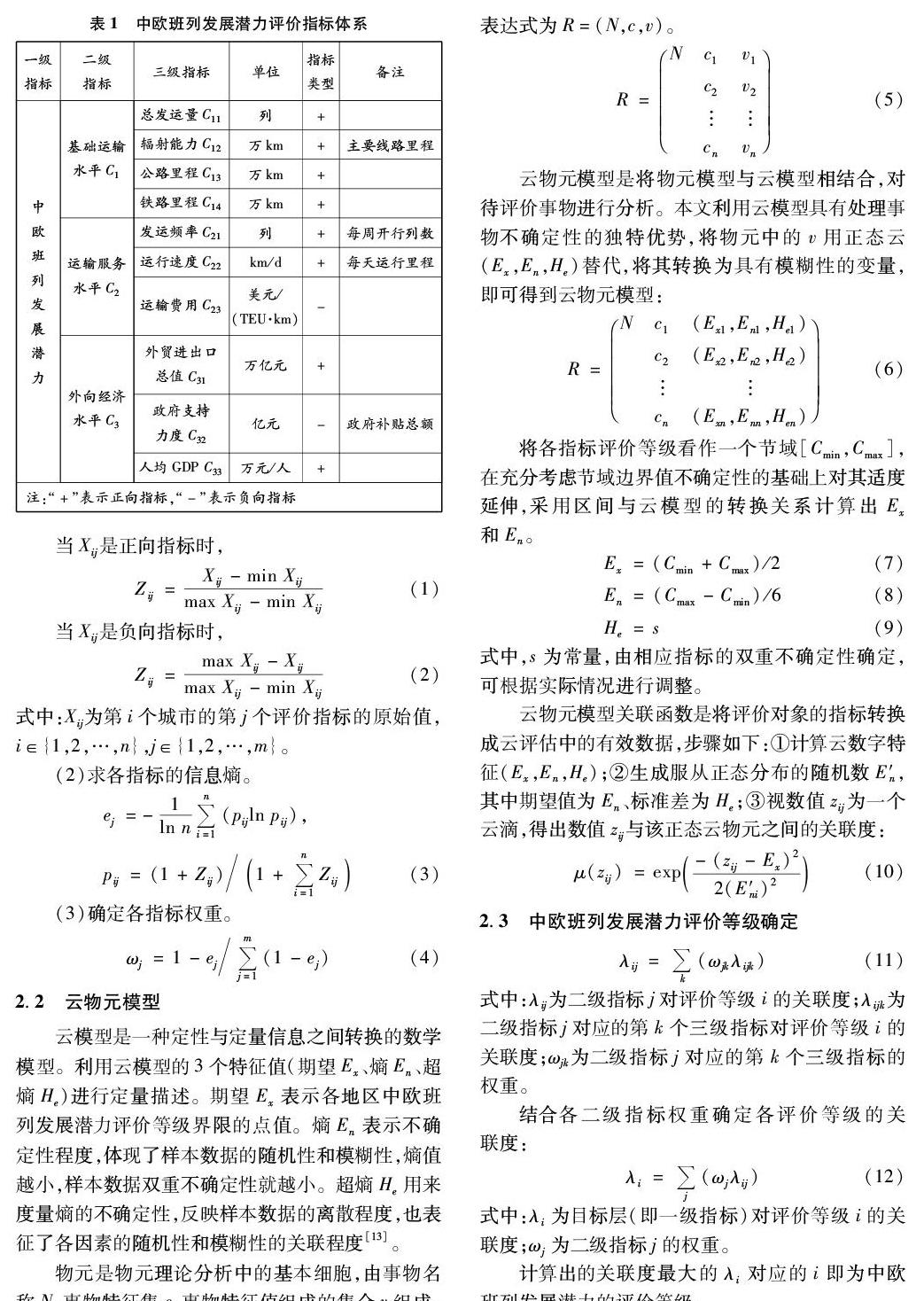

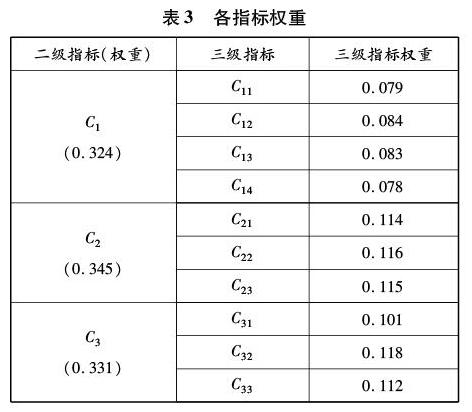
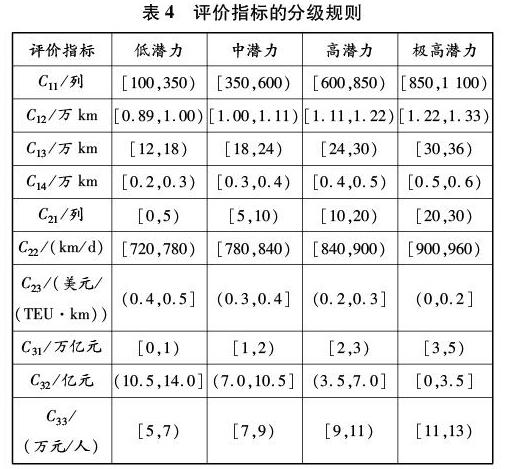

摘要:为稳定国际供应链,加强国际合作,使中欧班列更好地服务国内国际双循环发展新格局,运用云物元模型评价方法,结合熵权法计算权重,构建中欧班列发展潜力评价指标体系,从基础运输水平、运输服务水平和外向经济水平方面分析中欧班列的发展潜力。结果表明:中欧班列在成都、重庆和西安的发展潜力较低,在郑州、长沙和义乌的发展潜力较高,在苏州的发展潜力最大;基础运输水平呈现西高东低的趋势,外向经济水平则表现为东高西低。因此,中西部地区应积极促进产业结构优化升级,提高外贸进出口总值,使发展潜力从较低向较高转变;东部地区应在较高的外向经济水平下保持高发展潜力,完善中欧班列运输网络。
关键词: 中欧班列; 云物元模型; 发展潜力评价; 熵权法
中圖分类号: F532.4 文献标志码: A
Abstract: In order to stabilize the international supply chain, strengthen international cooperation, and make China-Europe Railway Express better serve the new pattern of domestic and international “dual circulation” development, the cloud matter-element model evaluation method is adopted, the entropy weight method is used to calculate the weight, and an evaluation index system for development potential of China-Europe Railway Express is constructed. The development potential of China-Europe Railway Express is analyzed from the aspects of basic transportation level, transportation service level and outward economic level. The results show that: China-Europe Railway Express has lower development potential in Chengdu, Chongqing, and Xi’an, has higher development potential in Zhengzhou, Changsha and Yiwu, and has the largest development potential in Suzhou; the basic transportation level presents a trend of high in the west and low in the east, while the level of outward economy level is high in the east and low in the west. Therefore, the central and western regions should actively promote the optimization and upgrading of the industrial structure, increase the total value of foreign trade imports and exports, and transform the development potential from low to high; the eastern region should maintain higher development potential under the higher outward economic level, and improve the transportation network of China-Europe Railway Express.
Key words: China-Europe Railway Express; cloud matter-element model; evaluation of development potential; entropy weight method
0 引 言
中欧班列有力支撑和推进了“一带一路”建设,是实现国际交流合作的桥梁,是促进国际循环的重要力量。目前关于中欧班列的研究角度多样,内容丰富,WANG等[1]运用仿真动态模型计算多式联运运输线参数对武汉到柏林的中欧班列铁路网进行验证。KUNDU 等[2]基于竞争博弈模型,分析铁路与海运的竞争模式,提出为促进中欧班列发展,政府应采取的补贴方案。邢磊等[3]基于中欧班列特征,针对海陆联运采用分布式鲁棒机会约束建立不确定需求下多周期中欧班列空箱调运优化模型。谢雨蓉等[4]利用两阶段博弈,研究中欧班列与班轮的运价竞争,以及政府分别根据发送量和社会福利最大目标对班列运营企业的补贴决策,提出班列发车间隔选择策略。……
登录APP查看全文