威权领导的两面:专权和尚严领导对工作绩效的差异性影响
2021-08-16 05:21:26黄勇崔敏田刘燕
上海管理科学
2021年3期
关键词:工作绩效
黄勇 崔敏 田刘燕
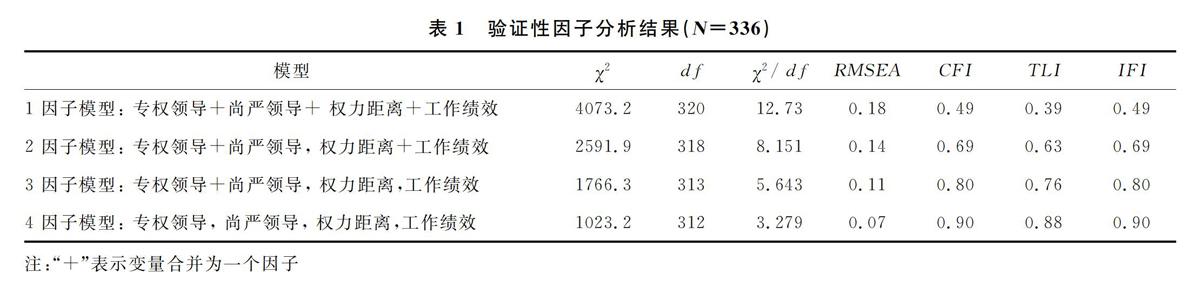

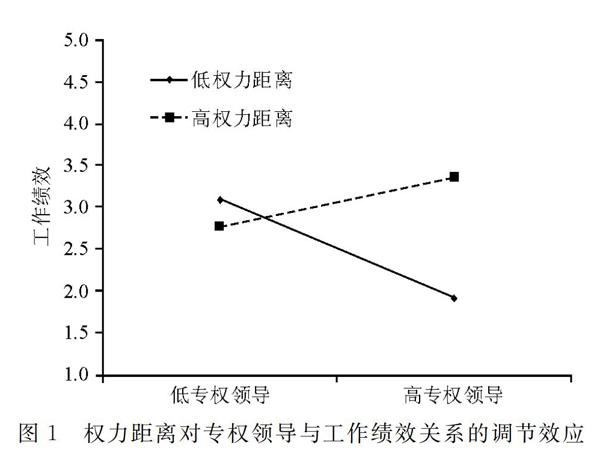
摘 要: 专权领导和尚严领导是威权领导的重要成分,而已有研究对二者影响的实证分析不足。从压力角度,阐述了专权领导和尚严领导代表了不同性质的工作压力源,分析了专权领导和尚严领导对员工绩效的差异性影响,以及权力距离的调节作用。基于336份甘肃省临夏回族自治州员工的调查数据,回归分析结果表明:专权领导负向影响工作绩效,权力距离调节了专权领导与工作绩效之间的关系;尚严领导与工作绩效之间呈显著的倒U形关系,中等水平的尚严领导更有益于员工绩效,权力距离对尚严领导与工作绩效关系的调节作用不显著。
关键词: 专权领导;尚严领导;权力距离;工作绩效
中图分类号: F 272.92
文献标志码: A
The Two Faces of Authoritarian Leadership:The Differential Effects of Dominance-focused andDiscipline-focused Leadership on Job Performance
HUANG Yong1 CUI Min2 TIAN Liuyan1
(1. School of Business, Northwest Normal University, Lanzhou 730070, China;2. School of Management, Shanghai University, Shanghai 200444, China)
Abstract: Dominance-focused and discipline-focused are two important dimensions of authoritarian leadership, yet there is lack of enough existing empirical studies to examine its influences, From the perspective of stressors, this study argued that dominance-focused and discipline-focused authoritarian leadership represent two different job stressors, and investigated its differential effects on employee performance , as well as the moderating role of power distance. Using a sample of 336 employees from Gansu Linxia Hui Autonomous?Prefecture, The results showed that dominance-focused authoritarian leadership negatively affected job performance, which was also moderated by power distance. There was an inverted U-shaped relationship between discipline-focused authoritarian leadership and employee performance, which indicates that moderate level of discipline-focused authoritarian leadership may be more beneficial for employee performance, but the moderating effect of power distance on this inverted U-shaped relationship was not significant.
Key words: dominance-focused leadership; discipline-focused leadership; Job performance; power distance
威權领导是华人组织中普遍存在的一种领导方式(Pellegrini & Scandura, 2008; 郑伯埙, 2018),也是家长式领导三元素中最清晰鲜明且最为突出的成分,不仅反映出华人社会尊卑有序的特色,而且代表了华人领导中强调家长权威的文化传统(Chen & Farh, 2010)。以往研究表明,这种强调绝对权威和纪律、主张控制下属、要求下属完全服从的领导风格(Cheng, Chou & Wu, 2004; 樊景立和郑伯埙, 2000),例如富士康董事长郭台铭作风强势、行事霸道、独裁专权(郑伯埙, 2018),既能促进员工绩效(Wang & Guan, 2018)和组织绩效(Huang, Xue & Chiu, 2015),也会对员工的态度(Hiller, Sin & Ponnapalli, 2019; 林姿葶、姜定宇、萧景鸿和郑伯埙, 2014)、组织公民行为(Wu, Huang & Li, 2012)、工作绩效(Hiller et al., 2019; Chen, Eberly & Chiang, 2014),甚至身心健康(赵安安和高尚仁, 2005)都产生显著的消极影响。
鉴于威权领导研究结果的不一致,大量研究考察……
登录APP查看全文
猜你喜欢
中国经贸(2016年19期)2016-12-12 20:52:49
经济师(2016年10期)2016-12-03 11:10:44
商(2016年30期)2016-11-09 09:13:55
现代经济信息(2016年22期)2016-10-26 09:44:14
考试周刊(2016年74期)2016-10-08 18:15:19
商(2016年23期)2016-07-23 13:42:54
商(2016年21期)2016-07-06 13:49:29
课程教育研究·学法教法研究(2016年12期)2016-06-29 18:16:01
现代经济信息(2016年13期)2016-06-17 21:31:28
商(2016年4期)2016-03-24 18:04:57