大学生人际适应、抑郁与主观幸福感的相关研究
2021-11-18 06:42:52龙娇娇
科学与生活
2021年20期
关键词:抑郁
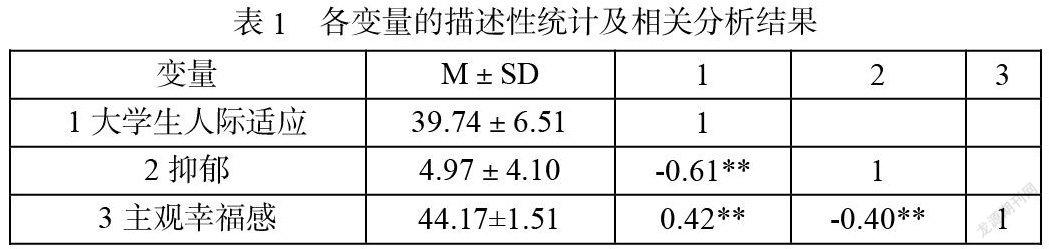
摘要:研究旨在探讨大学生人际适应、抑郁和主观幸福感的相关研究。采用大学生人际适应性分量表、抑郁-焦虑-压力自评量表、幸福感指数量表对860名大学生进行调查。结果发现:(1)大学生人际适应与抑郁呈显著负相关,与主观幸福感呈显著正相关;抑郁与主观幸福感呈显著负相关。研究结果可为探索大学生主观幸福感的教育策略提供参考。
关键词:大学生人际适应;主观幸福感;抑郁
Abstract:The purpose of this study is to explore the correlation between interpersonal adjustment,depression and subjective well-being of college students.A total of 860 college students were investigated by using the college student interpersonal adaptability subscale,depression - anxiety - stress self-rating scale and happiness index scale.The results showed that :(1) Interpersonal adjustment was negatively correlated with depression,and positively correlated with subjective well-being;Depression has a significant negative correlation with subjective well-being.The results of this study can provide reference for exploring the educational strategies of college students' subjective well-being.
Key words:college students' interpersonal adaptation; subjective well-being; depression
一、文獻综述
党的十九大报告上提出要培育人们积极向上的生活态度,从而促进人们的幸福感。主观幸福感主要包括两个维度,分别是情感和认知,即情感体验和生活满意度,其主要是用来评价个体生活质量的综合性心理指标[1]。主观幸福感作为一种常见的积极情绪,其对个体社会生活的改善和心理世界的构建有着深远的影响。因此,探讨大学生主观幸福感的相关因素有重要的理论意义和实际意义。
研究发现,个体人际适应性与主观幸福感显著正相关[2]。且抑郁水平越高,个体主观幸福感越低[3]。同时,个体的人际适应性越好,其身心发展得越健康[4]。
综上,我们提出假设,大学生人际适应、抑郁和主观幸福感相关显著。
二、研究设计
(一)研究对象
共发放问卷900份,回收有效问卷860份。其中男生347人,女生513人;大一学生321人,大二学生190人,大三学生228人,大四学生121人;被试年龄在16~25 岁之间,平均年龄为20.38±1.75岁。
(二)研究工具
(1)大学生人际适应性分量表,该量表取自卢谢峰[5]编制的大学生适应性量表。……
登录APP查看全文
猜你喜欢
知识就是力量(2016年11期)2016-12-02 18:05:52
中外医学研究(2016年26期)2016-11-30 04:57:32
中国医学创新(2016年30期)2016-11-28 00:15:09
家庭医药(2016年11期)2016-11-24 18:13:13
今日健康(2016年12期)2016-11-17 14:41:27
今日健康(2016年12期)2016-11-17 13:41:00
中国现代医生(2016年23期)2016-11-15 03:58:25
上海医药(2016年20期)2016-11-09 21:19:04
上海医药(2016年20期)2016-11-09 21:11:48