大学英语“活力课堂”教学模式研究与实践
2021-12-28 07:59:39梁杰
高教学刊
2021年35期
关键词:任务型教学法
梁杰
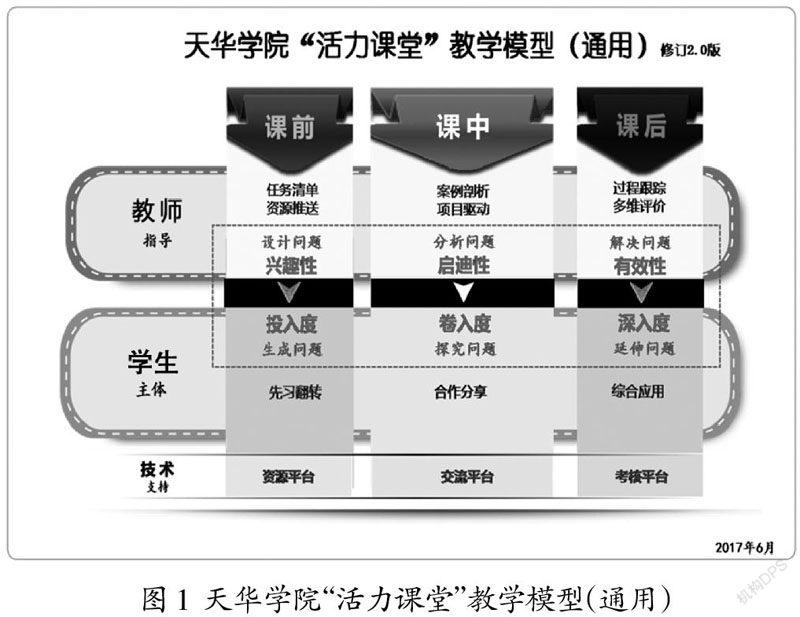
摘 要:“活力课堂”是天华学院在全校范围内由点及面开展的一场教学改革,其目的在于实现以“教师为主导、学生为主体”的“高认知度和高参与度”的教学,把沉默单向的课堂变成碰撞思想、启迪智慧的互动场所,激發学生学习潜能。在教改实践中,任课教师将任务型语言教学法融入“活力课堂”通用教学模型,取得了较好效果。鉴于教学实践周期,文章将主要探讨基于任务型语言教学法的大学英语“活力课堂”教学模式的组织和实施情况,为大学英语教学改革提供参考。
关键词:任务型教学法;活力课堂;分组讨论;表现性评价
中图分类号:G642 文献标志码:A 文章编号:2096-000X(2021)35-0099-04
Abstract: "Vitality Classroom" is a teaching reform carried out by Tianhua College. Its purpose is to stimulate students' learning potential and realize the "teacher-led, student-centered" teaching, characterized by students' "high awareness and engagement" in class activities, and to turn the silent one-way classroom into an interactive place for collision of ideas and inspiration of wisdom. In the practice of teaching reform, the author integrated task-based language teaching method into the general teaching model of "Vitality Classroom". It not only conforms to the laws and characteristics of language teaching itself, but also can realize the goal of "Vitality Classroom". In view of the teaching practice cycle, this paper will mainly discuss the organization and implementation of this blended teaching method in hope of offering reference for college English teaching "Vitality Classroom" reform.
Keywords: task-based language teaching method; Vitality Classroom; group discussion; performance evaluation
一、教改的背景与意义
随着智能手机的普及和线上线下混合式学习手段的不断改进,当代大学生的课堂学习受到了极大地冲击,为传统的以教师为中心的一言堂教学带来了极大的挑战!学生上课睡觉、玩手机、思维怠惰等不良学习状态几近常态,为改变这种被动、沉闷、灌输式的课堂教学现状,适应现代教育技术的发展和学生碎片化、多样化的学习需求,激发学生的学习兴趣和潜能,实现以学生为中心的高效、自主、互动、参与式的课堂教学,上海师范大学天华学院(下文简称天华学院)在全校范围内由点及面开展了一场“活力课堂”教学改革①。
大学英语作为受众最广的课程之一,其根本驱动力是学习者在社会(或交际)语境里接触和使用,在与他人互动中进行意义交流[1]。……
登录APP查看全文
猜你喜欢
考试周刊(2016年101期)2017-01-07 08:40:29
青春岁月(2016年22期)2016-12-23 22:46:39
读与写·教育教学版(2016年12期)2016-12-23 22:09:31
考试周刊(2016年95期)2016-12-21 01:06:25
科技创新导报(2016年21期)2016-12-17 13:53:12
新教育时代·教师版(2016年35期)2016-12-07 20:59:08
科教导刊(2016年25期)2016-11-15 18:28:29
成才之路(2016年21期)2016-08-06 18:33:10
考试周刊(2016年36期)2016-05-28 00:57:09
成才之路(2016年9期)2016-04-15 09:02:41