
方剂学自主学习能力培养模式问卷调查及分析
2016-03-02 08:40:40熊洪艳张胜马凤丽吴施国夏林秦竹
中国中医药信息杂志
2016年3期
熊洪艳 张胜 马凤丽 吴施国 夏林 秦竹
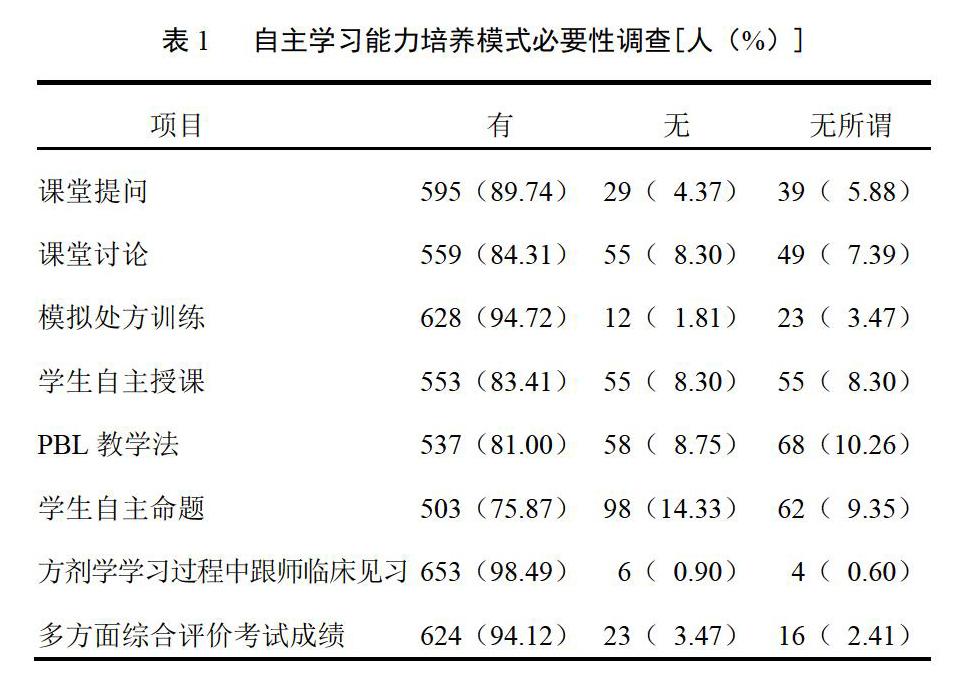
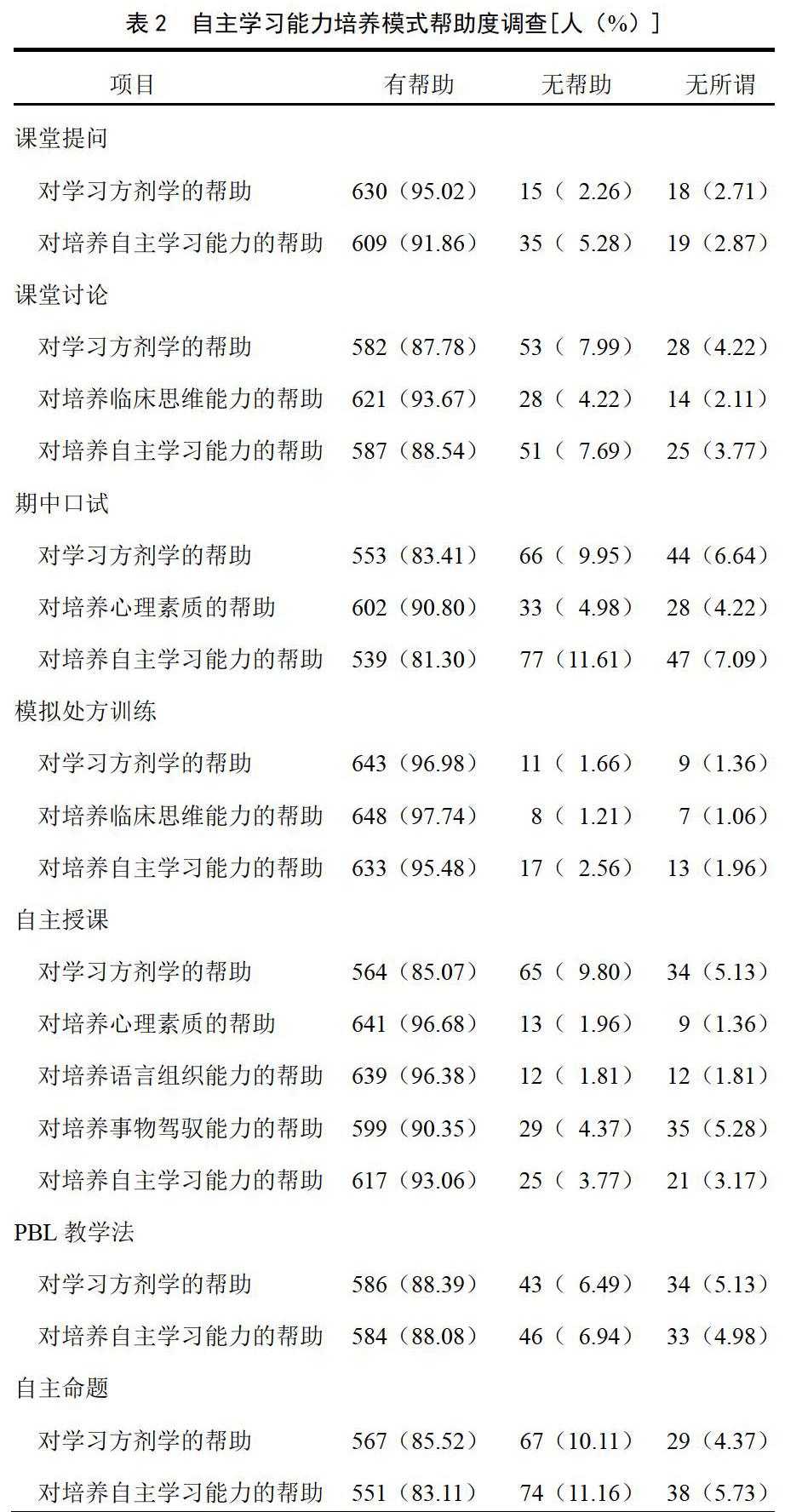
摘要:目的 探讨方剂学自主学习能力培养模式对学生学习能力和综合素质的影响。方法 在继承传统教学模式基础上,建构由课堂提问、课堂讨论、“以问题为导向”教学、模拟处方训练、自主授课、期中口试、自主命题组成的多元化自主学习能力培养模式。教学过程以教师讲授为主,穿插自主学习能力培养模式进行教学。教学活动结束时,采用问卷调查方式,对自主学习能力培养模式在方剂学教学中的运用进行量化评估。结果 81.30%~97.74%的学生认为该模式对提高学习能力、综合素质有帮助;75.87%~98.49%的学生认为有必要开展该模式进行教学活动;69.53%的学生认为以口试形式进行期中考试可行。结论 方剂学自主学习能力培养模式能从多个角度激发学生的学习热情,培养学习兴趣,调动学习积极性和主动性,进一步培养了自主学习能力及临床思维能力,可为方剂学教学改革提供参考。
关键词:方剂学;自主学习;能力培养;问卷调查;中医教育
DOI:10.3969/j.issn.1005-5304.2016.03.036
中图分类号:R2-04 文献标识码:A 文章编号:1005-5304(2016)03-0118-04
Abstract: Objective To observe the effects of cultivation mode of autonomous learning ability in TCM formula on students learning capacity and comprehensive quality. Methods On the basis of inheriting the traditional teaching mode, classroom questioning, class discussion, problem-based learned teaching, simulated prescription exercises, autonomous teaching and training, the mid-term oral test, and autonomous proposition consisted of autonomous learning ability training mode diversification. In the teaching process, teachers' teaching was the primary, and was interspersed with cultivation mode of autonomous learning ability. At the end of the teaching activities, questionnaire survey method was adopted to evaluate the autonomous learning ability training mode in the teaching of TCM formula. Results 81.30%-97.74% students believed that this mode is helpful to improve their learning ability and comprehensive quality; 75.87%-98.49% students believed that it is necessary to carry out the mode in the teaching activities; 69.53% students believed that conducting mid-term examination in the form of oral teat is feasible. Conclusion The cultivation mode of autonomous learning ability for TCM formula can stimulate the learning enthusiasm of the students from various angles, raise interest in learning, arouse students learning enthusiasm and initiative, and further cultivate autonomous learning ability and clinical thinking ability, which can provide references for the teaching reform of TCM formula.
Key words: TCM formula; autonomous learning; ability cultivation; questionnaire; TCM education
为提高方剂学教学质量,培养适应社会发展需要的高级中医药人才,笔者拟定了由课堂提问、课堂讨论、“以问题为导向”(problem-based learning,PBL)教学、模拟处方训练、自主授课、期中口试、自主命题等多种教学方法构建而成的多元化自主学习能力培养模式。在教学过程中,以教师讲授为主,穿插自
主学习能力培养模式进行教学。为了解该教学模式对学生的学习是否有帮助、成效如何以及学生的认同度、支持度等,笔者对实施过自主学习能力培养模式的本科生进行问卷调查。……
登录APP查看全文
猜你喜欢
中国科技博览(2016年19期)2016-10-19 13:31:55
今传媒(2016年9期)2016-10-15 22:37:20
考试周刊(2016年76期)2016-10-09 10:09:08
考试周刊(2016年76期)2016-10-09 10:07:22
成才之路(2016年25期)2016-10-08 10:15:46
成才之路(2016年25期)2016-10-08 10:15:03
成才之路(2016年25期)2016-10-08 10:03:04
成才之路(2016年25期)2016-10-08 09:59:12
小学教学参考(语文)(2016年9期)2016-09-30 09:01:16
小学教学参考(语文)(2016年9期)2016-09-30 08:50:38
