城市红树林系统中微塑料表面细菌群落结构特征分析
2021-01-13 05:05:15付茜茜李大圳章宇晴邓惠冯丹赵媛媛俞花美吴晓晨葛成军
热带作物学报
2021年12期
关键词:城市
付茜茜 李大圳 章宇晴 邓惠 冯丹 赵媛媛 俞花美 吴晓晨 葛成军
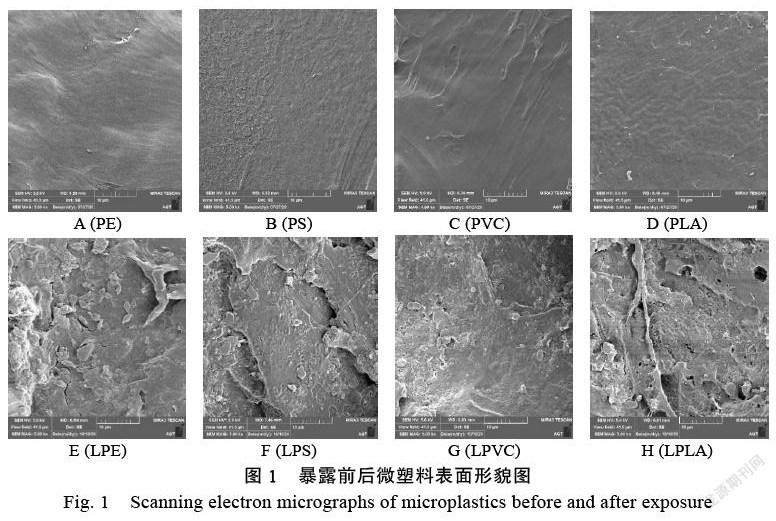

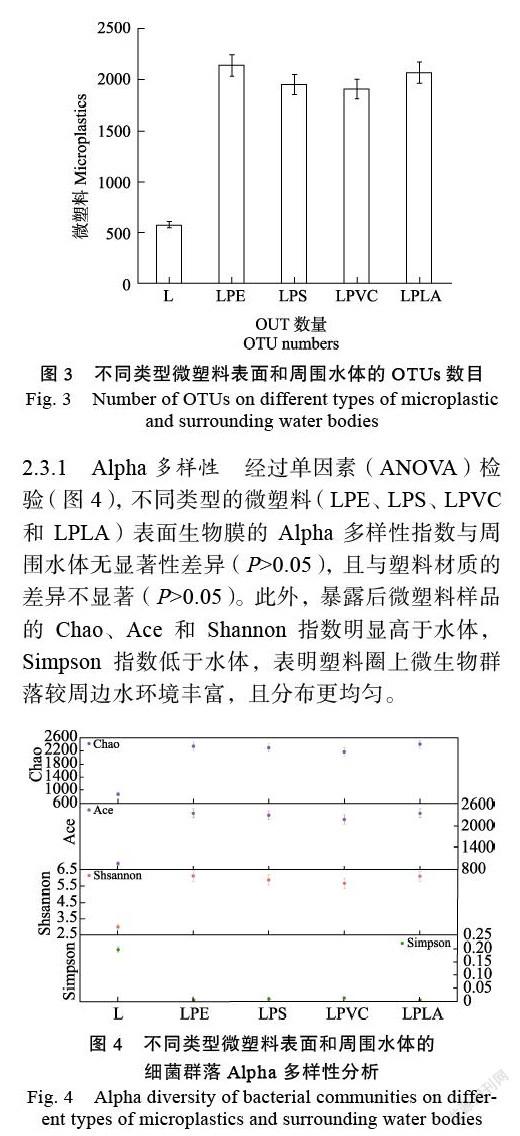
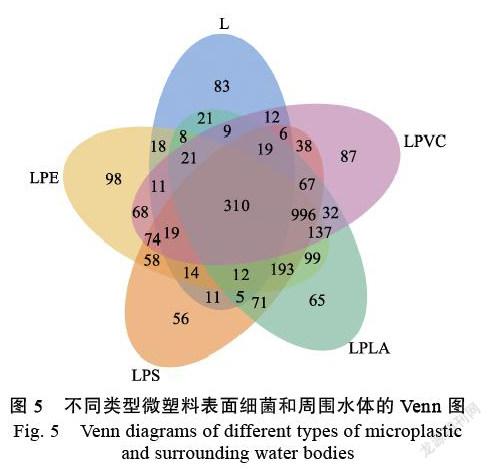
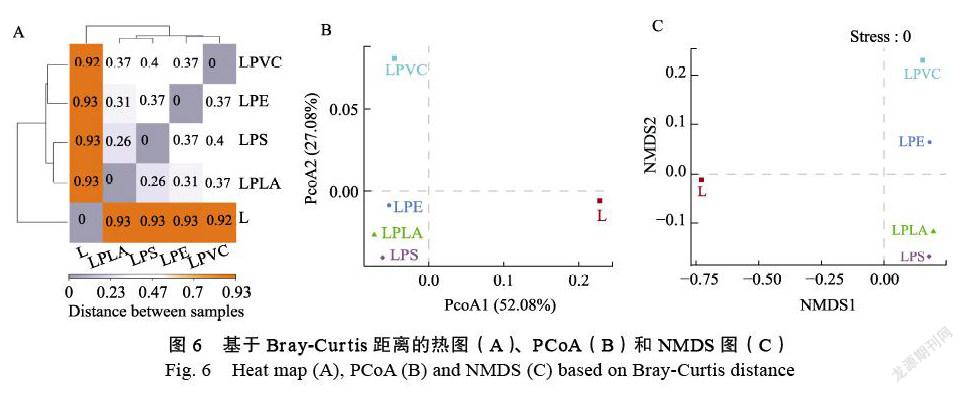
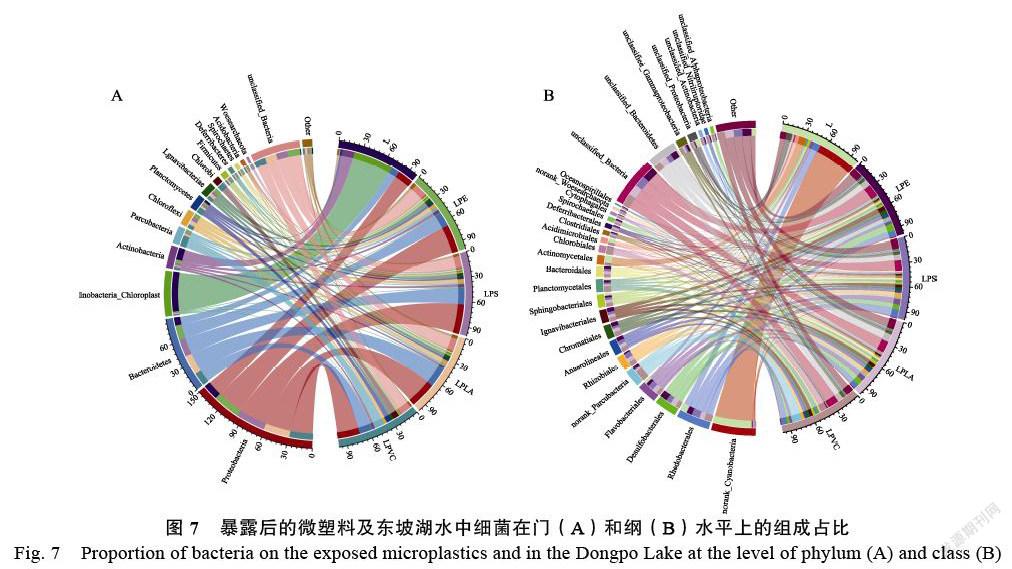
摘 要:以城市紅树林生态系统为研究对象,研究该系统水体中微塑料表面细菌群落结构的多样性与组分特征。采用野外原位暴露实验的方法,利用扫描电镜显微镜(SEM)和16S rDNA高通量测序技术,检测聚乙烯(PE)、聚苯乙烯(PS)、聚氯乙烯(PVC)和具有可降解性的聚乳酸(PLA)4种不同类型微塑料表面形貌特征和细菌群落结构。结果表明:4种微塑料暴露45 d后(标记为LPE、LPS、LPVC、LPLA)在其表面均能观察到明显微生物聚集体,主要以杆状细菌、球状细菌为主;不同类型微塑料表面生物膜总量存在显著差异,表现为LPE>LPLA>LPS>LPVC;4种微塑料表面的细菌群落主要包括变形菌门(Proteobacteria)和拟杆菌门(Bacteroidetes),而水环境中以蓝细菌门(Cyanobacteria_Chloroplast)、变形菌门(Proteobacteria)、放线菌门(Actinobacteria)和拟杆菌门(Bacteroidetes)为优势菌群。基于细菌群落多样性分析,结果发现微塑料表面生物膜中的细菌群落结构和周围水体存在显著差异,各个类型的微塑料表面细菌群落结构组分相似。红树林系统是微塑料的重要收纳场所,研究微塑料表面生物膜微生物群落特征,为进一步开展城市红树林系统中微塑料的环境行为与生态风险评价提供重要参考依据。
关键词:红树林生态系统;微塑料;细菌群落结构;城市
中图分类号:S718.55 文献标识码:A
Abstract: Recently, microplastic pollution has become a new global environmental problem. Due to the strong hydro-phobicity and large specific surface area, microplastics exposed to the environment can provide a new ecological site for microorganisms. Mangrove system is the “source” and “sink” of pollutants. Urban mangrove system was selected to study the diversity and composition characteristics of the bacterial community structure of the microplastics surface in the system. The method of in-situ exposure experiment, scanning electron microscope and 16S rDNA high-throughput sequencing technology were used to investigate the surface morphology characteristics and bacterial community structure of four types of microplastics (PE, PS, PVC, PLA). The results showed that obvious microbial aggregates were observed on the surfaces of the four microplastics after exposure (labeled as LPE, LPS, LPVC, LPLA), mainly bacilli and cocci (shape). There were significant differences in the total amount of biofilm on the surfaces of the four microplastics, which was represented by LPE>LPLA>LPS>LPVC. The results of high-throughput sequencing presented that the bacterial communities on the surfaces of the four microplastics mainly included Proteobacteria and Bacteroidetes. However, in the water environment, Cyanobacteria_Chloroplast, Proteobacteria, Actinobacteria and Bacteroidetes were the dominant flora. Based on the analysis of the diversity of the bacterial community, it was found that there were significant differences between the bacterial community structure in the microplastic surface biofilm and the surrounding water body, and the bacterial community structure composition on the surfaces of the four microplastics were similar. Since microplastics were accumulated in the mangrove area, it is necessary to study the microbial community characteristics of microplastic surface biofilm in order to provide an important reference for in-depth understanding the environmental behavior and ecological risk assessment of microplastics in urban mangrove systems.
Keywords: mangrove system; microplastics; bacterial community structure; urban
DOI: 10.3969/j.issn.1000-2561.2021.12.041
微塑料(MPs)是指粒径或长度小于5 mm的塑料,来源于大块塑料垃圾的碎裂或其直接环境排放,包含碎片、纤维、颗粒、发泡、薄膜等不同形貌类型[1]。近几年来,微塑料在全球各地海水、河流湖泊[2]、饮用水[1]、污水处理厂进水和出水[3]、沉积物[4]、土壤[5]和生物体[6]中被频繁检出,且丰度呈现出不断增加的趋势。……
登录APP查看全文
猜你喜欢
中国市场(2016年38期)2016-11-15 23:12:30
科技资讯(2016年18期)2016-11-15 18:19:23
体育时空(2016年9期)2016-11-10 20:33:01
人间(2016年26期)2016-11-03 16:25:37
中国科技博览(2016年22期)2016-11-01 15:13:50
中国科技博览(2016年18期)2016-10-19 09:22:03
科学与财富(2016年28期)2016-10-14 22:08:04
科学与财富(2016年28期)2016-10-14 21:41:23
科学与财富(2016年28期)2016-10-14 20:56:27
科学与财富(2016年28期)2016-10-14 20:55:44