
脑白质疏松严重程度与急性脑梗死静脉溶栓预后的相关性研究
2021-03-22 19:27:16王馨悦刘强
中国医学创新
2021年30期
王馨悦 刘强
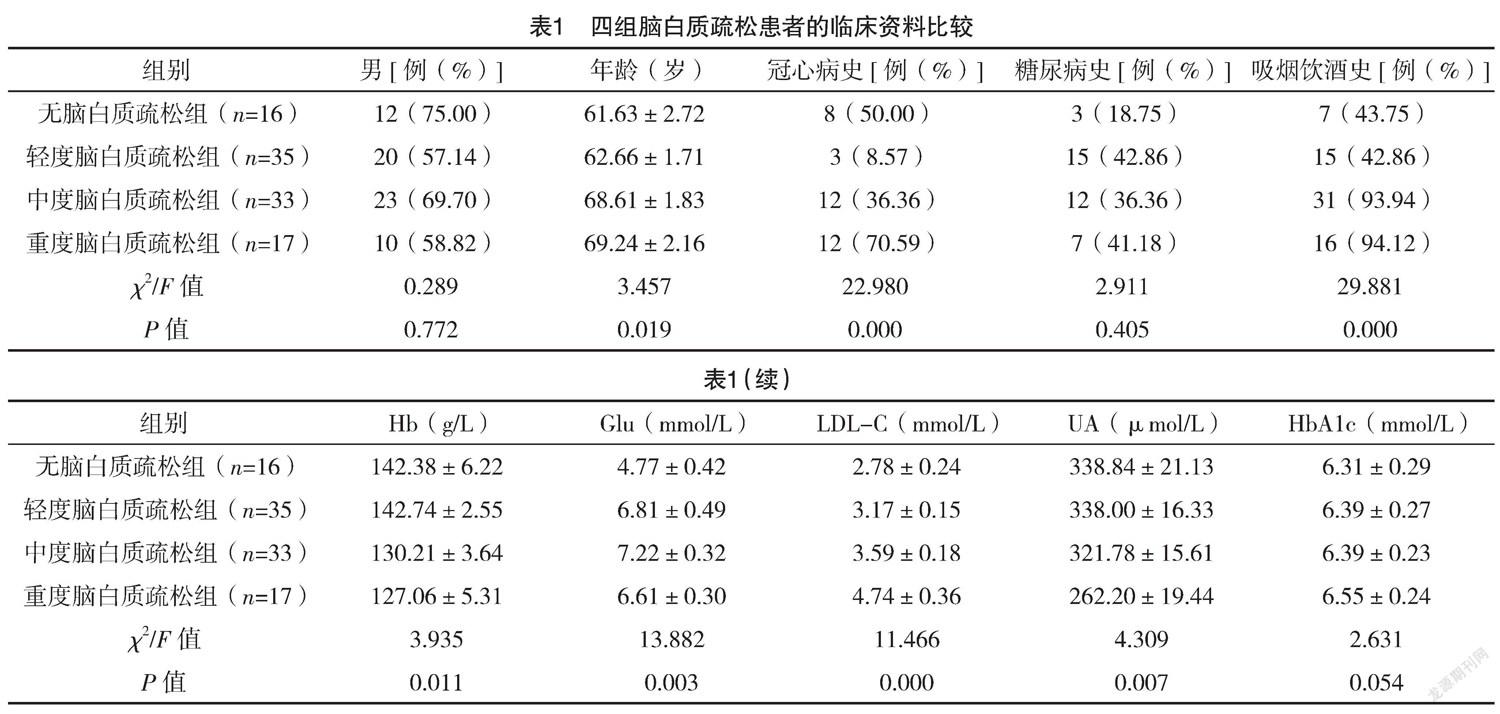
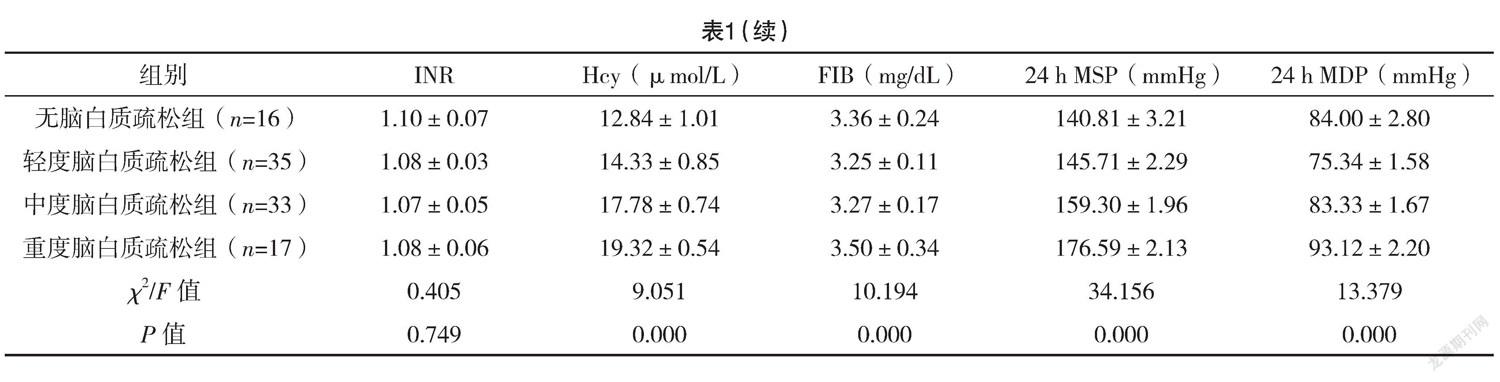
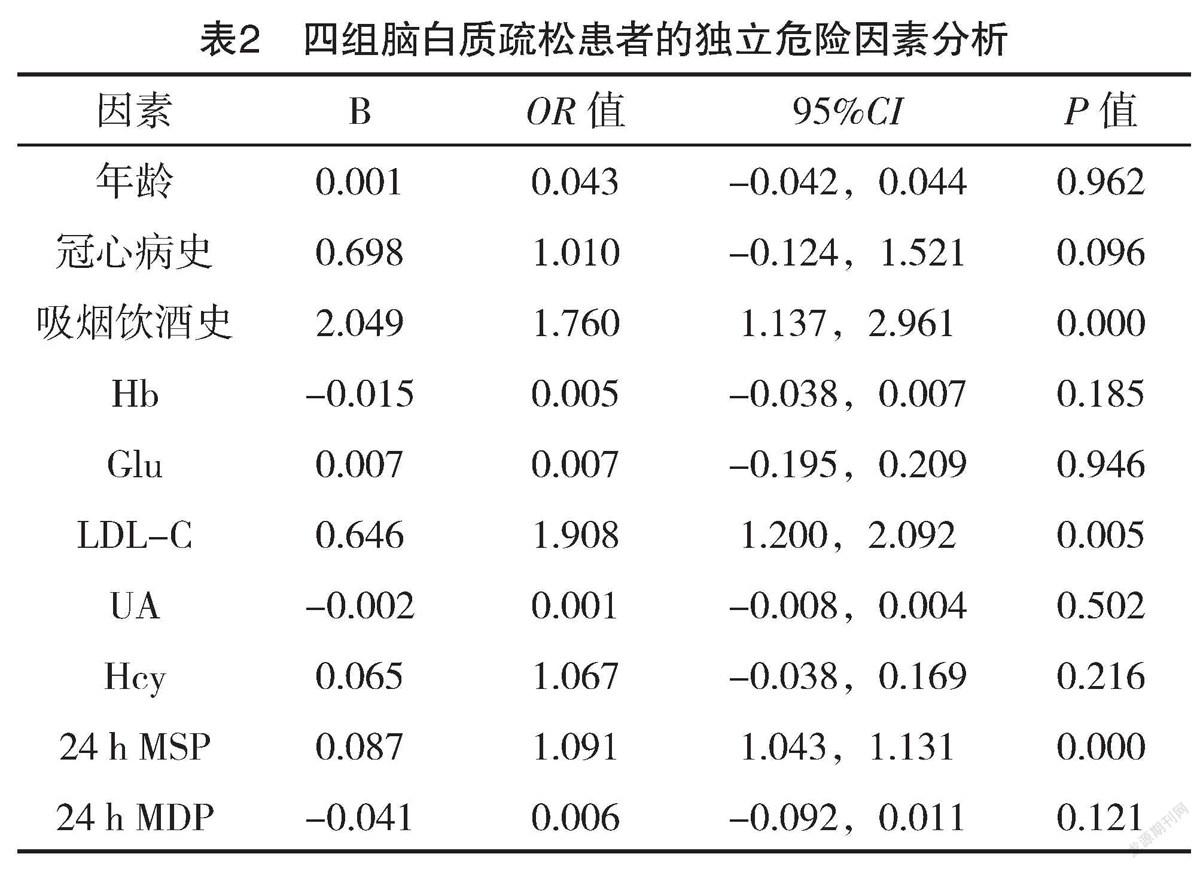

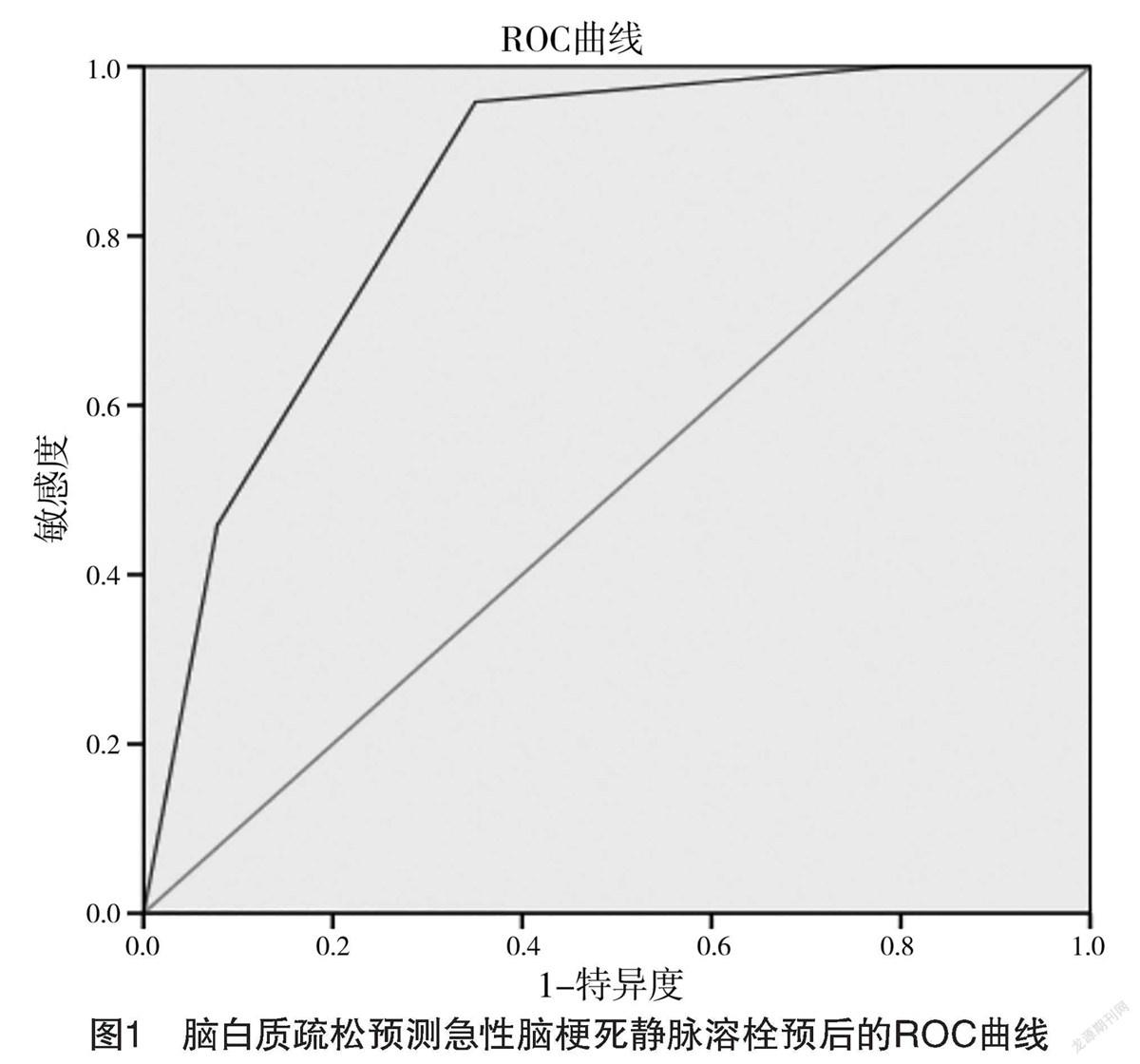
【摘要】 目的:探討脑白质疏松严重程度与急性脑梗死静脉溶栓治疗预后的关系。方法:回顾性分析2018年10月-2020年8月本院神经内科收治的101例经溶栓治疗的急性脑梗死患者。根据入院时影像学检查,分为无脑白质疏松组16例,轻度脑白质疏松组35例,中度脑白质疏松组33例,重度脑白质疏松组17例。记录患者溶栓后24 h平均收缩压及舒张压,血化验指标(血红蛋白、空腹葡萄糖、低密度脂蛋白胆固醇、尿酸、糖化血红蛋白、国际标准化比率、同型半胱氨酸、纤维蛋白原),既往病史(冠心病史、糖尿病史),个人史(吸烟饮酒史)。根据发病后90 d的mRS评分,分为预后良好组77例及预后不良组24例,分析脑白质疏松程度与预后的相关性。结果:四组患者的年龄、冠心病史、吸烟饮酒史、Hb、Glu、LDL-C、UA、Hcy、FIB、24 h MSP、24 h MDP比较,差异均有统计学意义(P<0.05)。多因素logistic回归分析结果显示,LDL-C、24 h MSP、吸烟饮酒史是脑白质疏松的独立危险因素(P<0.05)。急性脑梗死静脉溶栓不同预后组的脑白质疏松程度比较,差异有统计学意义(P<0.05)。Spearman秩相关结果显示脑白质疏松程度与脑梗死患者静脉溶栓预后相关(rs=0.653,P=0.000)。ROC曲线结果显示,曲线下面积(AUC)为0.851[95%CI(0.754,0.919)],最佳截断值为1.5分,特异度为0.649,敏感度为0.958。结论:急性脑梗死合并的脑白质疏松程度越严重,静脉溶栓预后越差。
【关键词】 脑梗死 预后 脑白质疏松 静脉溶栓
Severity of Leukoaraiosis and Acute Cerebral Infarction Correlation Study on Prognosis of Intravenous Thrombolysis/WANG Xinyue, LIU Qiang. //Medical Innovation of China, 2021, 18(30): -138
[Abstract] Objective: To explore the relationship between the severity of leukoaraiosis and the prognosis of intravenous thrombolytic therapy for acute cerebral infarction. Method: A retrospective analysis was performed on 101 patients with acute cerebral infarction treated with thrombolytic therapy from October 2018 to August 2020 in the Department of Neurology of our hospital. According to the imaging examination on admission, there were 16 cases in the no-WMT group, 35 cases in the mild WMT group, 33 cases in the moderate WMT group and 17 cases in the severe WMT group. Record average 24 h after thrombolysis in patients with systolic blood pressure and diastolic blood pressure, blood assay index (hemoglobin and fasting glucose, low density lipoprotein cholesterol, uric acid, glycosylated hemoglobin, ratio of international standardization, homocysteine, fibrinogen), past medical history (history of coronary heart disease, diabetes), personal history (history of smoking and drinking). According to mRS score 90 days after onset, 77 cases were divided into good prognosis group and 24 cases were divided into poor prognosis group, the correlation between the degree of white matter looseness and prognosis was analyzed. Result: Comparison of age, history of coronary heart disease, history of smoking and drinking, Hb, Glu, LDL-C, UA, Hcy, FIB, 24 h MSP and 24 h MDP in 4 groups, the differences were statistically significant (P<0.05). Multivariate logistic regression analysis showed that LDL-C, 24 h MSP and smoking and drinking history were independent risk factors for WMT (P<0.05). Comparison of the degree of white matter loosening in different prognosis groups of acute cerebral infarction with intravenous thrombolysis, the difference was statistically significant (P<0.05). Spearman rank correlation showed that the degree of white matter loosening was correlated with the prognosis of intravenous thrombolysis in patients with cerebral infarction (rs=0.653, P=0.000). ROC curve results showed that the area under curve (AUC) was 0.851[95%CI (0.754, 0.919)], the optimal cut-off value was 1.5 score, the specificity was 0.649, and the sensitivity was 0.958. Conclusion: The worse the degree of leukoaraiosis in acute cerebral infarction, the worse the prognosis of intravenous thrombolysis.
[Key words] Cerebral infarction The prognosis Leukoaraiosis Intravenous thrombolysis
First-author’s address: The Third Affiliated Hospital of Jinzhou Medical University, Jinzhou 121000, China
doi:10.3969/j.issn.1674-4985.2021.30.032
脑白质疏松症(leukoaraiosis,LA)是一种常见的神经退行性疾病,以脑白质完整性破坏或脱髓鞘变化为主要病理表现,是脑小血管病(cerebral small vessel disease,CSVD)的類型之一,可见于脑卒中等多种疾病中[1]。随着CT及MRI应用领域的扩大,越来越多的脑梗死患者被发现合并不同程度的脑白质疏松,并且预后不尽相同[2]。……
登录APP查看全文
