
民丰尼雅遗址出土蜡染棉布边饰纹样“鱼龙纹”的界定
2021-07-09 14:28:28卫艺林邓可卉梅蓉
丝绸
2021年5期
卫艺林 邓可卉 梅蓉

摘要: 尼雅出土东汉蜡染棉布是中国境内发现的最早的蜡染棉布,下方的边饰纹样通常被认为是鱼龙纹或龙纹。这种定性较为模糊,仍有待进一步的深入研究。文章从鱼龙纹和龙纹的形态演变入手,采用史料分析、比较研究等方法,在鳍、腹、足、爪、鳞、长宽比例、文化特征等各个方面对该纹样进行了深入探讨和形态分析。研究认为:该纹样并非中国传统的龙纹或鱼龙纹,可能是来自犍陀罗文明的某种植物或其他类型纹样。
关键词: 尼雅遗址;东汉蜡染棉布;鱼龙纹;摩羯纹;犍陀罗;龙纹;传统纹样
中图分类号: TS941.12;K876.9
文献标志码: B
文章编号: 1001-7003(2021)05-0107-07
引用页码: 051204
DOI: 10.3969/j.issn.1001-7003.2021.05.016(篇序)
Abstract: The batik cotton fabric of Eastern Han dynasty excavated from Niya ruins is deemed as the earliest batik cotton unearthed in China, where there are furbelow patterns on the bottom, generally deemed as ichthyosaur patterns or dragon patterns. Such indistinct definition needs further in-depth study. Starting from the morphological evolution of ichthyosaur patterns and dragon patterns, this paper conducted in-depth discussion and analyzed its morphology from aspects of the fin, abdomen, foot, claw, scale, ratio of length to width, and cultural characteristics through historical data analysis and comparative study. It is believed that such patterns, rather than traditional dragon patterns or ichthyosaur patterns in China, are possibly the patterns of specific plant or other patterns from Gandharan civilization.
Key words: Niya ruins; batik cotton fabric of Eastern Han dynasty; ichthyosaur patterns; capricorn pattern; Gandharan; dragon patterns; traditional pattern
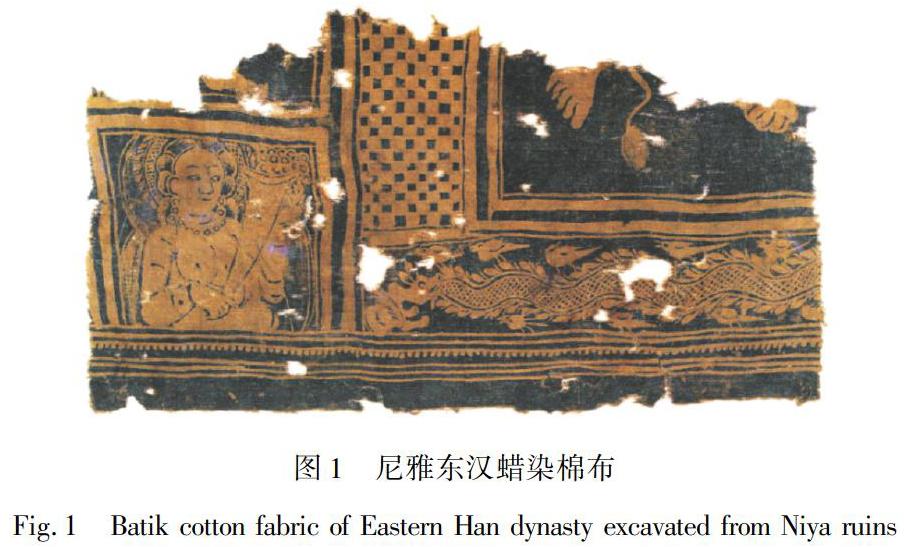
1959年新疆考古隊在民丰古尼雅遗址发现了一块蜡染蓝白印花棉布残片(图1),学界一般认为该残片为来自中亚-犍陀罗地区的商品,是中国境内发现最早的蜡染棉布[1]。这块残片在中国科学技术史(纺织卷)[1]、中国纺织通史[2]、中国纺织科学技术史(古代部分)[3]等经典著作中均曾被提及,学者们从各个角度对这块布的纹样、工艺、来源、产地等内容进行了研究、分析和引用。但是目前相关研究主要集中在对左下角女神像的图像学分析和文化研究上,对下面残缺鱼龙状边饰的界定研究相对较少。
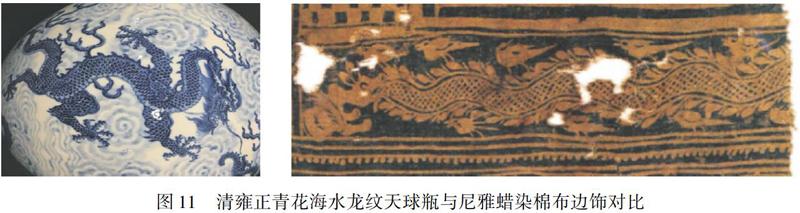
目前对于该边饰纹样的属性界定,较常见的有鱼龙纹和龙纹两种观点:有学者认为该区域的边饰图案为鱼龙、鸟、兽的一种组合纹样[4];也有的学者认为该区域为长方形框架内的飞鸟、鱼龙纹[5];另外一些观点认为位于下方的长条边饰内容为一兽咬着一龙尾[6];还有李安宁[7]则认为该边饰纹样是一条龙,身披鳞甲,上下皆有鳍,呈波浪式向前伸展。……
登录APP查看全文
