
北宋王居正《纺车图》画错了吗?
2021-07-09 14:28:28史晓雷
丝绸
2021年5期
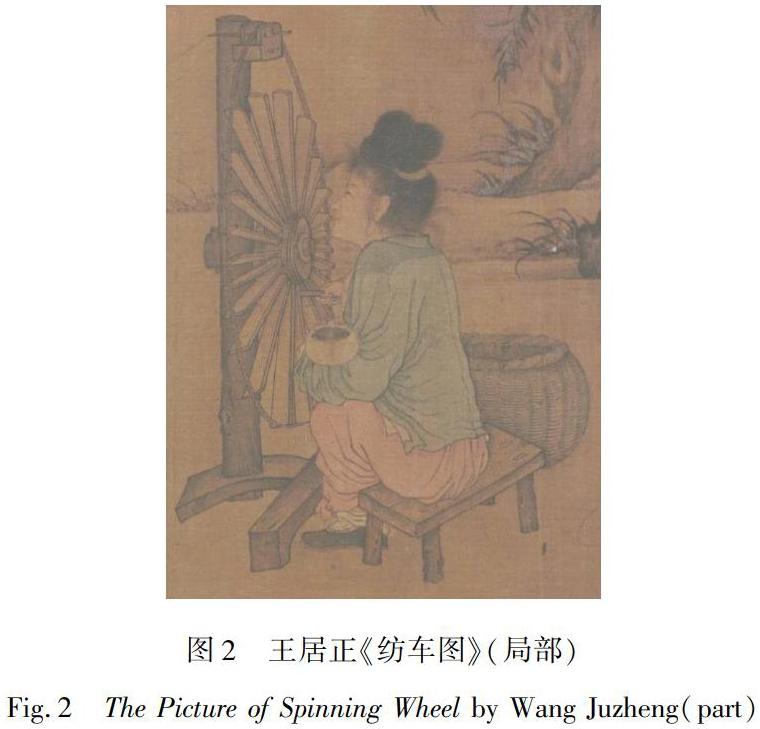

摘要: 针对黄小峰2013年发表的论文《丝线与家国理想:传宋人王居正〈纺车图〉的考察》,经重新考察后认为:《纺车图》手摇曲柄是依据所绘纺车结构的合理设置;无辋纺车用绳带传动不但古已有之,而且一直沿承到现代,传动机构可行、有效;立式手摇纺车的纺锭往往在手摇曲柄的另一侧,这是此类纺车的基本特征之一。文章进一步认为,《纺车图》是宋代写实主义风俗画的杰作之一,不但没有画错,而且反映了画师对底层劳动人民日常生活的关照和同情。
关键词: 王居正;《纺车图》;纺织科技史;手摇立式纺车;手摇曲柄;纺锭
中图分类号: TS941.12;K875.2
文献标志码: B
文章编号: 1001-7003(2021)05-0120-05
引用页码: 051206
DOI: 10.3969/j.issn.1001-7003.2021.05.018(篇序)
Abstract: Through the re-investigation of Huang Xiaofengs paper "Silk and the Ideal of the Family and State: An Investigation of the Picture of Spinning Wheel by Wang Juzheng" published in 2013, this paper drew following new conclusions and believed that the hand crank of the spinning wheel was set based on the mechanical structure of the wheel, which was completely reasonable. The belt-driven rimless spinning wheel has not only been used since the Song dynasty, but also been inherited to the modern times. The transmission mechanism is feasible and effective. The spindles in the vertical hand-driven spinning wheel are always set on the other side of the hand crank, which is one of the essential features of such spinning wheel. The Picture of Spinning Wheel as one of the masterpieces of realistic genre paintings was not wrongly drawn. On the contrary, it manifested the artists concern and sympathy for the daily life of laboring people at the bottom of society.
Key words: Wang Juzheng; the Picture of Spinning Wheel; the history of textile technology; vertical hand-driven spinning wheel; hand crank; spindle
在古代紡纱技术发展过程中,由纺专(纺坠)发展到纺车是一大技术进步。尽管中西方这一演变进程时间差距很大:中国至晚在汉代已经出现纺车,在多地出土的画像石上有纺车的形象;欧洲在13世纪才出现纺车,目前最早的纺车图像年代大约是1340年[1]。数年前,中国学界已经梳理了中国古代手摇纺车的发展历程,许多史料源自古代的绘画作品,包括北宋王居正的《纺车图》[2-3]。《纺车图》历来被认为是北宋写实风格的风俗画,但最近笔者发现一篇论文对《纺车图》进行了不同寻常的解读。
2013年,《艺术设计研究》刊发了黄小峰的论文《丝线与家国理想:传宋人王居正〈纺车图〉的考察》[4]。该文通过“新的研究”,声称“发现了一直以来被科技史奉为纺车典范的画中图像出现了几处关键的‘错误”,然后对画面进行了重新诠释,认为《纺车图》并非真实劳作场景的复现,表现的只是“世掌丝纶”的吉祥含义。……
登录APP查看全文
