不同形式的运动对肌少症患者影响的Meta分析
2021-09-13 04:48:58周先锋毛文慧
山东体育科技
2021年3期
关键词:Meta分析
周先锋 毛文慧
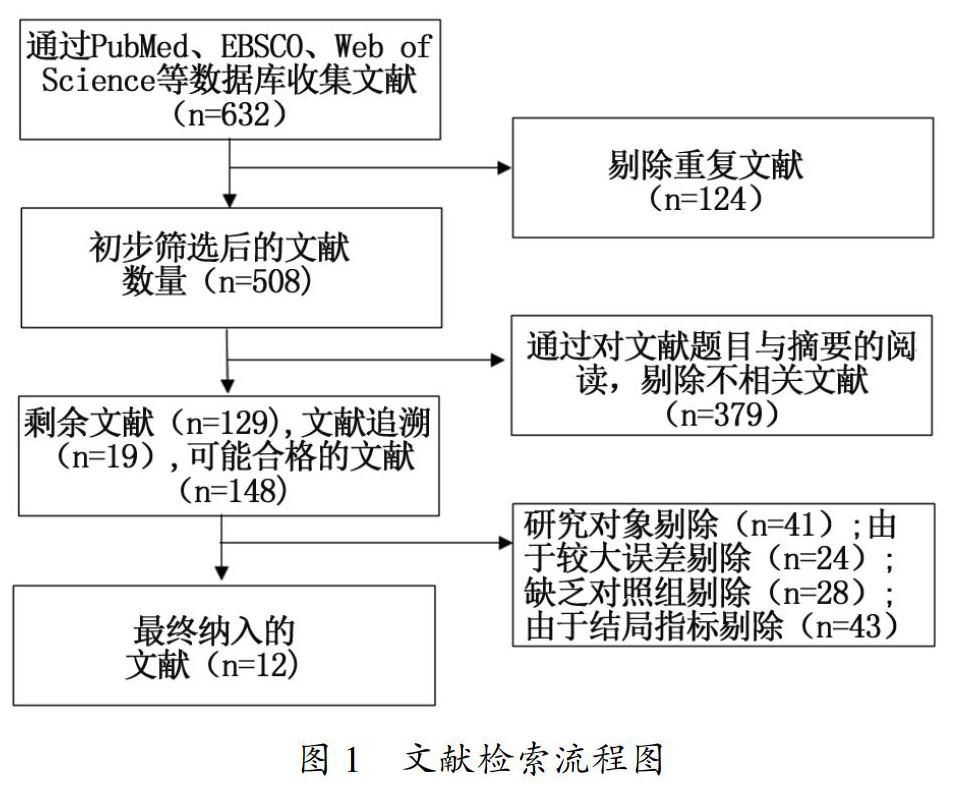
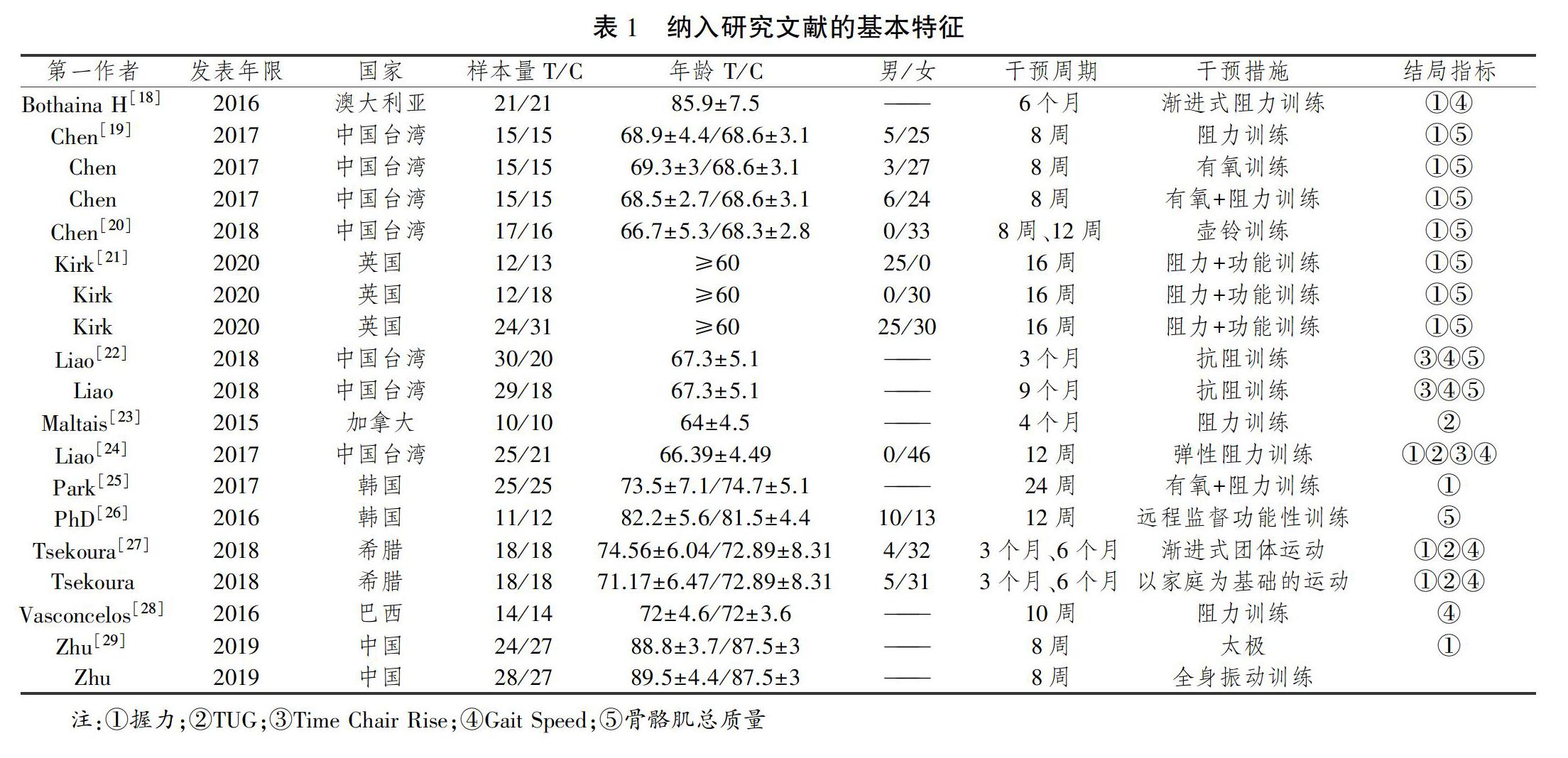
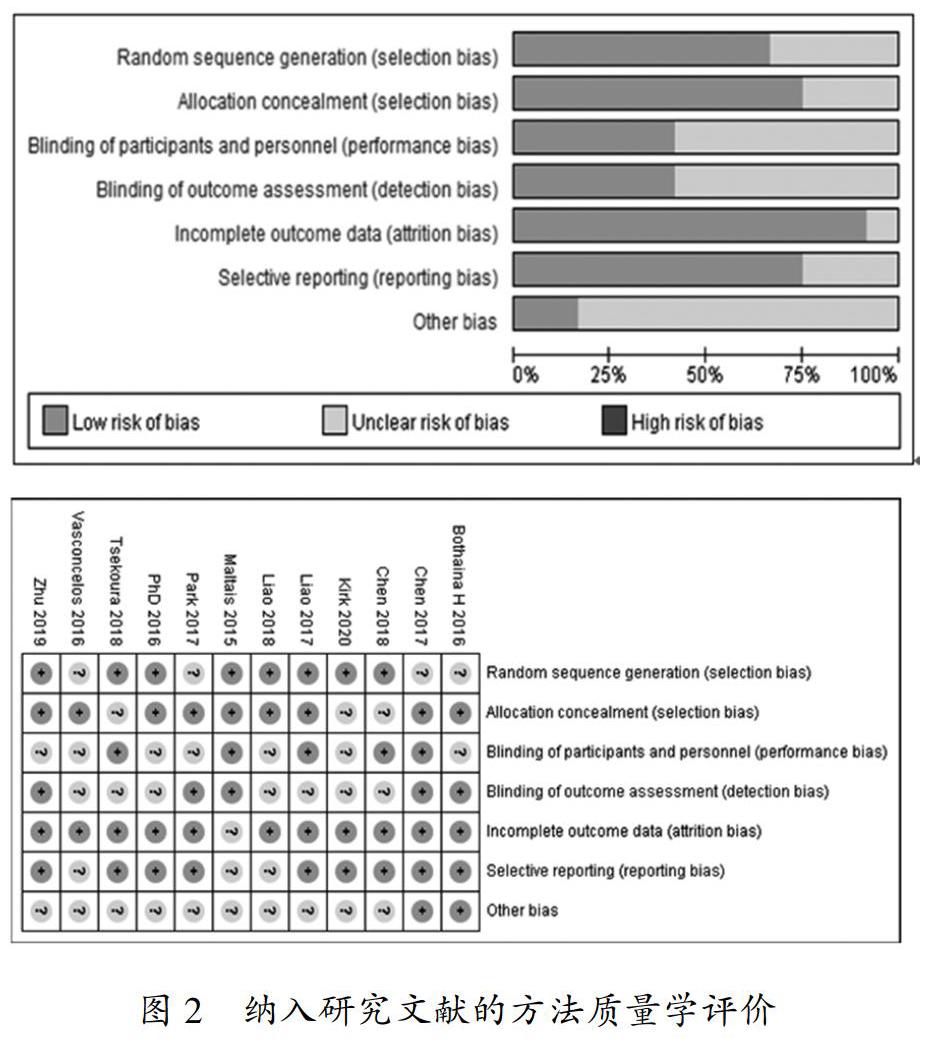
摘 要:目的:探究不同形式的运动能否有效地改善肌少症患者肌肉力量、身体功能、肌肉质量。方法:计算机检索了中国知网(CNKI)、万方数据库、维普、EBSCO学术检索大全(全学科)、Web of Science,检索期限均从建库开始到2019年10月,全面收集运动对肌少症患者肌肉影响的文献,应用 Cochrane 偏倚风险评估工评估工具对纳入的研究进行方法学质量评价。结果:共纳入12篇RCT,共包括A级文献9篇,B级文献3篇。Meta分析结果显示,不同形式的运动对肌少症患者的握力(WMD=2.62,95%CI:1.90~3.33)、身体功能性活动:TUG(WMD=-1.79,95%CI:-2.19~-1.38)、Time Chair Rise(WMD=5.56,95%CI:4.39~6.73)、步态速度(SMD=1.406,95CI%:1.16~1.65)具有明显的改善作用,对骨骼肌总质量(WMD=0.77,95CI%:0.08~1.45)无较明显的改善,却具有良好的缓解作用。结论:不同形式的运动能够改善肌少症患者的肌肉力量、身体功能活动,以及缓解骨骼肌总质量的减少。
关键词:肌少症;运动;肌肉质量;肌肉力量;meta分析
中图分类号:G804.6 文献标识码:A 文章编号:1009-9840(2021)03-0048-08
Abstract:Objective:To explore whether different forms of exercise can effectively improve muscle mass and strength in patients with sarcopenia.Methods:The computer searched CNKI, Wanfang Data, VIP, EBSCO Academic Search Encyclopedia (Full Discipline), and Web of Science. The search period started from the establishment of the database to October 2019. The literature on the muscle effects of patients with dysfunction, and the methodological quality of the included studies were evaluated using the Cochrane bias risk assessor assessment tool.Results:A total of 12 RCTs were included, including 9 A-level documents and 3 B-level documents. Meta-analysis results show that different forms of exercise have grip strength on patients with sarcopenia (WMD = 2.62, 95% CI: 1.90~3.33), and functional activities of the body: TUG (WMD =-1.79, 95% CI: -2.19~-1.38), Time Chair Rise (WMD = 5.56, 95% CI: 4.39~6.73), gait speed (SMD = 1.406, 95CI%: 1.16~1.65), has a significant improvement effect, and has a total mass of skeletal muscle (WMD = 0.77, 95CI%: 0.08 ~ 1.45) has no obvious improvement, but has a good relieving effect.Conclusion:Different forms of exercise can improve muscle strength, physical function activities, and reduce the total mass of skeletal muscle in patients with sarcopenia.
Key words:sarcopenia; exercise; muscle mass; muscle strength; meta-analysis
2021有研究表明:肌少癥的发生和发展与多种相互作用机制有关,包括蛋白质合成、蛋白质分解、神经肌肉完整性和肌肉脂肪含量[8]。而运动不足是导致老年肌少症的重要因素,身体活动较少的老年男性和女性骨骼肌质量较低,残疾患病率增大。运动、营养被认为是治疗骨骼肌减少症的主要干预手段[9]。肌肉力量、肌肉质量和身体功能性活动如步态速度是测量肌少症的有效指标[10]。握力(Hand Strength)测量是测量肌肉力量的一种有效、可靠的方法[11]。功能性测量可用TUG为测量指标[12]。我们使用Timed Chair Rise测试作为患者下肢功能肌力的临床测量[13]。步态速度(Gait Speed)可作为测量功能性活动的任务来评估身体能力[14]。……
登录APP查看全文
猜你喜欢
心脑血管病防治(2016年6期)2017-01-16 08:30:51
风湿病与关节炎(2016年12期)2017-01-14 19:45:07
中国当代医药(2016年29期)2017-01-03 22:56:14
中国医药导报(2016年30期)2016-12-28 16:48:40
中国医药导报(2016年29期)2016-12-27 16:28:02
中国医药导报(2016年29期)2016-12-27 13:05:04
现代商贸工业(2016年25期)2016-12-26 14:56:36
中外医学研究(2016年26期)2016-11-30 02:38:27
云南中医中药杂志(2016年9期)2016-11-29 08:02:14
风湿病与关节炎(2016年10期)2016-11-23 07:06:16