
清宫礼吉服中的黄色及槐子黄栌染色研究
2021-07-09 13:57:16金鉴梅赵丰刘剑王业宏
丝绸
2021年5期
金鉴梅 赵丰 刘剑 王业宏
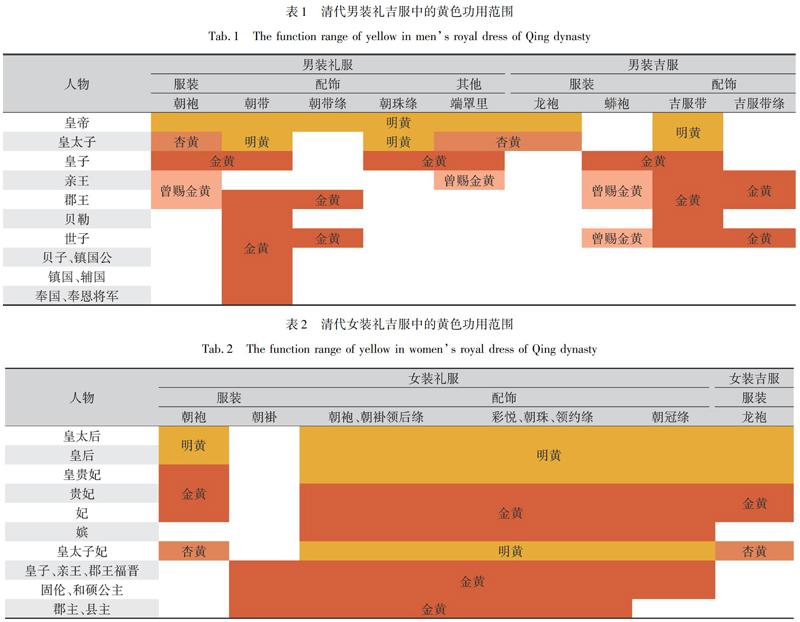


摘要: 黄色是中国传统色彩中的五正色之一,也是清代宫廷特有的、应用于正式场合的礼吉服用色。文章探讨了清宫礼吉服中明黄、杏黄、金黄三种色彩的功用范围、色相区域及染色工艺。通过文献资料的梳理分析得知:礼吉服色中等级次序为明黄>杏黄>金黄,且有详细的使用规范。依据织染局染作档案记载进行模拟实验结果表明,炒槐子染液放置发酵5 d以上后,a*、b*和K/S值均明显上升,明黄色更可能是炒槐子染液放置发酵5~15 d染色而成。槐子和黄栌套染时,增加黄栌比例、以K2CO3溶液进行后处理,可以使染得颜色向橙红色变化,从而获得杏黄和金黄色。
关键词: 清代宫廷;黄色;染色工艺;槐子;黄栌;礼吉服;色彩区域
中图分类号: TS193.6
文献标志码: A
文章编号: 1001-7003(2021)05-0026-08
引用页码: 051105
DOI: 10.3969/j.issn.1001-7003.2021.05.005(篇序)
Abstract: Yellow as one of the five Chinas traditional primary colors is also a unique color used for formal occasions in royal dress. The paper discusses the function scope, hue range and dyeing process of bright yellow, apricot yellow and golden yellow used in Qing dynasty royal dress. Through the analysis of document literature, it is found that the rank order of colors in royal dress is bright yellow>apricot yellow>golden yellow, and there are detailed usage specifications applicable for these colors. The results of the simulation experiment based on the archiving records of Weaving and Dyeing Bureau showed that the values of a*, b* and K/S increased significantly after the dye liquor of fried sophora japonica was placed to ferment for more than 5 days. And there is a greater possibility that bright yellow is dyed by the dye liquor of fried sophora japonica after standing to ferment for 5-15 days. When overdyeing with sophora japonica and cotinus coggygria, by increasing the proportion of cotinus coggygria or finishing with K2CO3 solution, the dyed color will have an orange-red change, thus obtaining apricot yellow and golden yellow.
Key words: Qing dynasty palace; yellow; dyeing; sophora japonica; cotinus coggygria; royal dress; color range
清代是古代天然染色技術发展的鼎盛时期,黄色作为清代宫廷服饰中最高等级的色彩,受到众多学者的研究和关注。有从历史文献及色彩文化角度分析清代明黄色朝袍功用和色彩内涵特征[1-2],也有运用高效液相色谱等分析方法对清代纺织实物中的黄色染料进行检测鉴别[3-4],但少有从染色工艺角度对其色相区域进行分析的相关研究。黄色在中国传统色彩理论体系中为五正色之一,在汉代的《礼记·玉藻》中就明确了其在服装上的应用关系即“衣正色,裳间色”,而:“正谓青、赤、黄、白、黑五方正色也。不正谓五方间色,绿、红、碧、紫、骝黄。”[5]其中所描述的“正色之黄”和“间色之黄”体现在服色上为何种黄色,其色彩特征既有相应社会文化背景的影响也受到了染色工艺的技术性制约。本文通过……
登录APP查看全文
